
You are using an out of date browser. It may not display this or other websites correctly.
You should upgrade or use an alternative browser.
You should upgrade or use an alternative browser.
Running Bear's February 2023 Coffee Shop
- Thread starter Chrιstιaη
- Start date
ModelRailroadForums.com is a free Model Railroad Discussion Forum and photo gallery. We cover all scales and sizes of model railroads. Online since 2002, it's one of the oldest and largest model railroad forums on the web. Whether you're a master model railroader or just getting started, you'll find something of interest here.


I've been wondering about technical trains being Yellow in color. I've seen pictures of DB trains that are either track measurement trains or work trains and they seem to usually be yellow in color. In Japan, HR Central runs "Doctor Yellow", a special Shinkansen used for track measurement etc.
Is this some sort if international standard or just coincidence or something? (Having said that, the JR East track measurement Shinkansen is not yellow).

 en.wikipedia.org

Which is why UK trains have yellow noses, or used to anyway
So the legal or illegal track crossers have to watch out for work trains but not regular trains (which aren't yellow). Got it!
That doesn't change my point. Non work trains don't have to be yellow, so why does it matter? Is getting hit by a work train worse than a non work train? (rhetorical question)
Japan has plenty of open track and I think Germany (rest of continent?) as well though I have not been in Germany in a long time. Not sure that is a big deal. The US is a lot bigger as well so fencing track out in the sticks is expensive without a lot of benefit.
I'm not trying to dwell on this. I just thought it curious that work trains would be yellow for visibility by the legal and illegal track goers, but al the normal trains don't have to be (which implies that they are less dangerous or prone to hit people if the yellow makes that big of a deal). Just a rhetorical thought exercise for the day.


Yellow is primarily treated as the color of caution and visibility. There has to be a stark contrast with the work environment so as to caution bystanders/ vehicles nearby about the presence of these machines. It’s a safety thing.



Affiliate Disclosure: We may receive a commision from some of the links and ads shown on this website (Learn More Here)
- Status
- Not open for further replies.

JeffH
Well-Known Member
I've been using IPA to clean my tracks
I'm going to try a bit of Kerosene to see how it works. It's one of the non-polar suggested ones.
@kbkchooch ATF might be worth looking at. It's one of the ingredients in "ED's Red" a homemade concoction used by many people as a DIY firearms cleaner/penetrate/lube product. It will be fine with plastics, and is gentle enough to use on blued metal. Basically equal parts ATF, Kerosene, Mineral Spirits and Acetone.
I'm going to try a bit of Kerosene to see how it works. It's one of the non-polar suggested ones.
@kbkchooch ATF might be worth looking at. It's one of the ingredients in "ED's Red" a homemade concoction used by many people as a DIY firearms cleaner/penetrate/lube product. It will be fine with plastics, and is gentle enough to use on blued metal. Basically equal parts ATF, Kerosene, Mineral Spirits and Acetone.
Last edited:
PRR Modeler
Well-Known Member
Afternoon All,
Started out with a walk at 52F. After cleaning up I started getting dizzy and nauseous. I checked my glucose and BP, and both were fine. I think I starting to see the side effects of taking an OTC antacid pill for months (I get bad reflux). The same thing happened to me previously on a different OTC reflux pill. Anyway, I laid down for about 4 hours (that was a surprise) and when I got up the dizziness was gone. This has also occurred to me after long term use of melatonin (sleep aid). No modeling today. I have nothing scheduled for tomorrow, so I hope to spend several hours in the train room.
Chet- I have videos under "curt webb videos." The latest one is from the new layout after track laying was complete but without much scenery.
TomO- I'm confident that the military knew exactly where it was and when. The shoot down authority comes from civilian authority (think NCA). I'm glad Terry is feeling better.
Karl- Great weathering.
James- Great 1:1 catch.
Sherrel- Interesting photo. Why did you switch back to your old avatar? Inquiring minds want to know!
Patrick- I use the CMX cleaning car with lacquer thinner. As someone mentioned frequent running of trains cleans the track.
I hope everyone has a good night.
Started out with a walk at 52F. After cleaning up I started getting dizzy and nauseous. I checked my glucose and BP, and both were fine. I think I starting to see the side effects of taking an OTC antacid pill for months (I get bad reflux). The same thing happened to me previously on a different OTC reflux pill. Anyway, I laid down for about 4 hours (that was a surprise) and when I got up the dizziness was gone. This has also occurred to me after long term use of melatonin (sleep aid). No modeling today. I have nothing scheduled for tomorrow, so I hope to spend several hours in the train room.
Chet- I have videos under "curt webb videos." The latest one is from the new layout after track laying was complete but without much scenery.
TomO- I'm confident that the military knew exactly where it was and when. The shoot down authority comes from civilian authority (think NCA). I'm glad Terry is feeling better.
Karl- Great weathering.
James- Great 1:1 catch.
Sherrel- Interesting photo. Why did you switch back to your old avatar? Inquiring minds want to know!
Patrick- I use the CMX cleaning car with lacquer thinner. As someone mentioned frequent running of trains cleans the track.
I hope everyone has a good night.
chadbag
Well-Known Member
I am friends with an English modeller and he is known as mellow yellow as the era he portrays has yellow technical trains which he models, do massive amounts of upgrades on them, and building unusual items not made by manufacturers, these lovelies remind me of his work, especially with the yellow plant machinery and yellowed track side grass? Anyway I love it.
I've been wondering about technical trains being Yellow in color. I've seen pictures of DB trains that are either track measurement trains or work trains and they seem to usually be yellow in color. In Japan, HR Central runs "Doctor Yellow", a special Shinkansen used for track measurement etc.
Is this some sort if international standard or just coincidence or something? (Having said that, the JR East track measurement Shinkansen is not yellow).
Doctor Yellow - Wikipedia
Smudge617
Well-Known Member
Better than one idea I heard of, using Brake fluid, didn't work out well for the modeller who tried it.OK, now you are all gonna flip on my take on track cleaning.
Automatic transmission fluid (ATF)
Back in my club days we experimented with alcohol, mineral spirits, RailZip and several others. We found that ATF worked well as a cleaner, was plastic safe (most transmissions have a lot of plastic parts) and loosened ground in dirt well enough that only light pressure was needed for removal. Put 2 drops on the track with a balky engine with a flickering headlight and suddenly then engine would be smooth and the lighting steady. Plus the thin layer of oil left behind stymied the oxidation of rails and wheels. Yes, you have to be careful using it on grades, but the club (and my own grades) are less than 2%. If you do overdo it, a paper towel will clean it up, or a centerline car.
Smudge617
Well-Known Member
I believe it's to do with the ISO or Industry Standards Organisation. All technical test trains or MOW have to be Yellow to make them easily visible to crossing users, trackside worker's and anyone else legally or illegally on the track.I've been wondering about technical trains being Yellow in color. I've seen pictures of DB trains that are either track measurement trains or work trains and they seem to usually be yellow in color. In Japan, HR Central runs "Doctor Yellow", a special Shinkansen used for track measurement etc.
Is this some sort if international standard or just coincidence or something? (Having said that, the JR East track measurement Shinkansen is not yellow).
Doctor Yellow - Wikipedia
Which is why UK trains have yellow noses, or used to anyway
chadbag
Well-Known Member
I believe it's to do with the ISO or Industry Standards Organisation. All technical test trains or MOW have to be Yellow to make them easily visible to crossing users, trackside worker's and anyone else legally or illegally on the track.
Which is why UK trains have yellow noses, or used to anyway
So the legal or illegal track crossers have to watch out for work trains but not regular trains (which aren't yellow). Got it!
Smudge617
Well-Known Member
Unfortunately the US is one of the few countries that has what could be considered open train tracks. In the UK our train tracks are fenced off, and pretty much always have been, as their private property and belong to the Railway CompanySo the legal or illegal track crossers have to watch out for work trains but not regular trains (which aren't yellow). Got it!
chadbag
Well-Known Member
Unfortunately the US is one of the few countries that has what could be considered open train tracks. In the UK our train tracks are fenced off, and pretty much always have been, as their private property and belong to the Railway Company
That doesn't change my point. Non work trains don't have to be yellow, so why does it matter? Is getting hit by a work train worse than a non work train? (rhetorical question)
Japan has plenty of open track and I think Germany (rest of continent?) as well though I have not been in Germany in a long time. Not sure that is a big deal. The US is a lot bigger as well so fencing track out in the sticks is expensive without a lot of benefit.
I'm not trying to dwell on this. I just thought it curious that work trains would be yellow for visibility by the legal and illegal track goers, but al the normal trains don't have to be (which implies that they are less dangerous or prone to hit people if the yellow makes that big of a deal). Just a rhetorical thought exercise for the day.
santafewillie
Same Ol' Buzzard
No offense taken. As one who lives here I know well that most people can't drive on snow or ice. What we usually get is ice though and even Yankees can't drive well on that.been busy, too many pages to catch up on
I came across this , this morning. somewhat humourous - dont take it personally Hobo & Willie
kbkchooch
Verified Human
In North America,, fences mean nothing,,,,,just look at our southern border!Unfortunately the US is one of the few countries that has what could be considered open train tracks. In the UK our train tracks are fenced off, and pretty much always have been, as their private property and belong to the Railway Company
CambriaArea51
Well-Known Member
Definitely need some sun, and the warm air would be nice too. I would love to take a train across the country and then fly back. That is if I left.That's rough, TOM! I have become so used to seeing the /sun out here that even just a few cloudy days make me gloomy. Today is Supposed to be 69F later on under a cloudless sky. Comon out!
Smudge617
Well-Known Member
I take your point, did some more digging, this actually seems more likely to be why.That doesn't change my point. Non work trains don't have to be yellow, so why does it matter? Is getting hit by a work train worse than a non work train? (rhetorical question)
Japan has plenty of open track and I think Germany (rest of continent?) as well though I have not been in Germany in a long time. Not sure that is a big deal. The US is a lot bigger as well so fencing track out in the sticks is expensive without a lot of benefit.
I'm not trying to dwell on this. I just thought it curious that work trains would be yellow for visibility by the legal and illegal track goers, but al the normal trains don't have to be (which implies that they are less dangerous or prone to hit people if the yellow makes that big of a deal). Just a rhetorical thought exercise for the day.
Yellow is primarily treated as the color of caution and visibility. There has to be a stark contrast with the work environment so as to caution bystanders/ vehicles nearby about the presence of these machines. It’s a safety thing.
CambriaArea51
Well-Known Member
This is what I use to clean track and wheels.
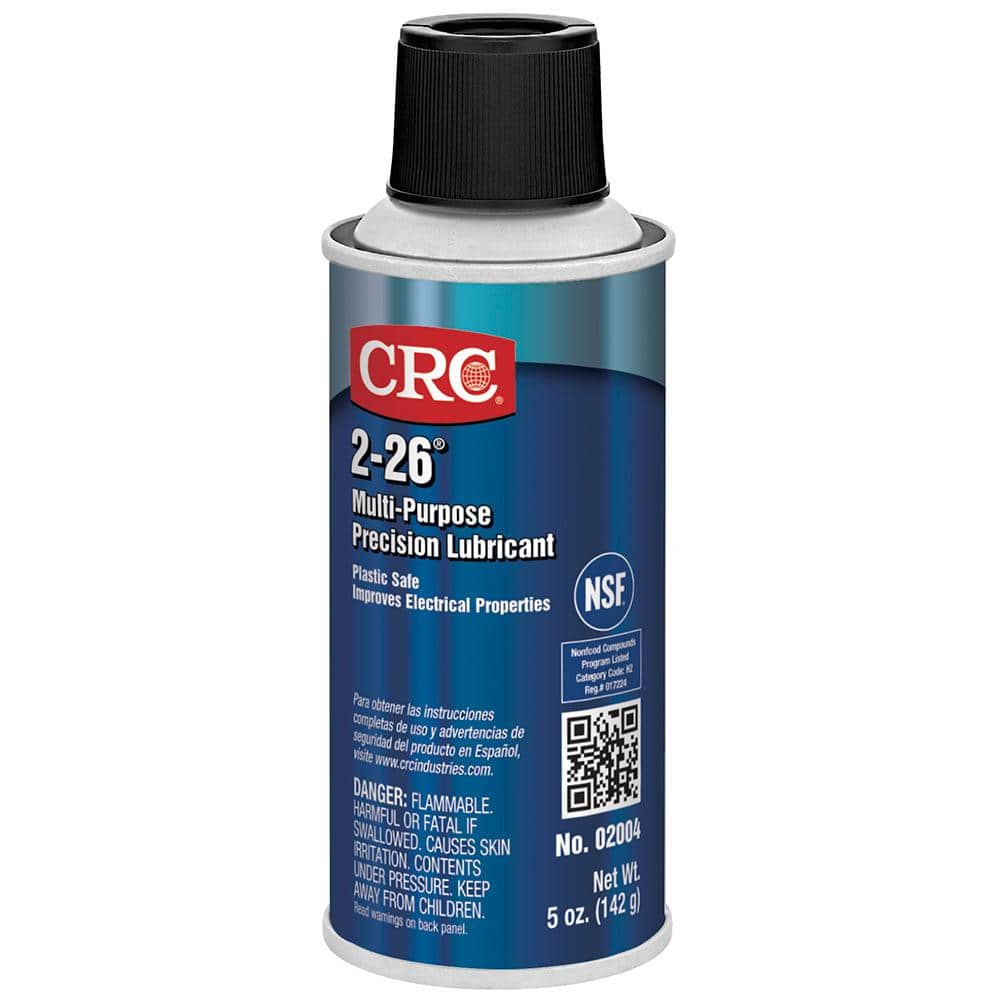
CRC CRCX 2-26 XMulti-Purpose Lubricant x 5 oz. 02004 - The Home Depot
The CRC 2-26 5 oz. Multi-Purpose Lubricant is a plastic-safe lubricant, penetrant and corrosion inhibitor. This lubricant helps prevent electrical malfunctions and restore damaged equipment caused by water penetration, humidity, condensation and corrosion. This product also restores resistance...
www.homedepot.com
Smudge617
Well-Known Member
And the Award for Dumbass of the day goes to MEEeeeeeeeeeeeee
Repainted the Signal box I'm building after the paint started to come away from too much handling, did that last night.
Tonight I applied a coat of matt clear coat, roughly 60/40 mix, left it a few hours and went back to apply a second coat a little while ago, made another mix and applied it to the signal box, suddenly realised it seemed far to wet to be right, I knew I had the mix right, suddenly realised I'd done the correct mix, except dumbass here used 60% clear coat
and 40% airbrush cleaner, yikes!!!
Repainted the Signal box I'm building after the paint started to come away from too much handling, did that last night.
Tonight I applied a coat of matt clear coat, roughly 60/40 mix, left it a few hours and went back to apply a second coat a little while ago, made another mix and applied it to the signal box, suddenly realised it seemed far to wet to be right, I knew I had the mix right, suddenly realised I'd done the correct mix, except dumbass here used 60% clear coat
and 40% airbrush cleaner, yikes!!!
montanan
Whiskey Merchant
Good afternoon. Managed to get some chores done today. Willie's package didn't go out on UPS. The building down the street from me has permanently closed for shipping. There is a place in town that will accept UPS packages but can't print shipping labels. The next closest UPS location for shipping id 68 miles by road north in Eureka, MT, almost at the Canadian border. Took the packages to the Post Office. They sure are pricey. I am locating more boxes of structures and trees which are available for sale if anyone is interested. Still haven't found everything.
After that went to the State Treasures office and put paperwork in for property tax relief. Depending on income, they will discount the state property tax. After that went and put a big dent in my checking account at the grocery store. I was going to go to the car wash, but even though we haven't had any snow for a while, the streets were damp and would get road grime on the lower part of the car.
Karl - You did an excellent job weathering that D&H Locomotive. Sweet.
Curt - I will have to check out YouTube when I am done here to see your layout.
Willie - Those Dust Monkeys do a pretty good job keeping the dust off the rails. I had a few cars with them on my layout and they did make a difference. As usual, like your photos.
Chad - At my club, we would use the Walthers track cleaning cars on all of the trains that were running except for my RDC. Whenever the club was running trains, the layout was open to the public and dust could be quite a problem. We would clean the abrasive pad at least once during an operating session with denatured alcohol. I would even use Dust Monkeys in addition to the Walthers car.

Sherrel - Thanks for posting those photos of the guys coming home. Bet you were proud being able to bring them home.
Here I am back in the archives. This was a fairly common sight when I left the club, a westbound getting ready to head west over Bozeman Pass. The old Northern Pacific station is right behind me here.


Till next time, LATER
After that went to the State Treasures office and put paperwork in for property tax relief. Depending on income, they will discount the state property tax. After that went and put a big dent in my checking account at the grocery store. I was going to go to the car wash, but even though we haven't had any snow for a while, the streets were damp and would get road grime on the lower part of the car.
Karl - You did an excellent job weathering that D&H Locomotive. Sweet.
Curt - I will have to check out YouTube when I am done here to see your layout.
Willie - Those Dust Monkeys do a pretty good job keeping the dust off the rails. I had a few cars with them on my layout and they did make a difference. As usual, like your photos.
Chad - At my club, we would use the Walthers track cleaning cars on all of the trains that were running except for my RDC. Whenever the club was running trains, the layout was open to the public and dust could be quite a problem. We would clean the abrasive pad at least once during an operating session with denatured alcohol. I would even use Dust Monkeys in addition to the Walthers car.
Sherrel - Thanks for posting those photos of the guys coming home. Bet you were proud being able to bring them home.
Here I am back in the archives. This was a fairly common sight when I left the club, a westbound getting ready to head west over Bozeman Pass. The old Northern Pacific station is right behind me here.
Till next time, LATER
Bruette
Well-Known Member
No one can drive well on ice, unless you have spiked tires. Even chains can slip on ice.What we usually get is ice though and even Yankees can't drive well on that.
Last edited:
Smudge617
Well-Known Member
Spikes aren't that much better unless your driving on ice several inches thick.No one can drive well on ice. Unless you have spiked tires. Even chains can slip on ice.
Boris
Beach Bum
Willie: That was what I meant, when I said that there are (Many), cases where the Home Health Nurse is more than useful. In my case, all of the dressings were off, before I left the hospital. The entry points, (Arteries), and the main IV (Artery in front of neck), were all healed over, again, before they would release me. So all that she would have to do, was record my temperature, BP and Heart Rate, something I do daily, since the first hospitalization. Big difference there. Looks like you could have used a third visit, while I honestly didn't need one, nor to be held to the Nurse's schedule. I know that they are covered by Medicare, I had one, and an at Home Therapist, (Rosie, the best), after my knee replacement. Looking ahead to a future spinal surgery, I will probably need some outside help.Joe - When my wife had her most recent knee replacement, we had a home health nurse visit twice a week for three months. It was actually quite convenient and cost us nothing! Medicare and Blue Cross paid the entire tab. She did more than just take vitals, she cleaned and changed dressings, did the infusions while she was here, (we did them at the other scheduled times), she cleaned and maintained the PICC line and ultimately removed it when that therapy was over. She coordinated a lot of stuff with medical suppliers (paperwork, reports etc), and she was just generally helpful and pleasant. Of course our circumstances were different, but ours was a positive experience.
- Status
- Not open for further replies.
Affiliate Disclosure: We may receive a commision from some of the links and ads shown on this website (Learn More Here)