Weathering Rolling Stock, a Continous thread

ModelRailroadForums.com is a free Model Railroad Discussion Forum and photo gallery. We cover all scales and sizes of model railroads. Online since 2002, it's one of the oldest and largest model railroad forums on the web. Whether you're a master model railroader or just getting started, you'll find something of interest here.


Status
Not open for further replies.
Tom O - Thanks for your blessing to continue this discussion. RCH has been quite informative as he has been explaining some unknown stuff about the area that I railfaned in for over 40 years.
Don't forget the Frisco! Their main line from Tulsa stopped in Carrollton where they picked up the Rock Island (now owned by DART) at Tower 77
I worked alongside the Frisco main line less than a mile SW of Tower 77 and the triangle; although the tower was gone by the time I started working there. In the days before UP scooped up the MKT, and SSW, and BN absorbed SLSF, railfanning at the triangle was most interesting. Early on, congestion spilled over to the vehicle traffic on Belt Line Road and the I-35E frontage roads. That whole triangle actually occupied less than a whole acre, but it still exists. The Cotton Belt line east is now leased by DG&NE, and leads to the KCS yard in Wylie (among other places). The line west of I-35E is used by FWWR to reach Ft Worth. The MKT line was purchased by DART and mostly supplanted by their light rail, with the section north from Carrollton to Denton leased to DCTA commuter rail. Some of the old MKT line still exists to serve local rail customers. The Frisco line that ran alongside the business that I worked at is still a very busy line for BN and now BNSF headed to Whitesboro. I spent many hours staring out the windows watching traffic on that line. It was there that I first saw Frisco crews do a "flying switch" (many times) to service industries on the other side of the tracks. That ended in 1980 when BN took over.
Today, my primary area for watching is the Alliance to OKC stretch on the BNSF. I have probably seen you there unknowingly.
 
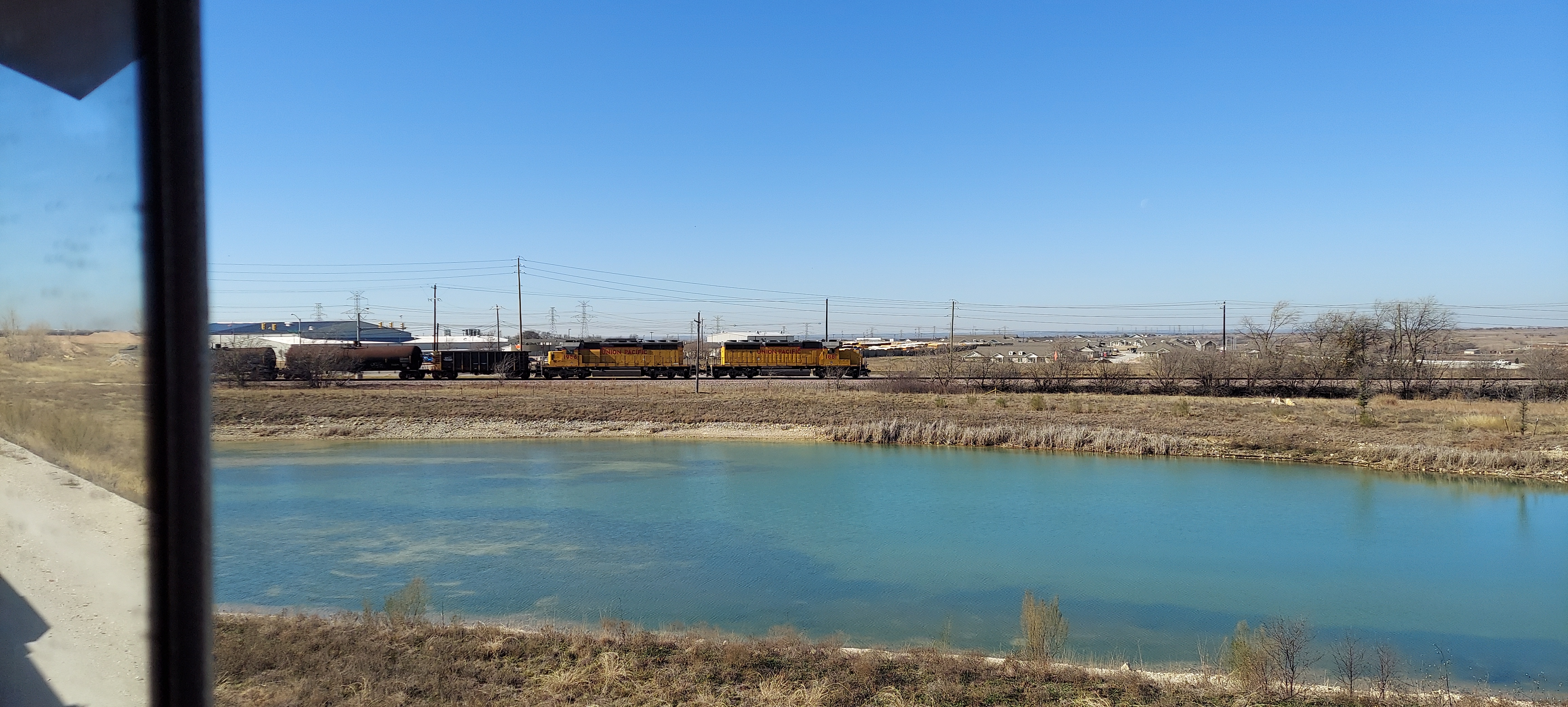
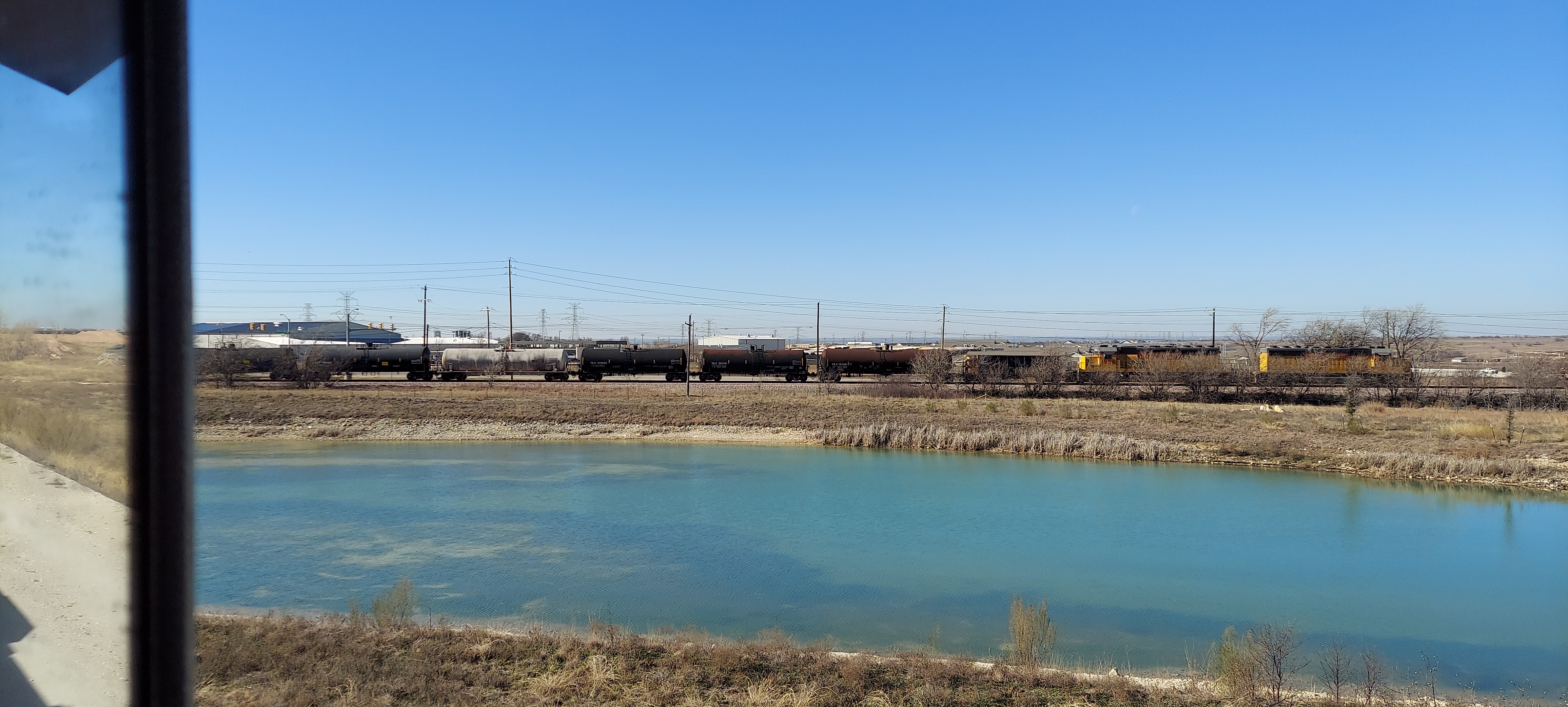
Here's that UP local hauling cars out to the Trinity tank facility from my vantage point at the Sunnyside sand plant:

original.jpg


original.jpg


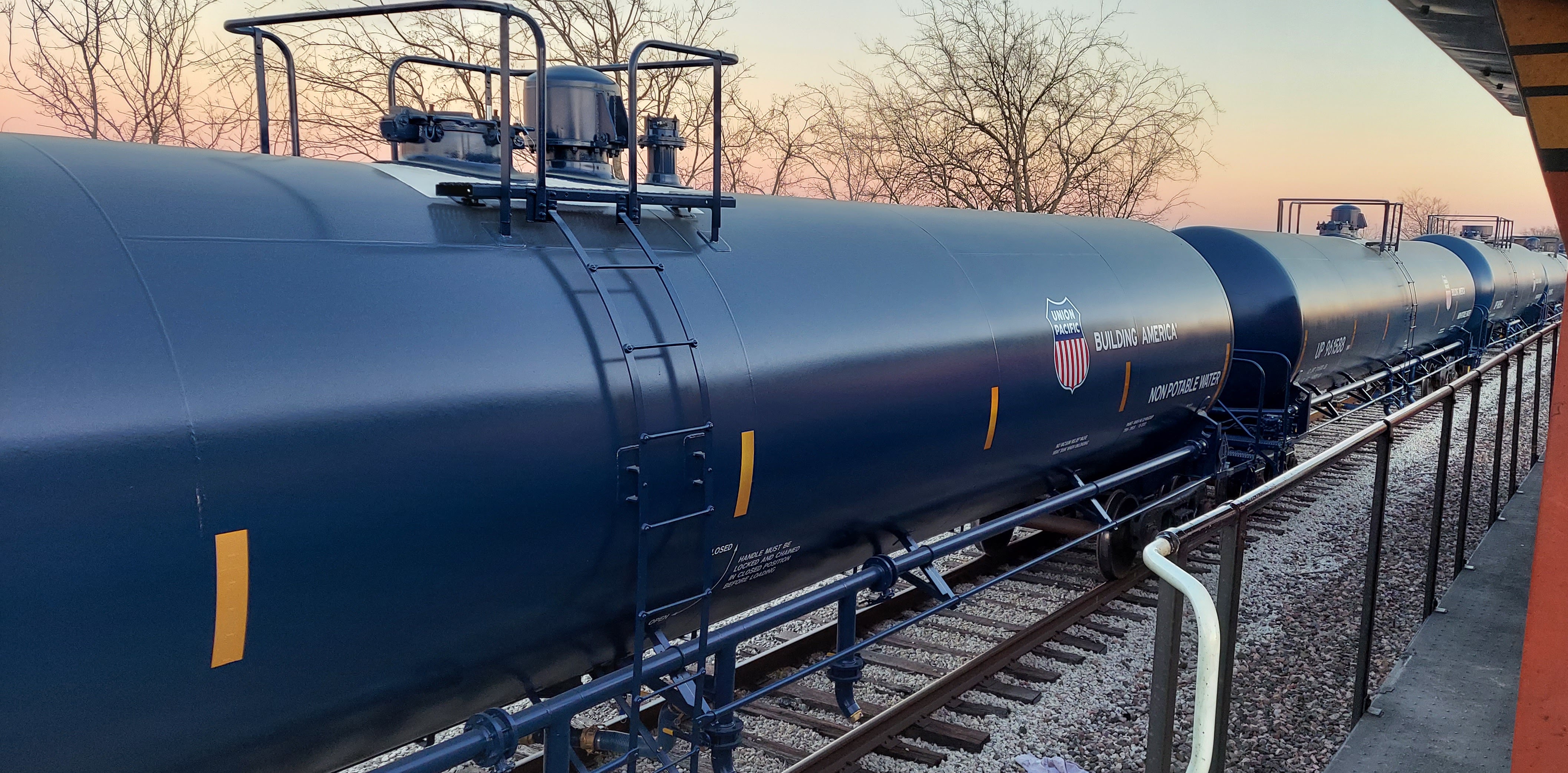
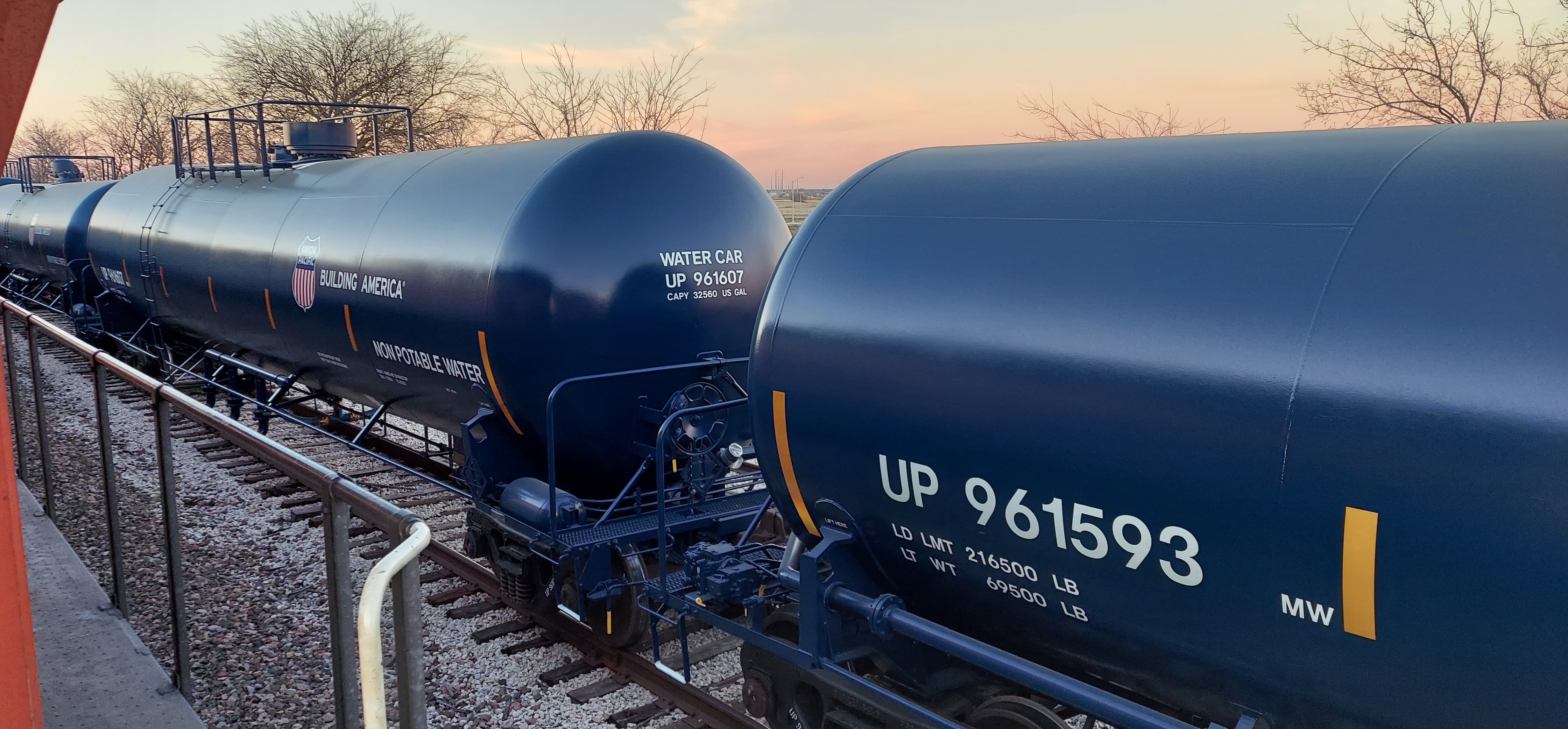
Later on I found myself waiting on Amtrak next to the Trinity spot and pull tracks where these strange and unfortunately spotless tank cars were tied down:

original.jpg


original.jpg


original.jpg


In the spirit of this thread I wish they had been dirty!

To that point I think you're onto something with the white. There is air in tank cars and as the temperature cools at night there is often a difference between the temperature of the air inside the tank and outside. This causes condensation to collect on the tank where the air is (this also happens on covered hoppers and you can see where the top of the load is in the car based on where the condensation ends). The condensation eventually runs down the side of the car leaving streaks. If you've ever done strenuous work outdoors in the summer you might have left salty sweat stains in your clothes as the moisture evaporates and the dissolved minerals remain. The same thing happens when the condensation evaporates on railcars. It shows up prominently on black cars like tanks and carbon black cars. Over enough time the process wears away the paint and rust forms. I would say to keep that in mind if you want to do the makeup sponge rust technique. It will guide your placement of the rust. I would also point out that this is a process, so a car needs to have enough age for this process to result in rust. The load also informs how this process works since an ethanol load will retain heat much less than beef tallow or an elevated temperature load like asphalt or molten sulfur.
RCH,

yes in the spirit of the thread those should be dirty tank cars!!! But, being by the repair facility you are forgiven for not having Trinity arrange a parade of dirty cars for you before they get maintained and New paint added. Besides that silliness, THANK YOU for sharing. I appreciate the information about the condensation on the cars. I have seen quite a few pictures of cars built in the early 2000’s but the picture being shot in 2008 or 2009 with a sheen of rust and the whiteness on them. Never imagined it was partly from a normal process of the car. Thank you.


I posted this car on FAcebook.

All airbrush work

Fade was done with gray Arcylic as noted previously Sea gray 20% to 80% Isopropyl Alcohol (99% strength)

rust around the dome and ladders is a feel right mix of black, earth brown and 99% Isopropyl Alcohol

kick up is burnt umber 50/50 mix

wheels and wheelsets are straight Vallejo Air burnt umber held in a wheelset holder and sprayed axles, wheel faces and backside

underbody is sea gray mixed 60% paint and 40% Isopropyl Alcohol

View attachment 159853View attachment 159854View attachment 159855View attachment 159856View attachment 159857View attachment 159858View attachment 159859View attachment 159860

The car sold in the first hour

The second car I showed last week is on the bench and faded by airbrush using a mix of Tamiya white and a few drops of black thinned with Isopropyl Alcohol. The balance of the weathering will be Vallejo Air brushed on as washes.
I like this one! It looks very plausible. The biggest problem I run into with tank cars is making sure streaking doesn't look too much like brush strokes. I almost always have to go back over them with some thinner to tone them down. The airbrush solves that nicely. Next, since I have older tankers, I'm going to be adding chipping effects and rust spots. If you aren't familiar with them I always look at what the military modelers are doing. They take weathering to an insane level. I found this video on YouTube, and I'm going to try his methods on some of the black tank cars I have.
 
Tom- Nice job on the tank car, looks great.

RCH- Thanks for the info, that helps knowing which tank car condensate more than others.
Thank you Tom. I was very unsure about even posting the car for sale as I thought the whiteness of the car was too scrambled…I always feel weathering should flow top to bottom but I have a former Railroad guy who tells me no. The movement of the cars moves the wetness on the car sides all around. Dirt gets on that wetness and will dry and it’s not a straight flow down the car. Rust generally flows allow lines, line the body panels joints and I try to stick to that unless I have a picture proving differently
 
I like this one! It looks very plausible. The biggest problem I run into with tank cars is making sure streaking doesn't look too much like brush strokes. I almost always have to go back over them with some thinner to tone them down. The airbrush solves that nicely. Next, since I have older tankers, I'm going to be adding chipping effects and rust spots. If you aren't familiar with them I always look at what the military modelers are doing. They take weathering to an insane level. I found this video on YouTube, and I'm going to try his methods on some of the black tank cars I have.
Alan, thank you. I appreciate the comments.

I have not seen this video before and have added it to the collection to review today. The voice sounds familiar but definitely not his content. Thanks for sharing it.

My favorite military weathering modeler is Panzermeister36 who also does the occasional HO scale rail car. I know he has been mentioned in this thread before. I have been impressed for many years by the military You Tube scale model weathering content providers. Even many of the ones with terrible videios display awesome work.
 
Tom O - Thanks for your blessing to continue this discussion. RCH has been quite informative as he has been explaining some unknown stuff about the area that I railfaned in for over 40 years.

I worked alongside the Frisco main line less than a mile SW of Tower 77 and the triangle; although the tower was gone by the time I started working there. In the days before UP scooped up the MKT, and SSW, and BN absorbed SLSF, railfanning at the triangle was most interesting. Early on, congestion spilled over to the vehicle traffic on Belt Line Road and the I-35E frontage roads. That whole triangle actually occupied less than a whole acre, but it still exists. The Cotton Belt line east is now leased by DG&NE, and leads to the KCS yard in Wylie (among other places). The line west of I-35E is used by FWWR to reach Ft Worth. The MKT line was purchased by DART and mostly supplanted by their light rail, with the section north from Carrollton to Denton leased to DCTA commuter rail. Some of the old MKT line still exists to serve local rail customers. The Frisco line that ran alongside the business that I worked at is still a very busy line for BN and now BNSF headed to Whitesboro. I spent many hours staring out the windows watching traffic on that line. It was there that I first saw Frisco crews do a "flying switch" (many times) to service industries on the other side of the tracks. That ended in 1980 when BN took over.
Today, my primary area for watching is the Alliance to OKC stretch on the BNSF. I have probably seen you there unknowingly.
Willie, really no issue. While I generally don’t enjoy threads being derailed but RCH didn’t derail. If someone really derails one of my threads I will let them know by messaging on the forum mail. But, not needed on this one. I enjoy listening and reading from knowledgeable people.

As far as I am concerned he has enhanced the thread with his knowledge. I feel honored he tossed it in. As I mentioned previously I am intrigued by the area and even passing by on I35 takes me back to traveling the Chicago expressways back as a kid. Traveling to Michigan through Gary, Indiana always had my nose pressed up against the windows to look at all the steel industries back then. Those blazing furnaces I still can vividly picture. I sort of get that feeling going through StLouis with so many closed up plants along the Riverfront, traveling past the grain facilities in KC and just trying to figure out what tracks are below I35 in FW. Of course I love Google Earth and use it often in our travels and after.

RCH, thanks again. Get your information ready for when I start doing the 2 bay covered hoppers for sand that I have to do. I have a client who threatened me last year with 20 cars, that I had to say no to at the time. He wrote last week asking when he can send them.

I missed it until I noticed the pictures of those UP Water Cars were taken from the inside of a locomotive. Are you able to say who you work for?
 
Tom O - Thanks for your blessing to continue this discussion. RCH has been quite informative as he has been explaining some unknown stuff about the area that I railfaned in for over 40 years.

I worked alongside the Frisco main line less than a mile SW of Tower 77 and the triangle; although the tower was gone by the time I started working there. In the days before UP scooped up the MKT, and SSW, and BN absorbed SLSF, railfanning at the triangle was most interesting. Early on, congestion spilled over to the vehicle traffic on Belt Line Road and the I-35E frontage roads. That whole triangle actually occupied less than a whole acre, but it still exists. The Cotton Belt line east is now leased by DG&NE, and leads to the KCS yard in Wylie (among other places). The line west of I-35E is used by FWWR to reach Ft Worth. The MKT line was purchased by DART and mostly supplanted by their light rail, with the section north from Carrollton to Denton leased to DCTA commuter rail. Some of the old MKT line still exists to serve local rail customers. The Frisco line that ran alongside the business that I worked at is still a very busy line for BN and now BNSF headed to Whitesboro. I spent many hours staring out the windows watching traffic on that line. It was there that I first saw Frisco crews do a "flying switch" (many times) to service industries on the other side of the tracks. That ended in 1980 when BN took over.
Today, my primary area for watching is the Alliance to OKC stretch on the BNSF. I have probably seen you there unknowingly.

The construction of the DART Silver Line is well under way on the former Cotton Belt from DFW airport through Plano. I'm not sure what this means for the Fort Worth & Western or Dallas Garland and Northeastern. I live near the former Cotton Belt northeast of Fort Worth and I can't recall the last time I saw a freight train on the line since it's been rebuilt for the TexRail commuter cars.

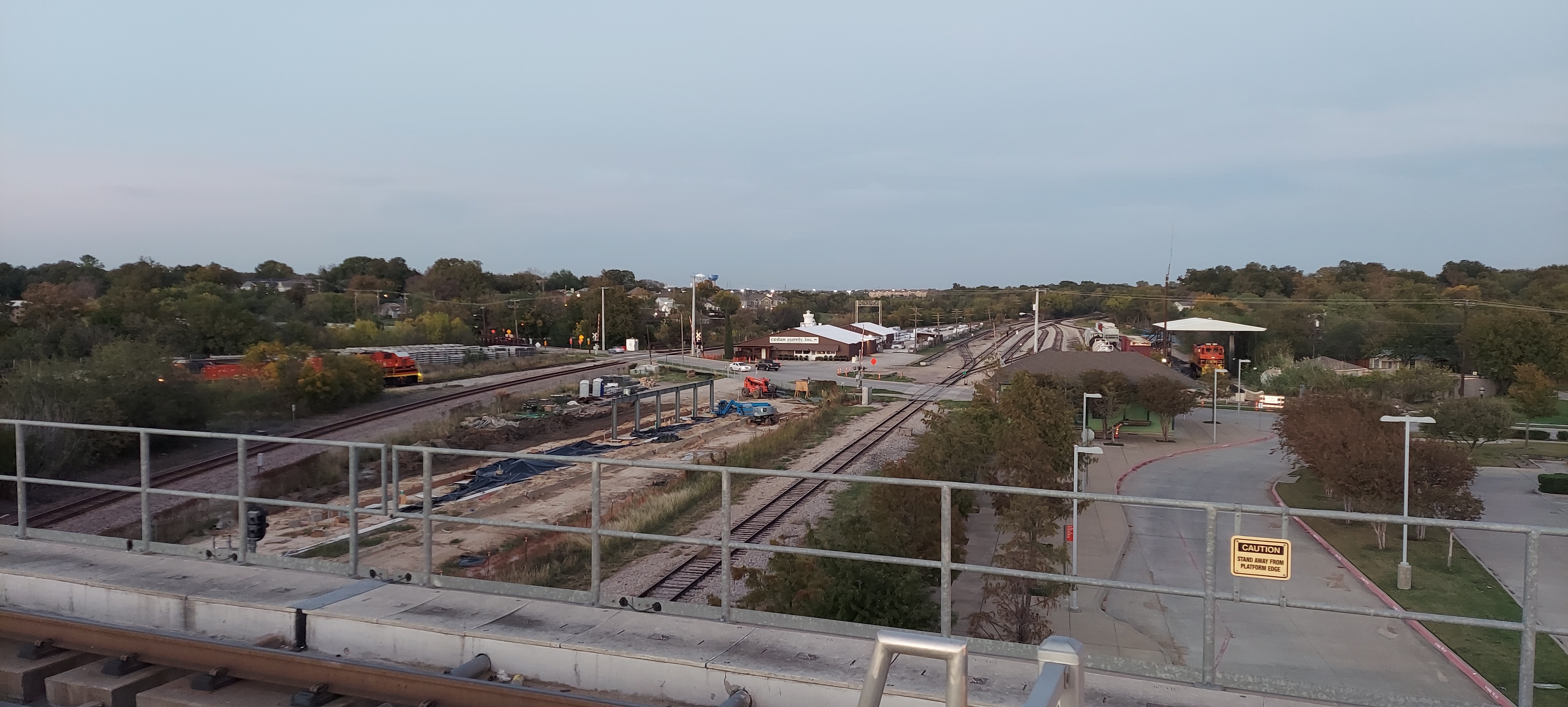
I took a trip out to Carrollton a few months ago and got these photos of the former Tower 77 area from the DART station platform. It gives a nice perch to view the area but it also obscures the view of the triangle. Looking east:

original.jpg


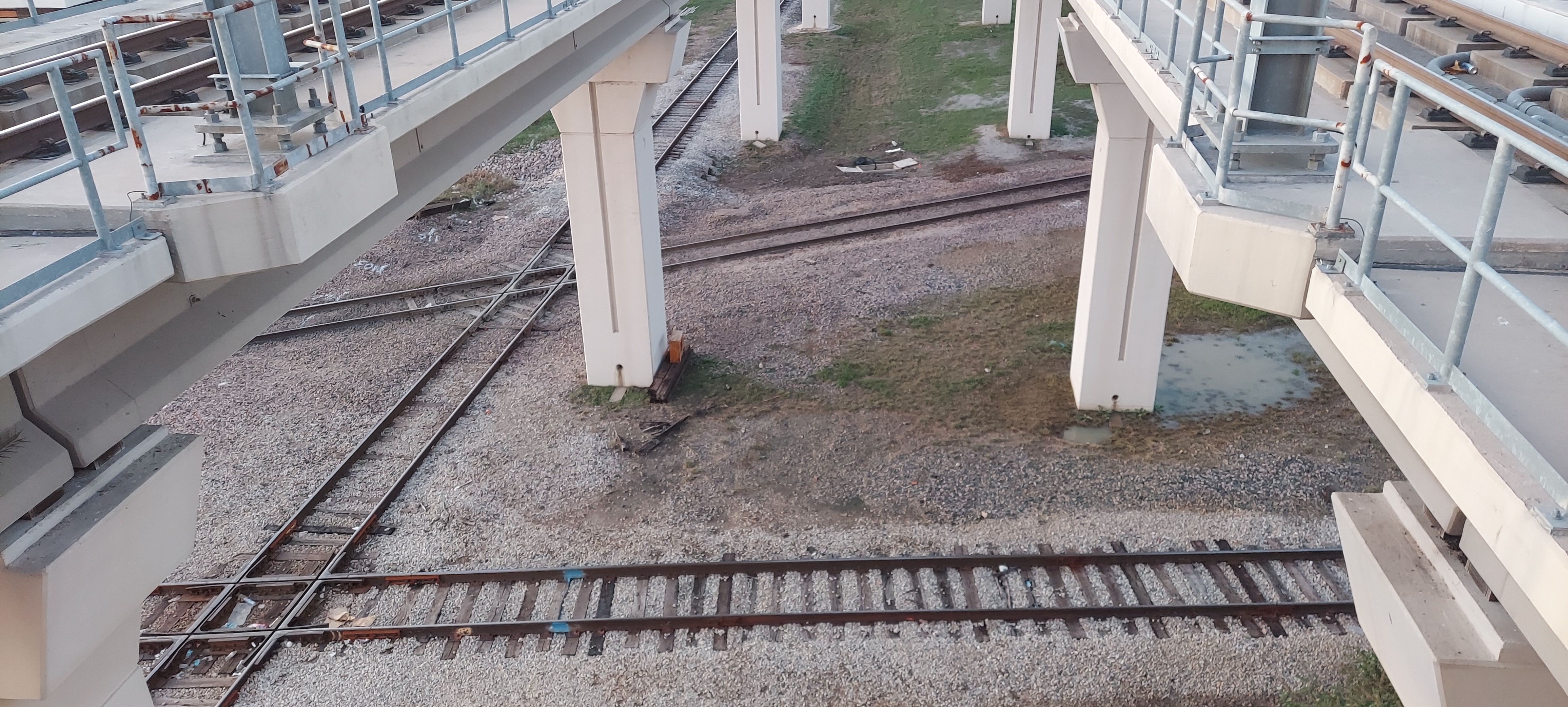
The triangle, with the former MKT from lower left to top center, BNSF/former Frisco from upper right to left middle and former Cotton Belt now DART Silver Line lower left to lower right:

original.jpg


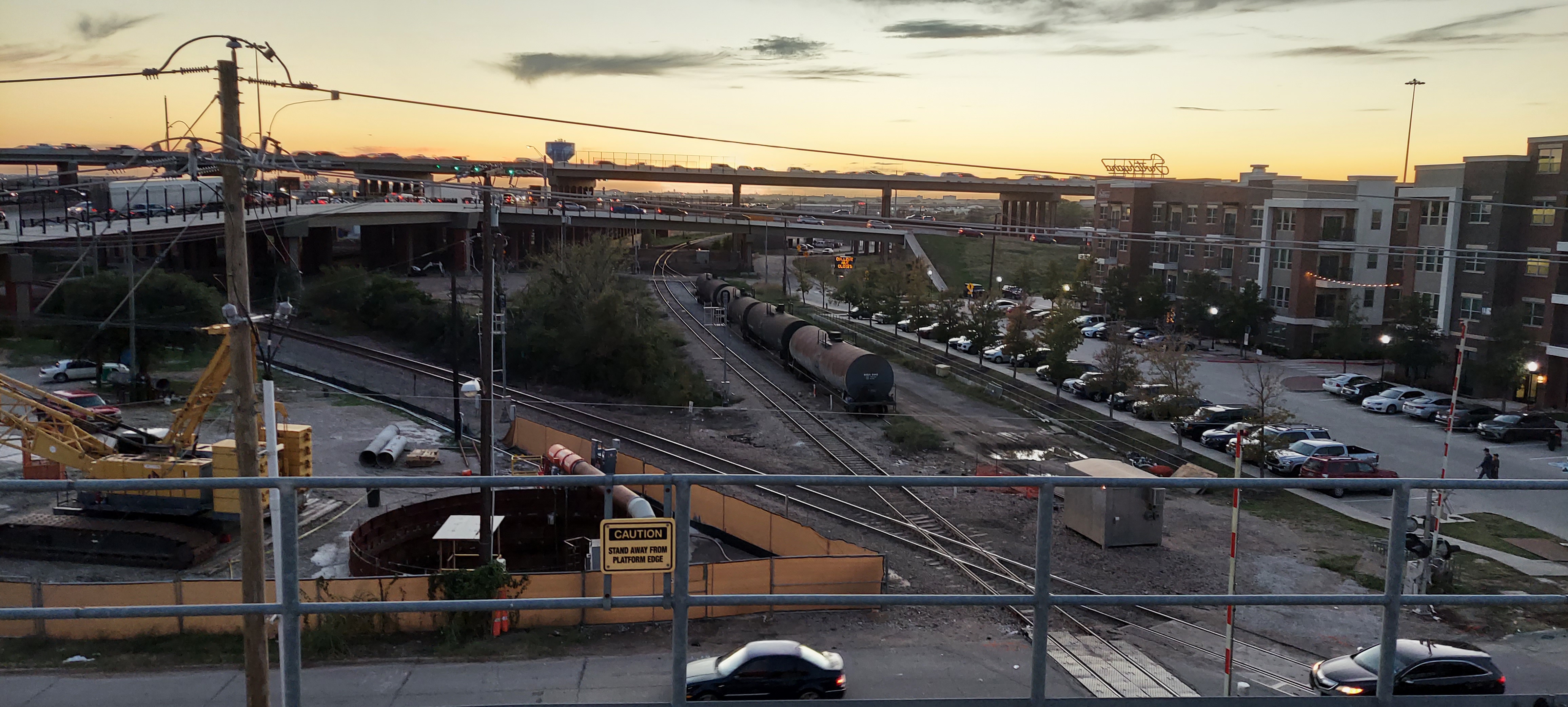
Looking west:

original.jpg


That tank closest to the camera shows the condensation rust I was talking about. That track is where you could find Southern Pacific and Cotton Belt locomotives idling away in the days before the UP merger. The multitude of flyover highways in this photo is fairly new. In the years Willie is talking about there was one bridge looking west -- I35E -- and the rest was surface streets. A fun place to take a heavy train!
 
Tank car #1 done. Earth tone airbrushed then some grimy black to tone it down some, it also gives the coupler a rusty/grim look.
The electrical cabinets are painted with Vallejo flat aluminum. First time using it and like it.View attachment 159886View attachment 159887View attachment 159888View attachment 159889

I love that flat aluminum!

Those Kadee shelf couplers are not a bad approximation of the SF couplers the prototype car has. SF couplers are huge compared to SE couplers, which are the standard double shelf couplers you see on tank cars today. SF couplers were used on tank cars built in the 70s. I can't give an exact date range but '72 to '78 inclusive and likely earlier up to 1970. I'm not sure when the change was made in 1979 but by 1980 SE couplers were standard. The draft gear for E and F couplers is completely different, so it's not a simple matter to swap out couplers on the real thing; however, E, SE, and SBE couplers are interchangeable with each other as are F and SF couplers, so you occasionally might see a car with mismatched couplers as long as they are both E or both F.

These cars have Sergent SE couplers:

original.jpg


And this one has Sergent SF couplers:

original.jpg


The construction of the DART Silver Line is well under way on the former Cotton Belt from DFW airport through Plano. I'm not sure what this means for the Fort Worth & Western or Dallas Garland and Northeastern. I live near the former Cotton Belt northeast of Fort Worth and I can't recall the last time I saw a freight train on the line since it's been rebuilt for the TexRail commuter cars.

I took a trip out to Carrollton a few months ago and got these photos of the former Tower 77 area from the DART station platform. It gives a nice perch to view the area but it also obscures the view of the triangle. Looking east:

original.jpg


The triangle, with the former MKT from lower left to top center, BNSF/former Frisco from upper right to left middle and former Cotton Belt now DART Silver Line lower left to lower right:

original.jpg


Looking west:

original.jpg


That tank closest to the camera shows the condensation rust I was talking about. That track is where you could find Southern Pacific and Cotton Belt locomotives idling away in the days before the UP merger. The multitude of flyover highways in this photo is fairly new. In the years Willie is talking about there was one bridge looking west -- I35E -- and the rest was surface streets. A fun place to take a heavy train!
We started driving i35 down to Austin as those miserable flyovers were being built. Sometimes it was easy travel but others we just sat. Now it’s a breeze traveling through. So this is a more normal view from what I see from the highway.

I do to get there and visit
 
Tank car #1 done. Earth tone airbrushed then some grimy black to tone it down some, it also gives the coupler a rusty/grim look.
The electrical cabinets are painted with Vallejo flat aluminum. First time using it and like it.View attachment 159886View attachment 159887View attachment 159888View attachment 159889
Nicely done Tom from NY State. He he!

Nice and subtle plus very convincing without all the hub bub of my car. Many ways to weather models that are convincing. Thanks for sharing.

The electrical cabinets are superb.
 
I love that flat aluminum!

Those Kadee shelf couplers are not a bad approximation of the SF couplers the prototype car has. SF couplers are huge compared to SE couplers, which are the standard double shelf couplers you see on tank cars today. SF couplers were used on tank cars built in the 70s. I can't give an exact date range but '72 to '78 inclusive and likely earlier up to 1970. I'm not sure when the change was made in 1979 but by 1980 SE couplers were standard. The draft gear for E and F couplers is completely different, so it's not a simple matter to swap out couplers on the real thing; however, E, SE, and SBE couplers are interchangeable with each other as are F and SF couplers, so you occasionally might see a car with mismatched couplers as long as they are both E or both F.

These cars have Sergent SE couplers:

original.jpg


And this one has Sergent SF couplers:

original.jpg
RCH. I guess you have reminded me to change the couplers on the tank cars I will keep for myself to the shelf type. I had looked into Sergant couplers but heard they were finicky to put together and install. The new open source type though I read are very easy retro fits. The ones you show look great.

Is that your weathering? Looks great

These are my next set of tankers to weather and they are for me, yes they are green
EFC7510E-D9AC-4C01-8972-528B6424A90D.jpeg
 
Sergent couplers are definitely not for the faint of heart! I don't know how the new couplers are from Innovative Models, but I might find out next week when I visit a friend who just got some.

I converted my fleet over in 2013 or so with a few bulk packs of couplers and lots of dummy couplers. Now the dummy couplers just stay on unit trains and the working Sergent couplers go on everything else.

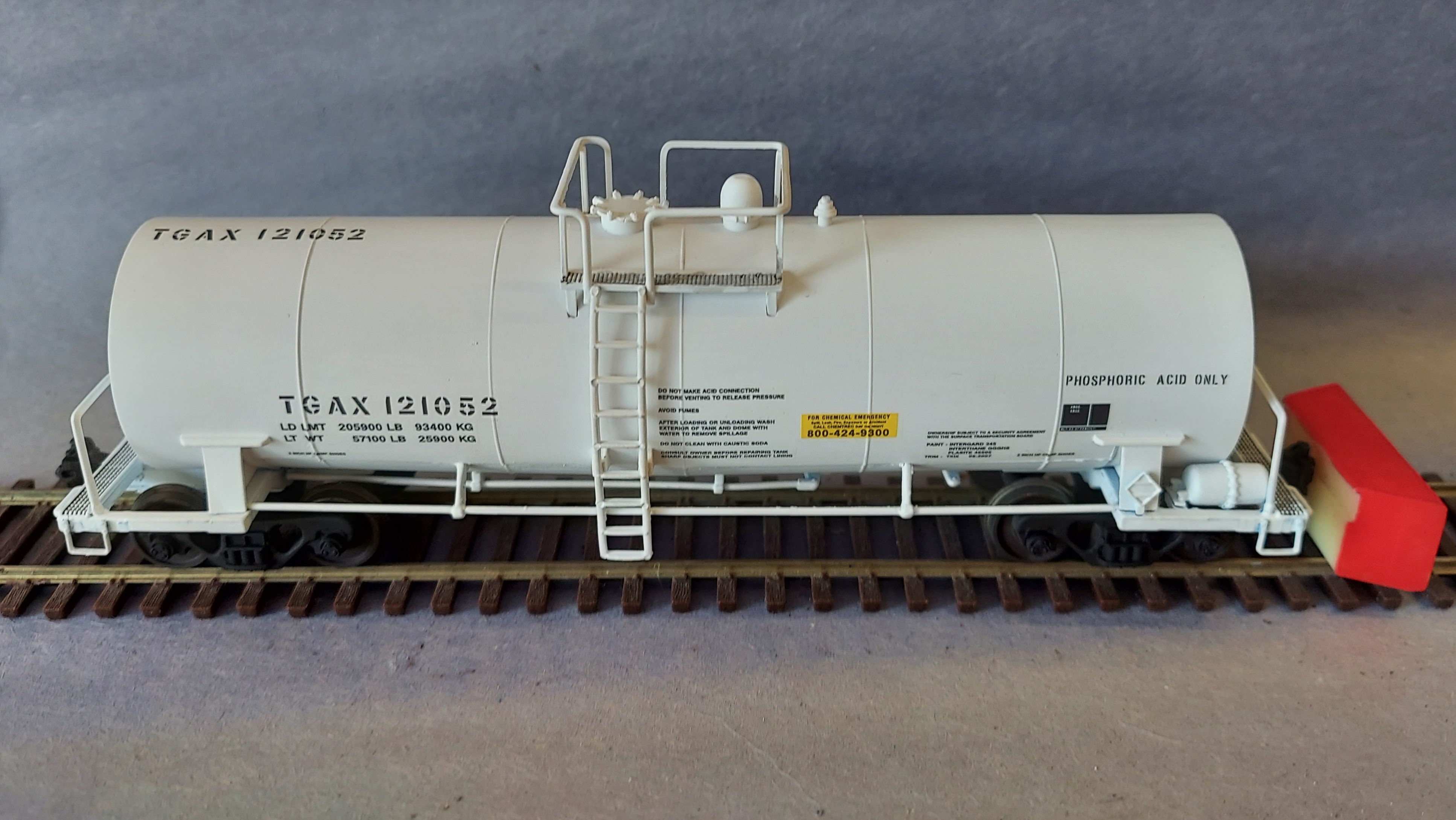
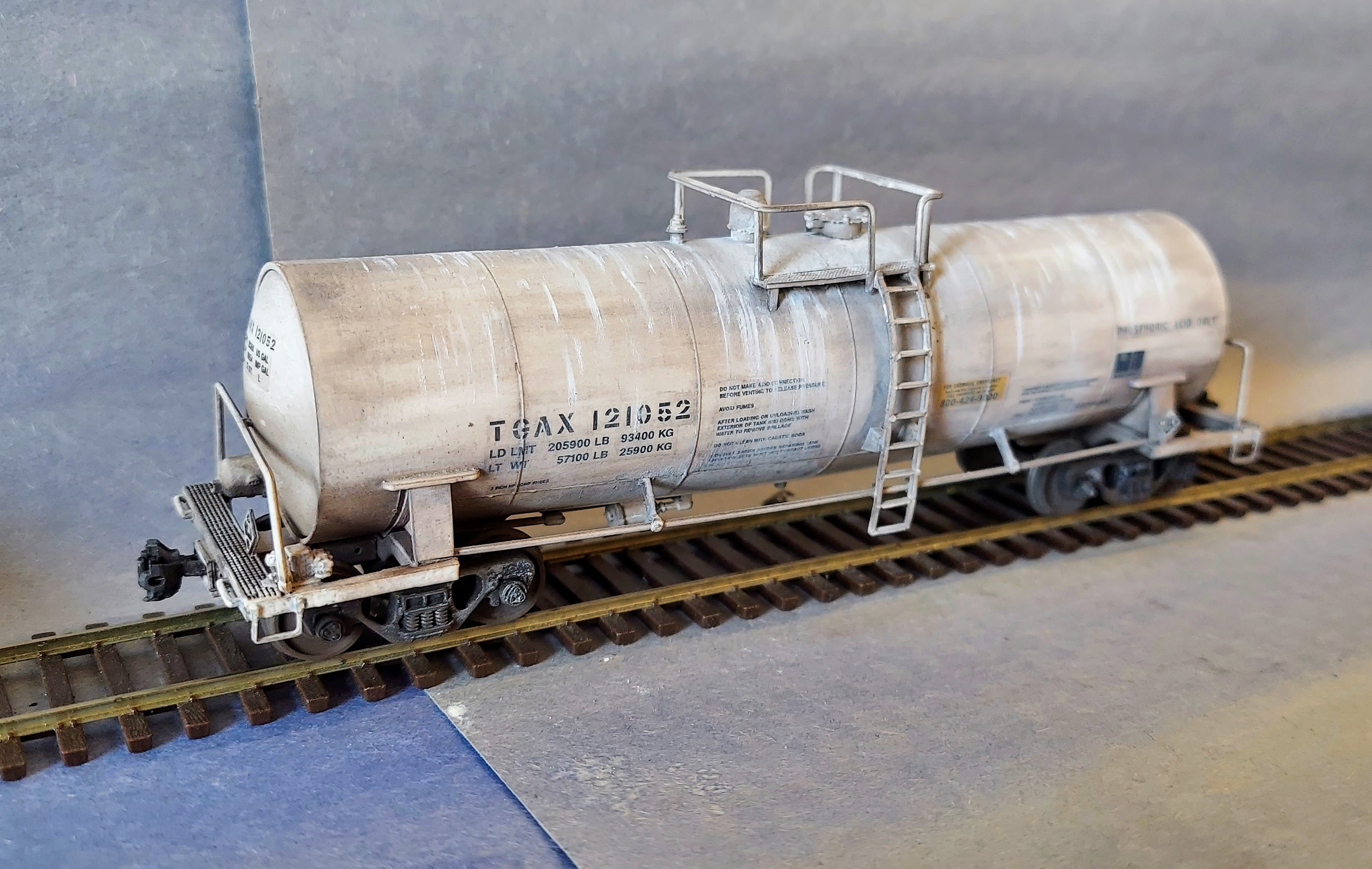
This is how that tank car started out:

original.jpg


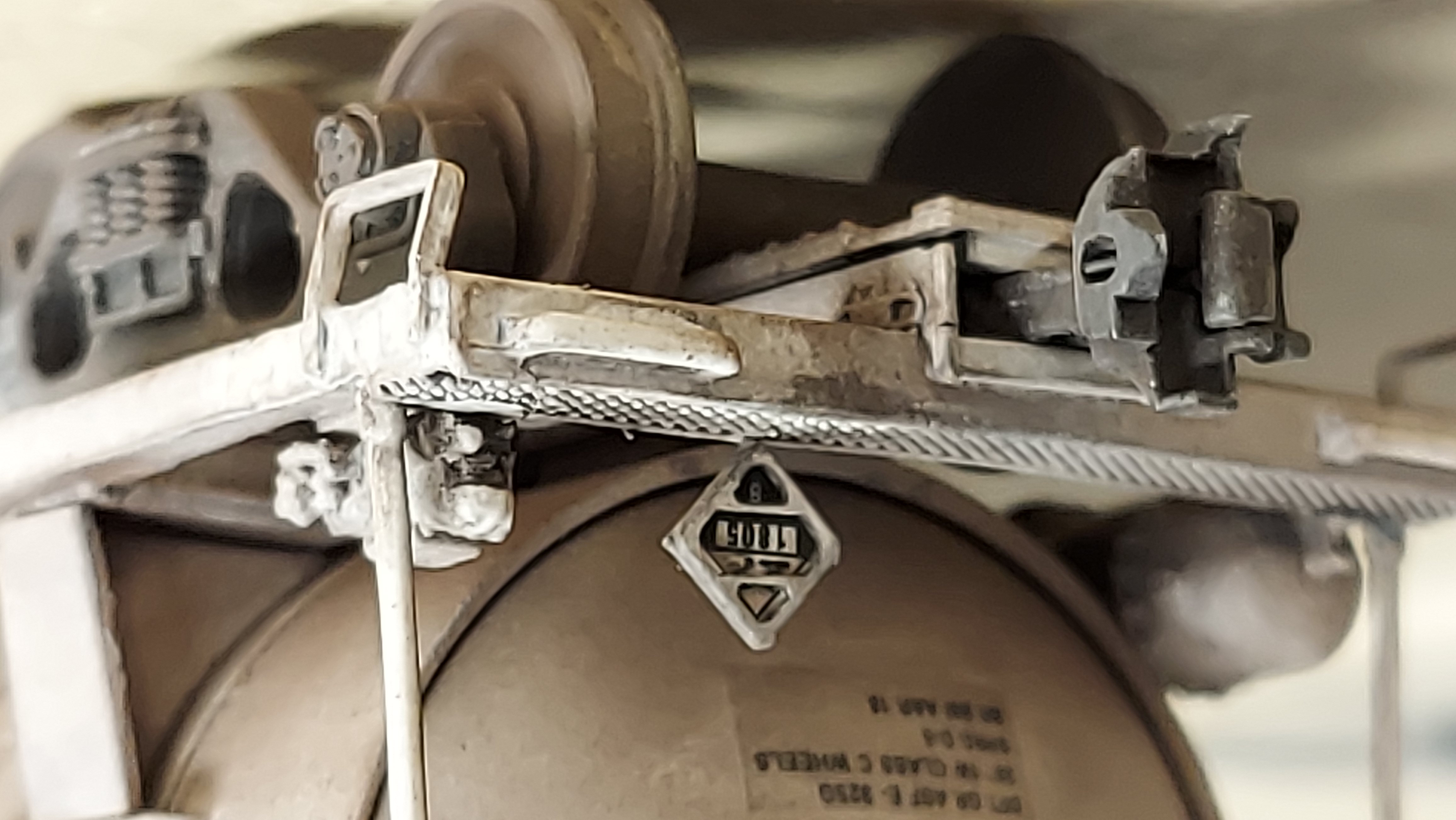
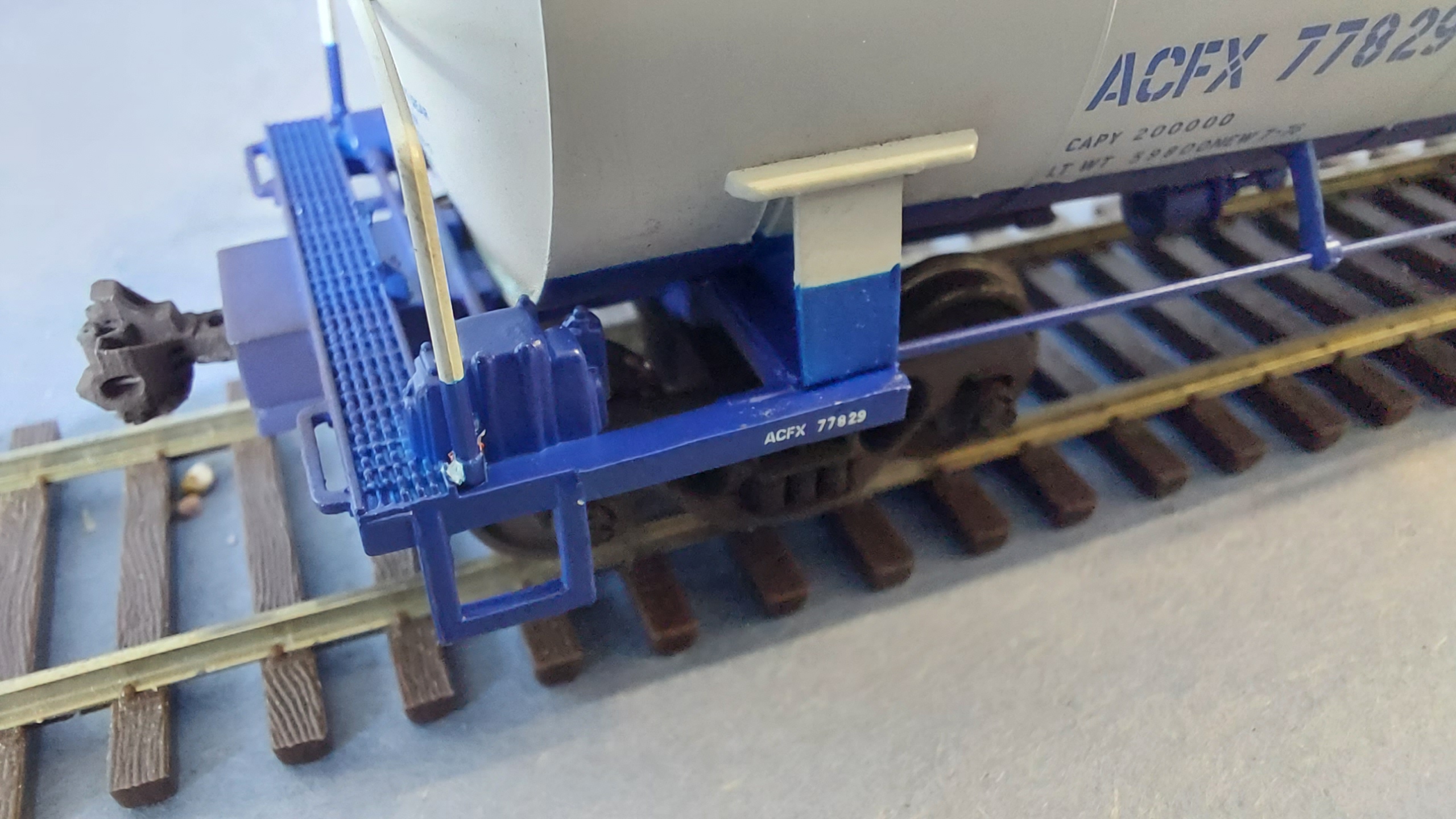
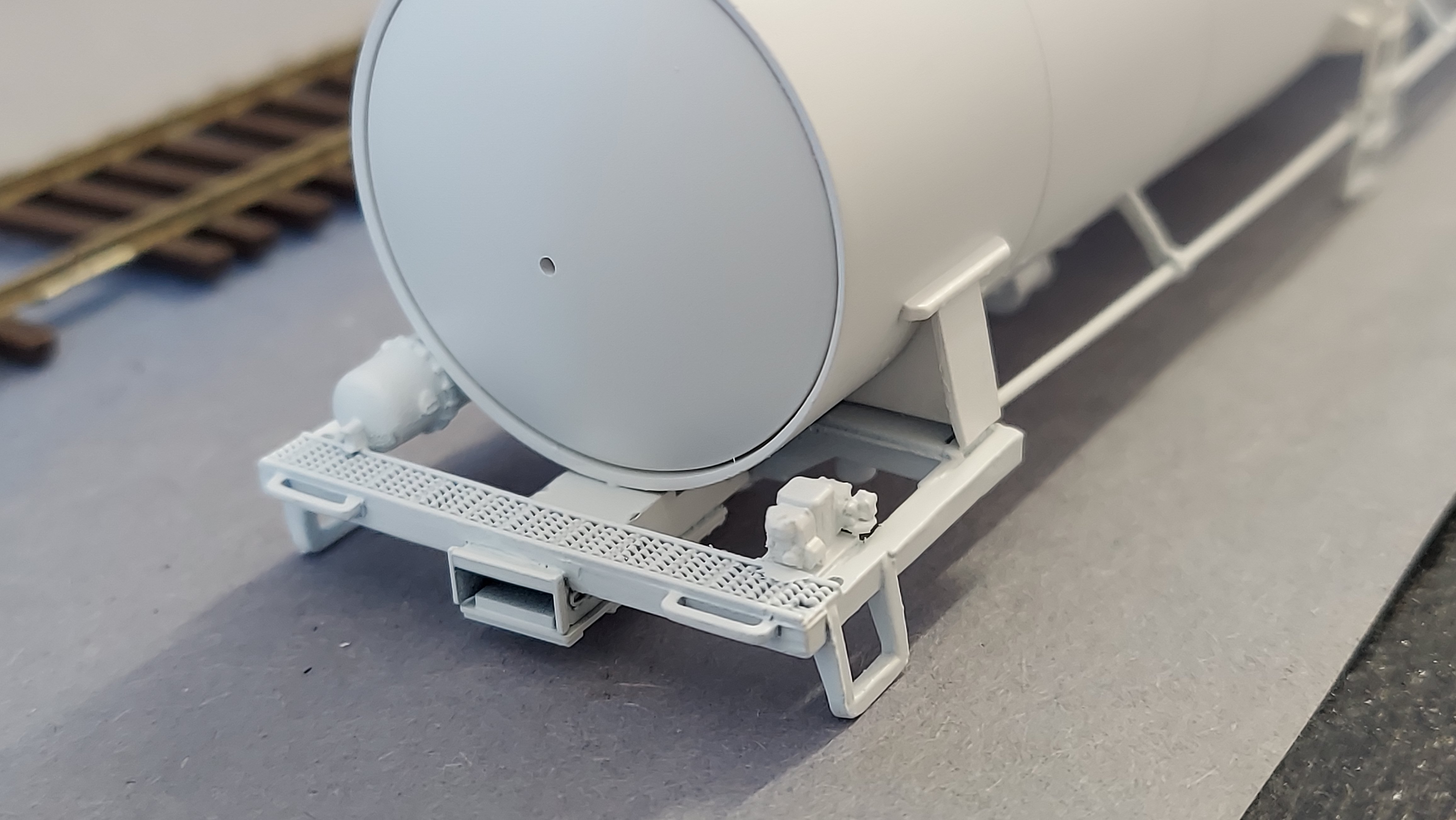
It is an Atlas clay slurry tank car which is a decent match for some phosphoric acid tank cars built around the same time. It has the signature ACF features of the time, which include a control valve and reservoir at the A end and the handbrake at the B end. Speaking of the control valve, I was not happy with it at all so I 3D printed a few ABDX valves through Shapeways and installed them on the three tank cars in my post above. This is a before photo of the control valve, which is really just a lump shaped like a control valve.

Here the car is stripped and repainted with a new control valve and reservoir:

original.jpg


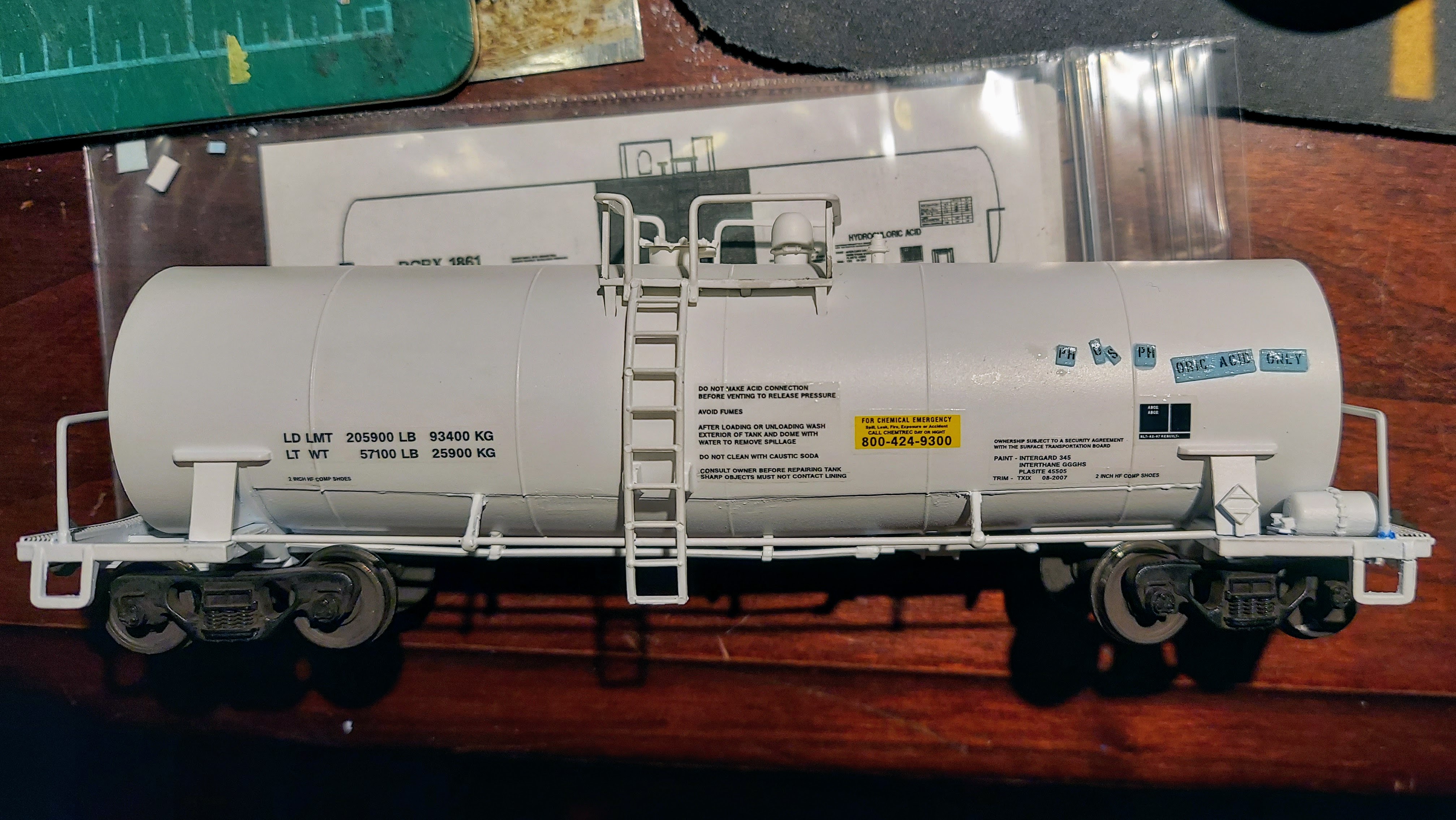
Now I'm adding decals and cobbling together "PHOSPHORIC ACID" from a couple other labels:

original.jpg


Decals are complete, I've replaced the stirrups and flowed some panel line accent into the crossover and manway platforms:

original.jpg


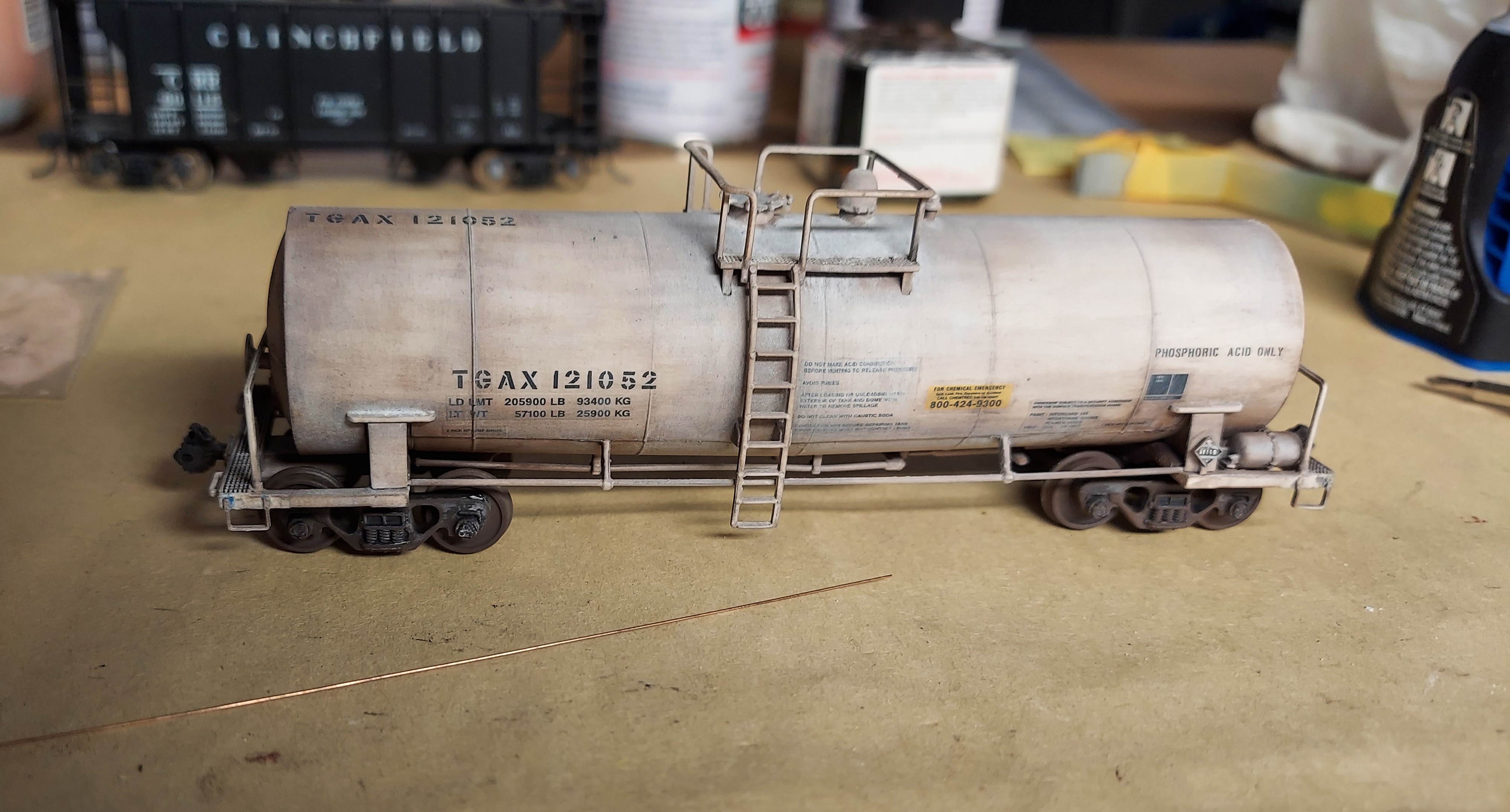
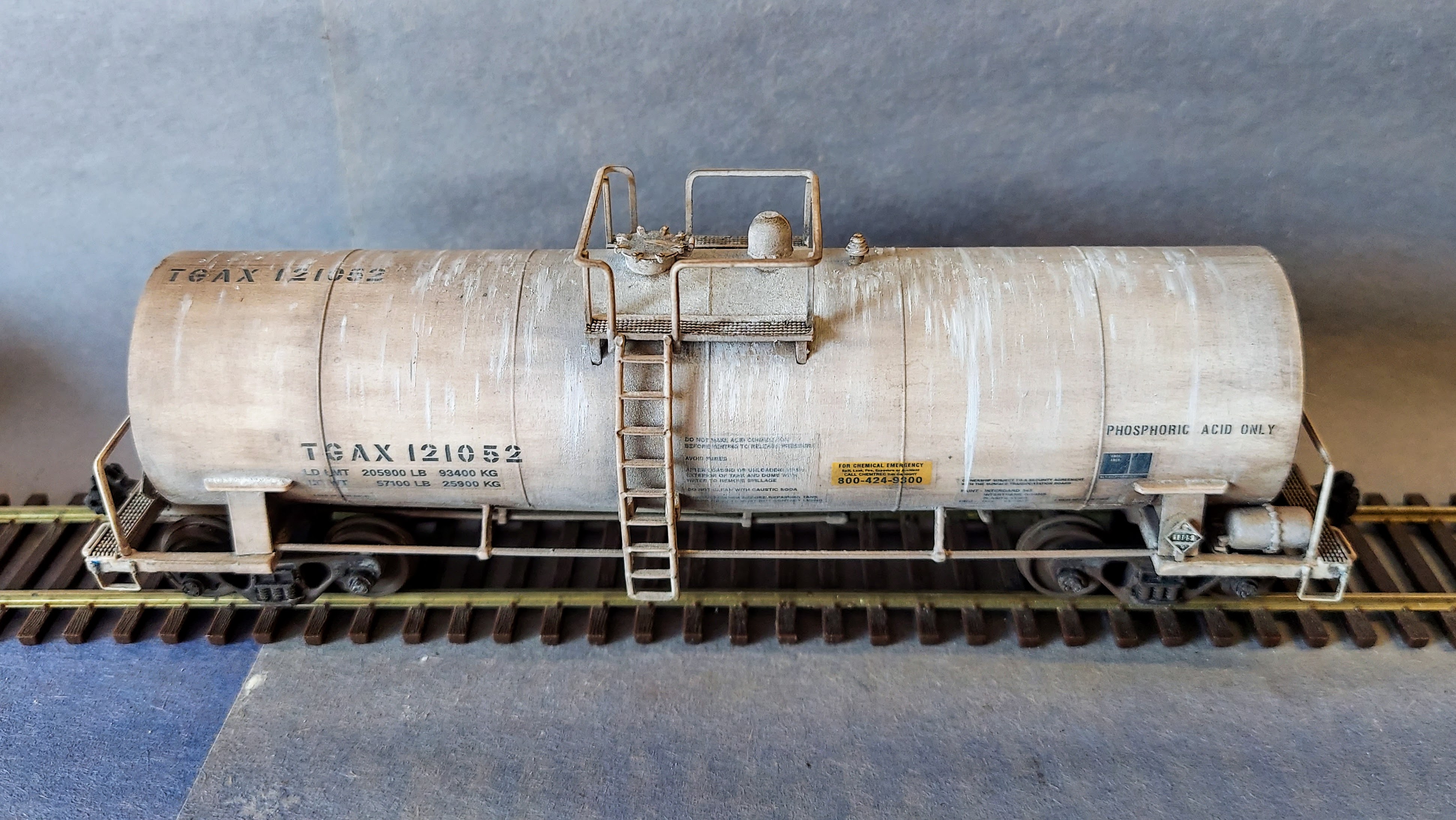
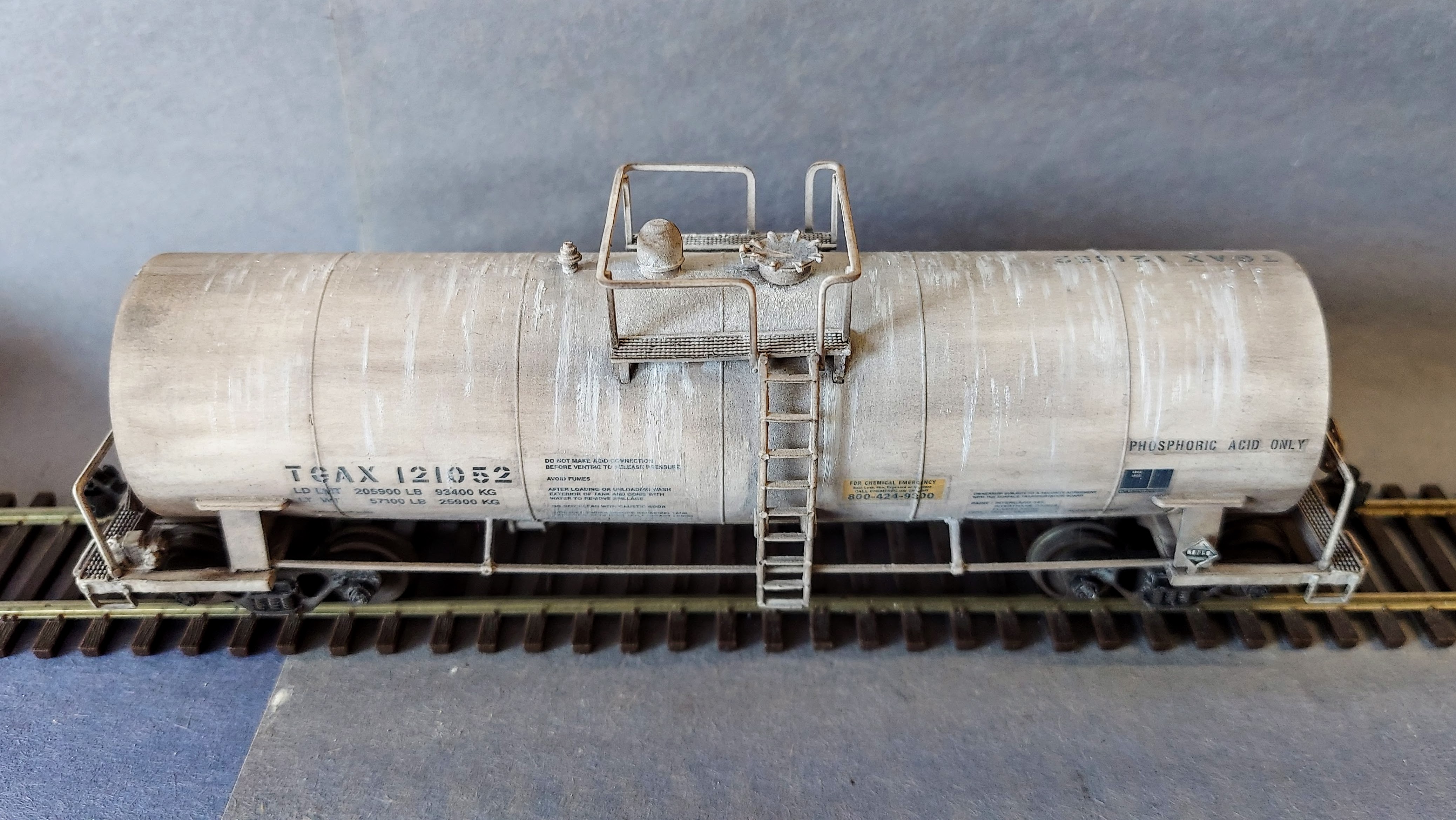
These phosphoric acid cars can get filthy, especially if they've been around for awhile, so I picked out some prototype photos and did some damage:

original.jpg


original.jpg


original.jpg


original.jpg


The area where we spot these cars has some caliche gravel driveways alongside and over the tracks so mud is always splashing up underneath as we switch the cars. I tried to get a little of that on the trucks.

From what I understand the molds for these cars have been damaged so Atlas is not likely to run them again. The last run was in 2003.

 
Sergent couplers are definitely not for the faint of heart! I don't know how the new couplers are from Innovative Models, but I might find out next week when I visit a friend who just got some.

I converted my fleet over in 2013 or so with a few bulk packs of couplers and lots of dummy couplers. Now the dummy couplers just stay on unit trains and the working Sergent couplers go on everything else.

This is how that tank car started out:

original.jpg


It is an Atlas clay slurry tank car which is a decent match for some phosphoric acid tank cars built around the same time. It has the signature ACF features of the time, which include a control valve and reservoir at the A end and the handbrake at the B end. Speaking of the control valve, I was not happy with it at all so I 3D printed a few ABDX valves through Shapeways and installed them on the three tank cars in my post above. This is a before photo of the control valve, which is really just a lump shaped like a control valve.

Here the car is stripped and repainted with a new control valve and reservoir:

original.jpg


Now I'm adding decals and cobbling together "PHOSPHORIC ACID" from a couple other labels:

original.jpg


Decals are complete, I've replaced the stirrups and flowed some panel line accent into the crossover and manway platforms:

original.jpg


These phosphoric acid cars can get filthy, especially if they've been around for awhile, so I picked out some prototype photos and did some damage:

original.jpg


original.jpg


original.jpg


original.jpg


The area where we spot these cars has some caliche gravel driveways alongside and over the tracks so mud is always splashing up underneath as we switch the cars. I tried to get a little of that on the trucks.

From what I understand the molds for these cars have been damaged so Atlas is not likely to run them again. The last run was in 2003.
Thank you for showing these. I just got 1 of 3 Genesis slurry cars in from the LHS. The last of the rolling stock I need for the paper mill. I will wait for all 3 to get here before weathering.

Interesting that slurry Atlas cars are a good match for the acid car you want.
 
Interesting that slurry Atlas cars are a good match for the acid car you want.
Well they aren't exact. Modeling tank cars of a certain era you have to take what you can get. They are outwardly similar in length, barrel diameter, fittings, saddles and brake arrangement. That checks a lot of boxes for me!

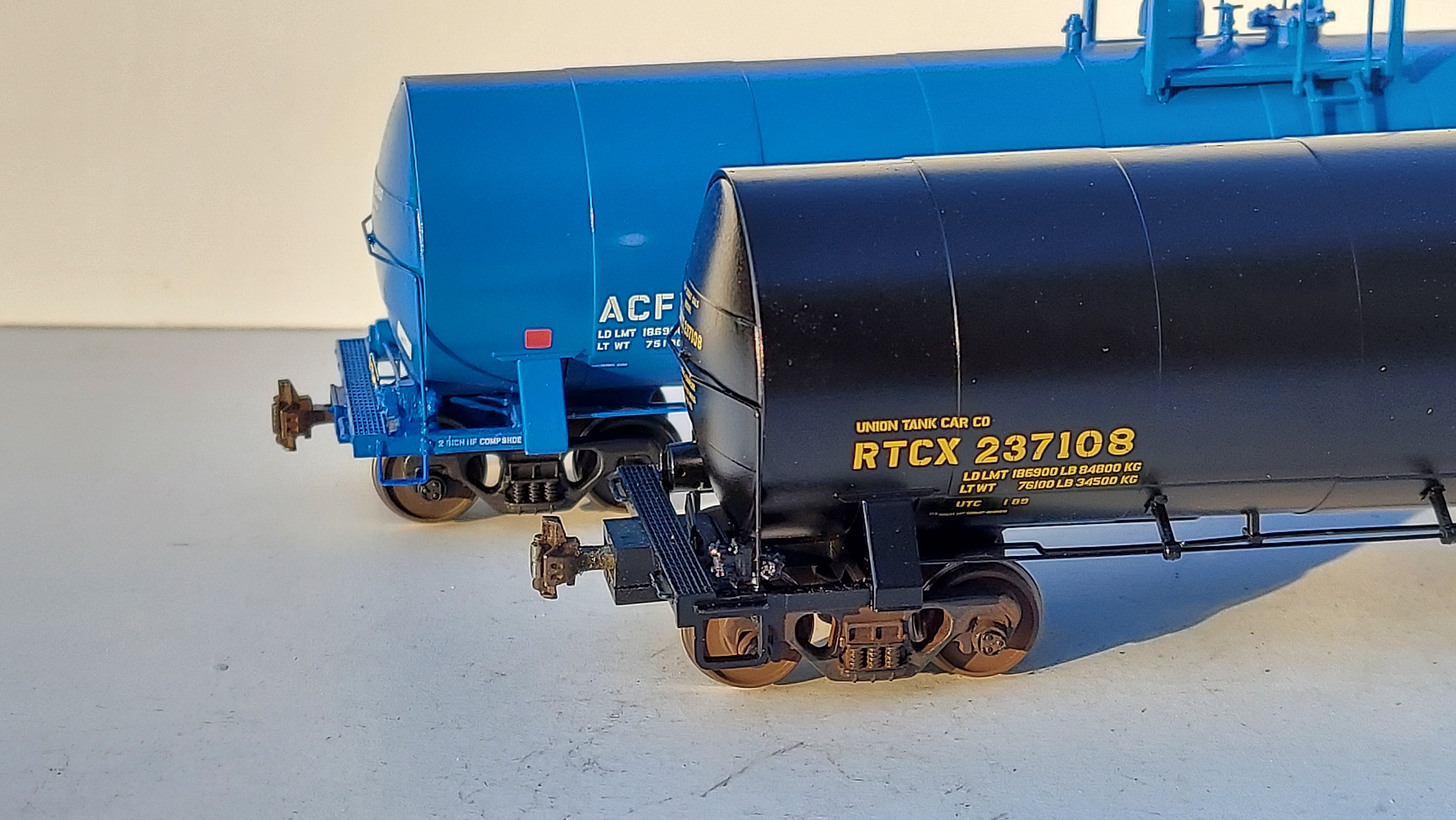
You can see differences between the clay slurry car and the phosphoric acid car looking at these two photos:


We also spot a customer who gets kaolin slurry so I might need to grab another one of these or if the Athearn car works for me one of those.


Status
Not open for further replies.


Affiliate Disclosure: We may receive a commision from some of the links and ads shown on this website (Learn More Here)

Back
Top