Weathering Rolling Stock, a Continous thread

ModelRailroadForums.com is a free Model Railroad Discussion Forum and photo gallery. We cover all scales and sizes of model railroads. Online since 2002, it's one of the oldest and largest model railroad forums on the web. Whether you're a master model railroader or just getting started, you'll find something of interest here.


Status
Not open for further replies.
Strange you weathering tankers, saw these and thought "I wonder what TLOC and Espeefan would do with these"

I model 2015 and these cars may not have reached my time frame. But if they had, a hard fade on the tank where the rust wasn’t. Add in some rust pits on the ends and heavily weathered truck frames and wheels. I would need to see some pictures to determine the weathering on the underbody. I have never seen these in real life but these cars have always intrigued me but not enough to buy a set.

photo credit on the photo. Photo date is 1989 from railcarphotos.com
79FD0A35-A2CF-4461-A80B-DD8CD4CD1256.jpeg
2013 photo date
305E73EF-97ED-47B5-9F3C-074F94A384F8.jpeg
I am unable to quickly locate a photo with the script that Athearn put on their models

It would be a fun one to do.


That's the place! Sometimes I go that way to work but there's not a good place to stop and take photos when I do see something.

That place used to be a contract shop and not actually part of Trinity. It was a much smaller operation then.

The two main tracks on the right side of the aerial are the UP Duncan Sub (former Oklahoma Kansas Texas main, nee Rock Island) on the left closest to the highway and serving the Trinity facility, and the BNSF Wichita Falls Sub (former FW&D main) to the right. Another Trinity plant is served by BNSF a couple miles to the south of this location.
 
That's the place! Sometimes I go that way to work but there's not a good place to stop and take photos when I do see something.

That place used to be a contract shop and not actually part of Trinity. It was a much smaller operation then.

The two main tracks on the right side of the aerial are the UP Duncan Sub (former Oklahoma Kansas Texas main, nee Rock Island) on the left closest to the highway and serving the Trinity facility, and the BNSF Wichita Falls Sub (former FW&D main) to the right. Another Trinity plant is served by BNSF a couple miles to the south of this location.
I knew there was another plant in the area. Before I retired I thought of doing a repair facility for tank cars and covered hoppers. I found these 2 plants near Fort Worth. The area from here south and east to I35 would make for some great modern model railroading, especially the big locomotive plant. But the interest stuff to me was inside those structures.
F74EB007-B430-40B5-B3CE-A41338EF7322.png
 
There are some other facilities in the area that would make a good industry to model. If you go south on I35W at the SE intersection of NE 28th Street and 35W was a plant on a triangular shaped plot of land next to the old joint T&P/MKT line between Fort Worth and Whitesboro (now the UP Choctaw Sub Main 2). This plant constructed many types of cars over the years but I remember seeing covered hoppers more often than not. An old coworker of mine worked here painting railcars before we worked together.

original.jpg


If you go west along NE 28th Street from here at the point where you've crossed under the Fort Worth & Western and UP Choctaw Sub Main 1 (former FW&D main) but before you reach the UP Duncan Sub (former OKKT nee Rock Island) and BNSF Fort Worth Sub main (former Santa Fe) there is another triangular plot of land south of the street where tank bodies were constructed (and might still be). As far back as I can remember these bodies would be loaded on Trinity's flatbed trailers and hauled by their distinctive mint green Freightliner cabovers north to the Saginaw plant you showed above for assembly into finished cars.

original.jpg


Another Trinity plant that was a bustling place in the past but seems to be a ghost town now is their Irving Blvd. facility in Dallas just south of Mockingbird Yard. It's on a rectangular plot of land in the center of this image and a spur connects it to the yard lead at the NW corner of the property:

original.jpg


I don't know how other railcar manufacturers did things, but Trinity seemed to be very decentralized. There were always trucks moving around town with steel shapes, wheels, trucks, tank ends and other components delivering subassemblies from one plant to another. Even if you couldn't recognize the component it was hard to miss their trucks.

I don't think it would take much to model one of these facilities. You could leave the large structures off the edge of the layout or just imply them with background flat versions and keep the spur track and storage tracks leading to the main. At the edge of the facility along the fence you could line up trucks, wheels, and steel shapes. Of course you'll need some flatbed and lowboy trailers to fill in some of the space, and maybe an overhead crane on the spur track for unloading large components like the zoomed in version of the Irving Blvd plant seen here:

original.jpg
 
There are some other facilities in the area that would make a good industry to model. If you go south on I35W at the SE intersection of NE 28th Street and 35W was a plant on a triangular shaped plot of land next to the old joint T&P/MKT line between Fort Worth and Whitesboro (now the UP Choctaw Sub Main 2). This plant constructed many types of cars over the years but I remember seeing covered hoppers more often than not. An old coworker of mine worked here painting railcars before we worked together.

original.jpg


If you go west along NE 28th Street from here at the point where you've crossed under the Fort Worth & Western and UP Choctaw Sub Main 1 (former FW&D main) but before you reach the UP Duncan Sub (former OKKT nee Rock Island) and BNSF Fort Worth Sub main (former Santa Fe) there is another triangular plot of land south of the street where tank bodies were constructed (and might still be). As far back as I can remember these bodies would be loaded on Trinity's flatbed trailers and hauled by their distinctive mint green Freightliner cabovers north to the Saginaw plant you showed above for assembly into finished cars.

original.jpg


Another Trinity plant that was a bustling place in the past but seems to be a ghost town now is their Irving Blvd. facility in Dallas just south of Mockingbird Yard. It's on a rectangular plot of land in the center of this image and a spur connects it to the yard lead at the NW corner of the property:

original.jpg


I don't know how other railcar manufacturers did things, but Trinity seemed to be very decentralized. There were always trucks moving around town with steel shapes, wheels, trucks, tank ends and other components delivering subassemblies from one plant to another. Even if you couldn't recognize the component it was hard to miss their trucks.

I don't think it would take much to model one of these facilities. You could leave the large structures off the edge of the layout or just imply them with background flat versions and keep the spur track and storage tracks leading to the main. At the edge of the facility along the fence you could line up trucks, wheels, and steel shapes. Of course you'll need some flatbed and lowboy trailers to fill in some of the space, and maybe an overhead crane on the spur track for unloading large components like the zoomed in version of the Irving Blvd plant seen here:

original.jpg
I love big Manufacturing facilities. FW has lots of good examples and when we drive through it seems to mostly Terry driving to Waco before we switch. Looking out the window has been interesting to say the least.. Much more modern then driving through St. Louis that because of its aging and closed factories has more character. For detail freaks, those last couple of the manufacturing yards will have them drooling

thanks for sharing
 
Back to weathering tank cars. I had to strip down the car to remove the the fibers that became stuck because of my inattentiveness.

I hit this morning with a fade of 80% Isopropyl Alcohol and 20% sea gray from Tamiya. Lightly sprayed trying to use the airbrush to show the weathering lines. I used a smaller needle in a Badger Chrome at 16PSI.
214630C6-6DCB-4E0B-895B-FE825083F302.jpeg
B61ED63B-6049-4708-8073-AAFC6A751070.jpeg
9080775B-7400-44F1-80CF-DE8AE0EA2106.jpeg
27FDB710-E353-4145-9D3E-7EA9F977CB01.jpeg
B1BD7D54-0E8C-4EFF-AF43-4EAAAD17A368.jpeg
0D66CC1A-D556-4AFA-8399-BE0C2C9E86CA.jpeg
F93A435C-26D5-42BA-8FD9-DCDBA5B77661.jpeg
0FB764B3-5366-419F-A29A-FD17F4564D8F.jpeg


Let me know what you think. You know the rules!


FW has lots of good examples and when we drive through it seems to mostly Terry driving to Waco
The northern part of Ft Worth also seems to be endless railroad tracks. More so 35 years ago than now. I used to be able to see CRI&P (Rock Island), T&P, ATSF, SP, SSW (Cotton Belt), MP, FW&D, MKT (Katy), among others. I don't remember if UP was there, or just visiting on SP tracks. To this day, there are still over 100 trains a day that pass by Tower 55 near downtown.
 
Considering having 3 cats and a dog, I'm lucky it doesn't look like a hairy monster.

Tank car is coming along great.

I want to try Dan's method of applying rust with a makeup sponge to the top part of the tank. Gotta get some though.
I watched that video a few days after it came out. He sure has his ways to do things. His explanations and demonstrations are excellent. I have communicated a few times with him via texts before Christmas as he offered advice, tips and specific materials as I learn to create graffiti.

Thanks for sharing
 
The northern part of Ft Worth also seems to be endless railroad tracks. More so 35 years ago than now. I used to be able to see CRI&P (Rock Island), T&P, ATSF, SP, SSW (Cotton Belt), MP, FW&D, MKT (Katy), among others. I don't remember if UP was there, or just visiting on SP tracks. To this day, there are still over 100 trains a day that pass by Tower 55 near downtown.
I have a FB friend who has offered a few times to take me around Fort Worth specifically on the BNSF that he is a manager for.

Such an interesting Railroad town
 
The northern part of Ft Worth also seems to be endless railroad tracks. More so 35 years ago than now. I used to be able to see CRI&P (Rock Island), T&P, ATSF, SP, SSW (Cotton Belt), MP, FW&D, MKT (Katy), among others. I don't remember if UP was there, or just visiting on SP tracks. To this day, there are still over 100 trains a day that pass by Tower 55 near downtown.
Don't forget the Frisco! Their main line from Tulsa stopped in Carrollton where they picked up the Rock Island (now owned by DART) at Tower 77 to Irving. Originally the plan was to use the Cotton Belt from here into Fort Worth and they might have for a time. Fun fact: Frisco's telegraph lines actually did run along the Cotton Belt to Fort Worth.

From Tower 77 the Frisco ran across the Burlington-Rock Island to Fort Worth, then continued on the Rock Island north up to Tower 60 where the rail swept across the FW&D and Santa Fe then ran parallel to the Cotton Belt's old alignment into Buttermilk Flats (near the old steam generating station north of the courthouse). After the Cotton Belt curved away to the south the Frisco continued on southwesterly to their 8th Avenue Yard.

The last remains of the sweeping Frisco main line curving across the Santa Fe and FW&D mains is a spur to a recycling plant. The Cotton Belt relocated their terminal from Buttermilk Flats to the area just north of Tower 55 near where the large Ben E. Keith distribution facility is located today. Their alignment from Hodge Yard curved into and shared the FW&D main across the Trinity River. From there a switch comes off the FW&D main and a track called the Gauntlet continues down to Tower 55. This was a hand-throw switch until UP and BNSF reconstructed the Tower 55 area in 2015 and now it is CTC.

Although the FW&D main from Hodge Curve at the south end of North Yard is now used and controlled by UP, BNSF still switches those legacy industries on the line and uses the same to interchange cars with the UP at Davidson Yard west of Fort Worth. As a brand new switchman I was force-assigned to that industry job since with all the other railroads you had to deal with it was an easy way to get fired. It was an easy jump to the interchange job with the UP which I'd work when my seniority would allow. Learning that territory and the other railroad's rules ended up being very helpful later on when I became an engineer.

I could talk about this stuff all day, so please forgive my indulgence and continue with the weathering! Fort Worth is chock full of cool industries, more so in the past, but they can still be found with a little digging.
 
The northern part of Ft Worth also seems to be endless railroad tracks. More so 35 years ago than now. I used to be able to see CRI&P (Rock Island), T&P, ATSF, SP, SSW (Cotton Belt), MP, FW&D, MKT (Katy), among others. I don't remember if UP was there, or just visiting on SP tracks. To this day, there are still over 100 trains a day that pass by Tower 55 near downtown.
I have a FB friend who has offered a few times to take me around Fort Worth specifically on the BNSF that he is a manager for.

Such an interesting Railroad town
Don't forget the Frisco! Their main line from Tulsa stopped in Carrollton where they picked up the Rock Island (now owned by DART) at Tower 77 to Irving. Originally the plan was to use the Cotton Belt from here into Fort Worth and they might have for a time. Fun fact: Frisco's telegraph lines actually did run along the Cotton Belt to Fort Worth.

From Tower 77 the Frisco ran across the Burlington-Rock Island to Fort Worth, then continued on the Rock Island north up to Tower 60 where the rail swept across the FW&D and Santa Fe then ran parallel to the Cotton Belt's old alignment into Buttermilk Flats (near the old steam generating station north of the courthouse). After the Cotton Belt curved away to the south the Frisco continued on southwesterly to their 8th Avenue Yard.

The last remains of the sweeping Frisco main line curving across the Santa Fe and FW&D mains is a spur to a recycling plant. The Cotton Belt relocated their terminal from Buttermilk Flats to the area just north of Tower 55 near where the large Ben E. Keith distribution facility is located today. Their alignment from Hodge Yard curved into and shared the FW&D main across the Trinity River. From there a switch comes off the FW&D main and a track called the Gauntlet continues down to Tower 55. This was a hand-throw switch until UP and BNSF reconstructed the Tower 55 area in 2015 and now it is CTC.

Although the FW&D main from Hodge Curve at the south end of North Yard is now used and controlled by UP, BNSF still switches those legacy industries on the line and uses the same to interchange cars with the UP at Davidson Yard west of Fort Worth. As a brand new switchman I was force-assigned to that industry job since with all the other railroads you had to deal with it was an easy way to get fired. It was an easy jump to the interchange job with the UP which I'd work when my seniority would allow. Learning that territory and the other railroad's rules ended up being very helpful later on when I became an engineer.

I could talk about this stuff all day, so please forgive my indulgence and continue with the weathering! Fort Worth is chock full of cool industries, more so in the past, but they can still be found with a little digging.
RCH, it’s my thread. No problem with this discussion on FW trains past or present. Continue on…
 
Last edited:
I posted this car on FAcebook.

All airbrush work

Fade was done with gray Arcylic as noted previously Sea gray 20% to 80% Isopropyl Alcohol (99% strength)

rust around the dome and ladders is a feel right mix of black, earth brown and 99% Isopropyl Alcohol

kick up is burnt umber 50/50 mix

wheels and wheelsets are straight Vallejo Air burnt umber held in a wheelset holder and sprayed axles, wheel faces and backside

underbody is sea gray mixed 60% paint and 40% Isopropyl Alcohol

81B35503-39A7-4D59-B7CB-3955F68A2C2A.jpeg
F1052254-6C0B-4920-A8EC-2EE98E03DDA1.jpeg
7921DE77-16DE-4345-9542-1941D286C24A.jpeg
32B2CE30-AED6-4836-8859-01DA776402F6.jpeg
AD3F34F2-3B54-49DB-8A1C-8960BC43272E.jpeg
7488F235-687A-4077-8B20-59027C421BF9.jpeg
D58058A7-45DE-4F65-B06F-7B4B93B07F71.jpeg
B1C066FF-619F-4EAE-9F4E-436F087A1009.jpeg


The car sold in the first hour

The second car I showed last week is on the bench and faded by airbrush using a mix of Tamiya white and a few drops of black thinned with Isopropyl Alcohol. The balance of the weathering will be Vallejo Air brushed on as washes.
 
Last edited:


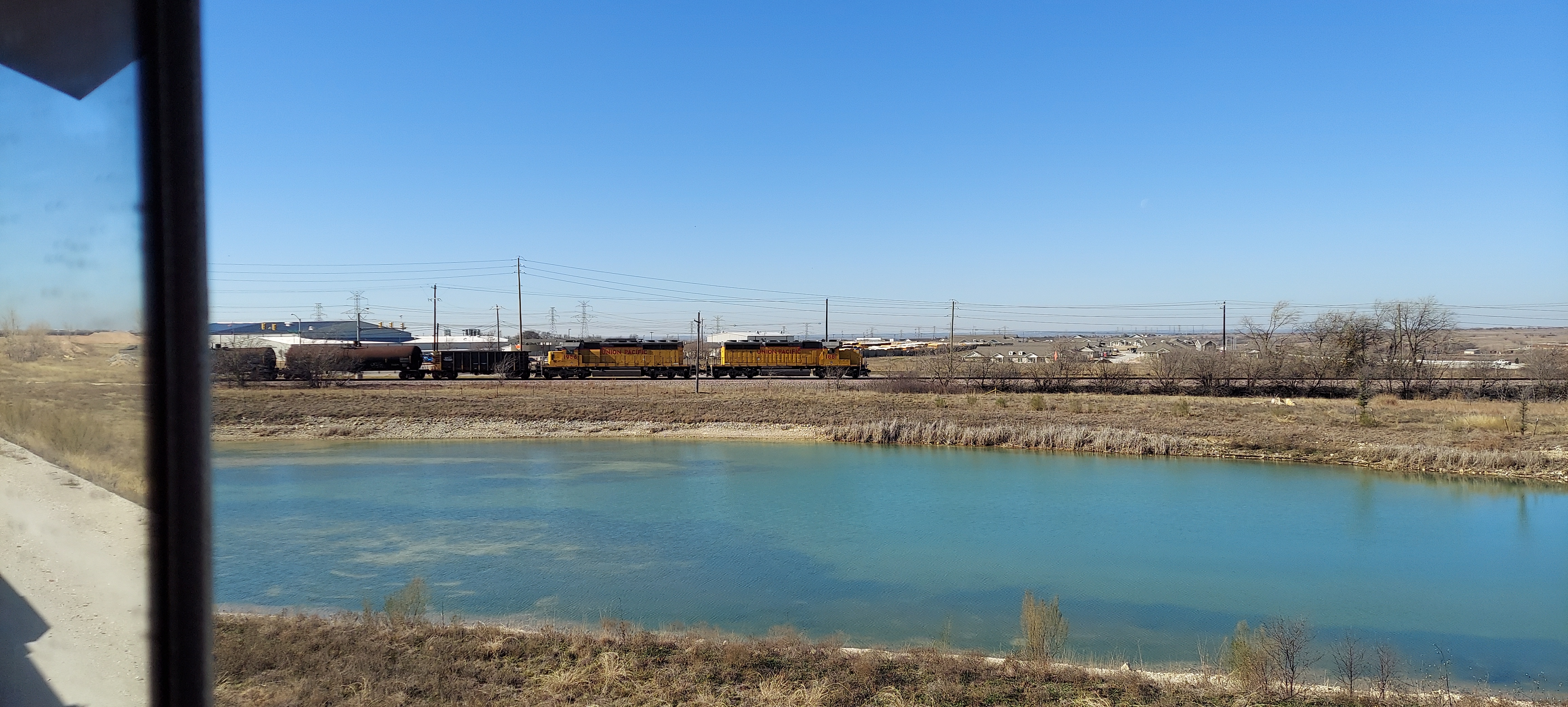
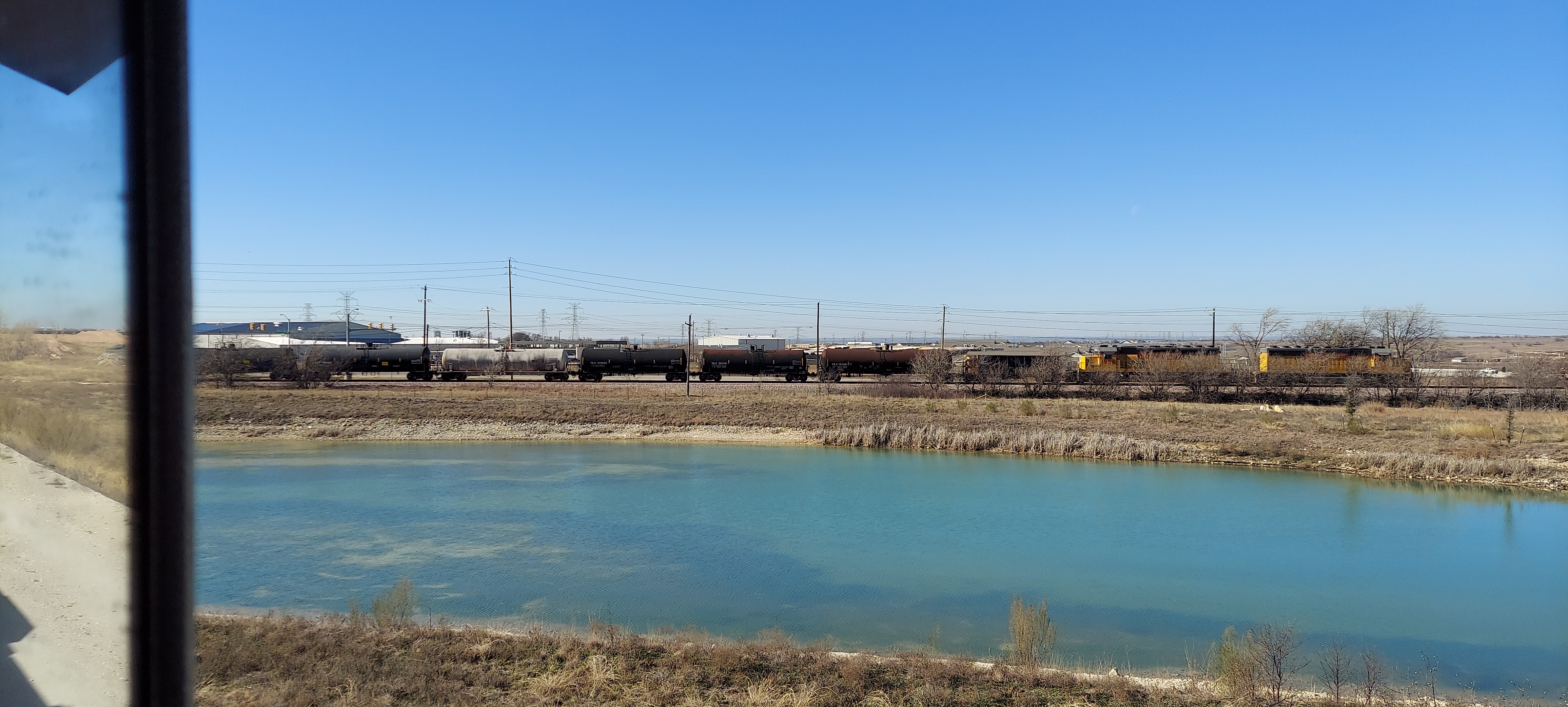
Here's that UP local hauling cars out to the Trinity tank facility from my vantage point at the Sunnyside sand plant:

original.jpg


original.jpg


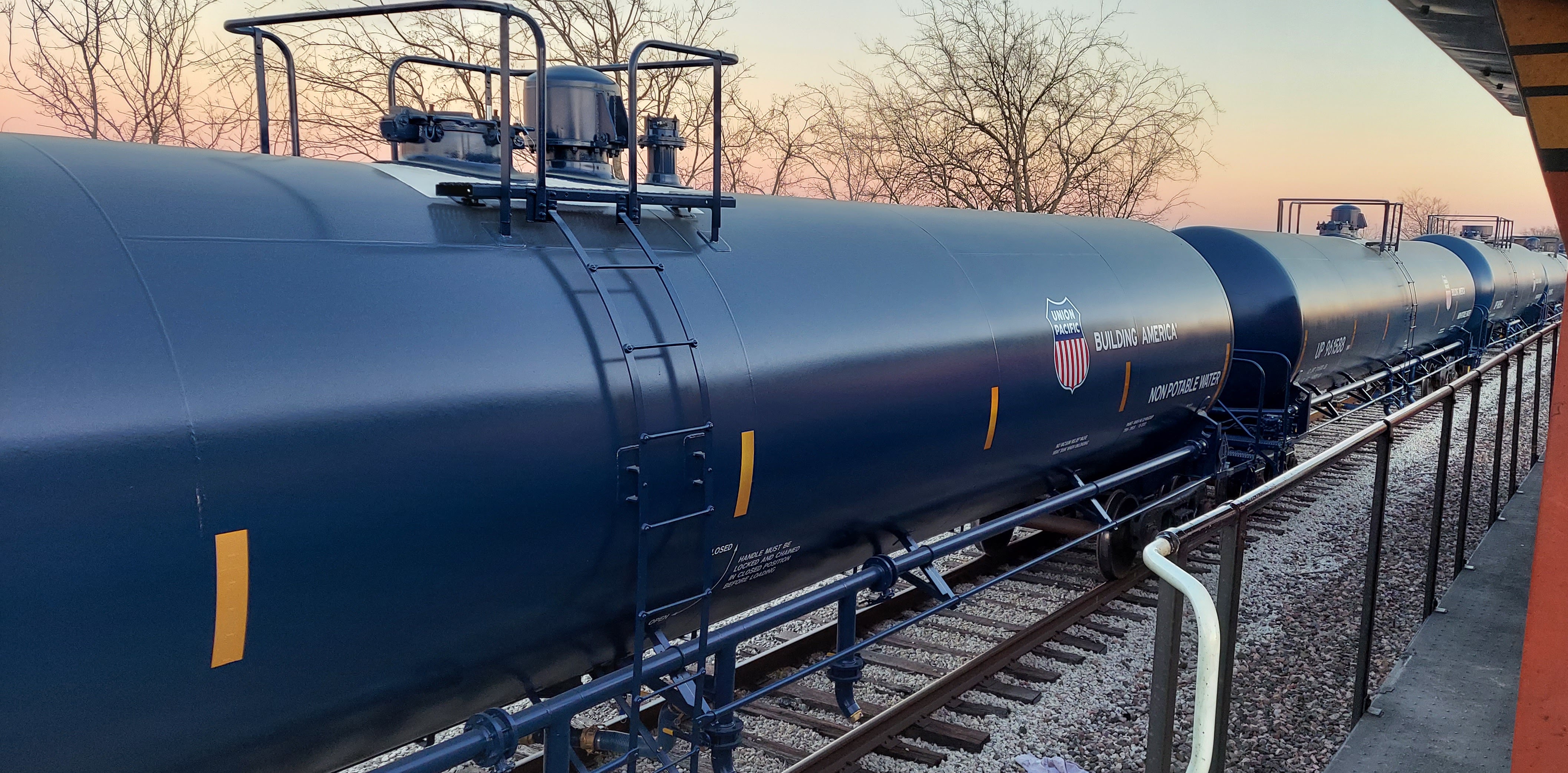
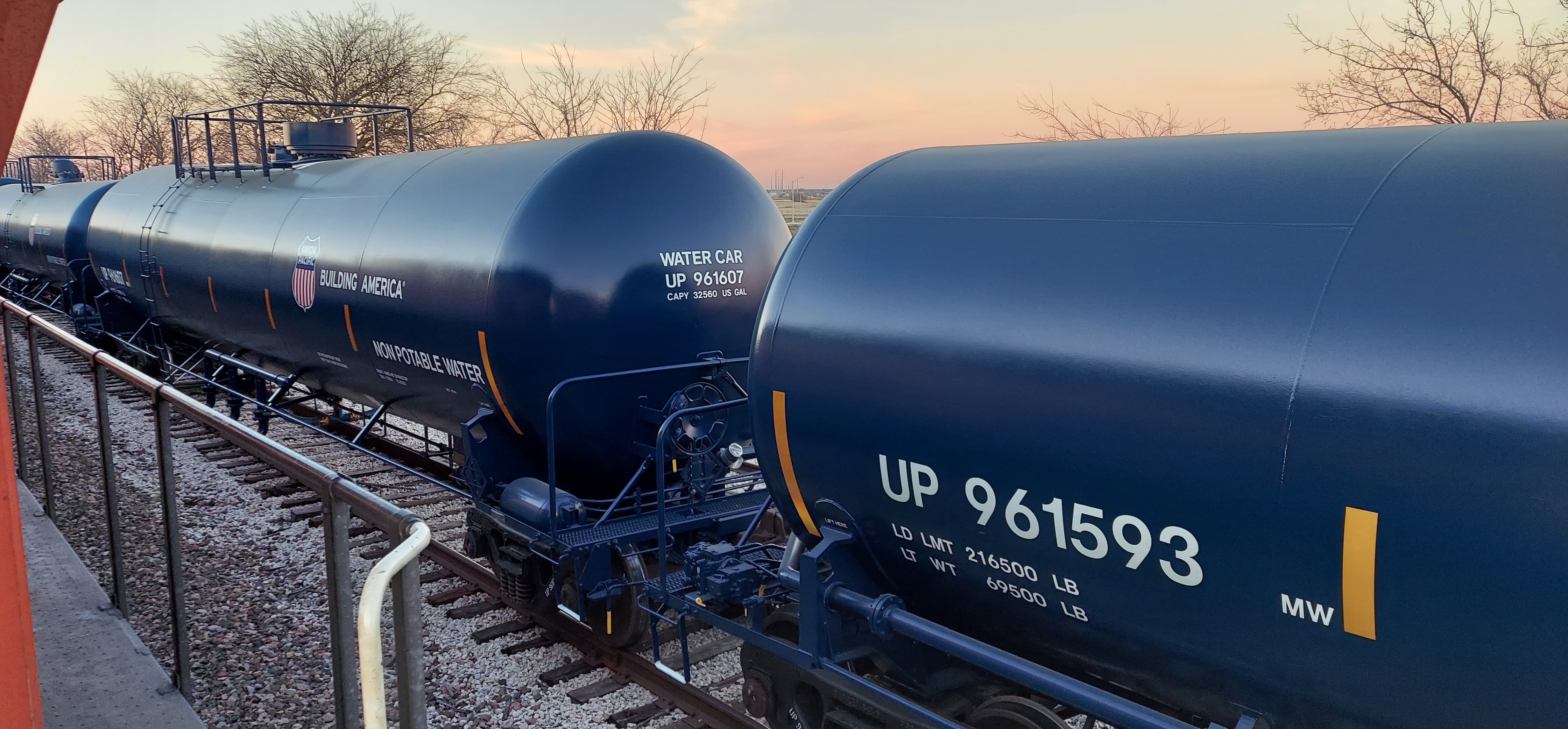
Later on I found myself waiting on Amtrak next to the Trinity spot and pull tracks where these strange and unfortunately spotless tank cars were tied down:

original.jpg


original.jpg


In the spirit of this thread I wish they had been dirty!

To that point I think you're onto something with the white. There is air in tank cars and as the temperature cools at night there is often a difference between the temperature of the air inside the tank and outside. This causes condensation to collect on the tank where the air is (this also happens on covered hoppers and you can see where the top of the load is in the car based on where the condensation ends). The condensation eventually runs down the side of the car leaving streaks. If you've ever done strenuous work outdoors in the summer you might have left salty sweat stains in your clothes as the moisture evaporates and the dissolved minerals remain. The same thing happens when the condensation evaporates on railcars. It shows up prominently on black cars like tanks and carbon black cars. Over enough time the process wears away the paint and rust forms. I would say to keep that in mind if you want to do the makeup sponge rust technique. It will guide your placement of the rust. I would also point out that this is a process, so a car needs to have enough age for this process to result in rust. The load also informs how this process works since an ethanol load will retain heat much less than beef tallow or an elevated temperature load like asphalt or molten sulfur.
 
Last edited:
Status
Not open for further replies.


Affiliate Disclosure: We may receive a commision from some of the links and ads shown on this website (Learn More Here)

Back
Top