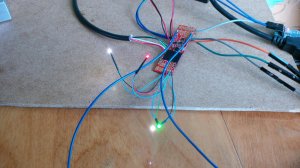
First WiFi Loco-Nodes, ready for fabrication/assembly

ModelRailroadForums.com is a free Model Railroad Discussion Forum and photo gallery. We cover all scales and sizes of model railroads. Online since 2002, it's one of the oldest and largest model railroad forums on the web. Whether you're a master model railroader or just getting started, you'll find something of interest here.


Status
Not open for further replies.
about 75% of the systems are now tested

the FX_LED issue has been traced to a soldering defect we can fix and eliminate with tighter QC, everything else so far is OK

we have semi-working drivers now for the sound amplifier, battery fuel gauge, and flash, still debugging

motor drivers and motion will be next

pop ups for the UX are now done so the WiFi portal can be accessed, FX_LED and Sound updated from the main throttle page

moving forward, just a lot of work

www.layout-ioe.com
 
I spent the day going through the flash driver code and we got it up and running, now BusyBox went down again a few days ago but after comparing UART outputs, its the only thing missing - on the 17th it came up perfect

The last thing to modify with the flash is ensuring we can read/write it in the console when its running and also ensuring it defaults to the on-board ECC on at all times so we can boot from it

This is the sample from the console for the flash:

SPINAND: 0x2c, 0x32, MT29F1G01AAADDHC
Beagle-MTD_01.00_Linux2.6.33_20100507
mtd: Giving out device 0 to MT29F1G01AAADDHC

To get the above code, the CPU sent out read messages, chip enable commands, and got two correct ID's in bit 0 and bit 1 in response

We also have code ready for an audio test (8 kHz only but the demo could support up to 44,000 kHz) and I2C drivers for the sound amplifier (gain, compression, enable, left or right), and the battery fuel gauge

I just went though an entire list of configurations so the new batch of files will cut out a lot of unnecessary items

I am meeting with Juan tomorrow afternoon to have a sit down and get reorganized for the next surge, after we finish the above items, adding the motor driver and eCompass/Motion takes care of the major work

www.layout-ioe.com
 
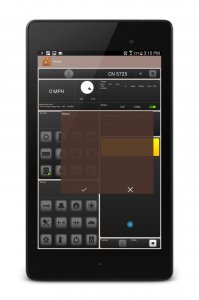
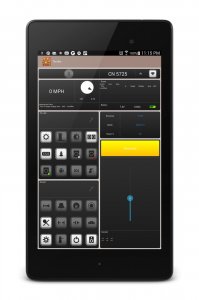
Screenshot_2015-05-22-23-15-56_framed.jpg

UX update, the seekBar has been updated since this image


We got the BusyBox bug fixed, it hasn't been coming up since we got the sound demo ready and flash driver into the file - so we can continue hardware testing this week

After the file is cleaned up and the debugger info is removed we can test the sound and battery fuel gauge

Then we have some more drivers to do for the motor control, motion, and WiFi

Here is another update on the UX, the update pages are all made where applicable, still have to add content but its coming along

app.jpg
 
More progress today:

1) We found some errors in the driver patch Micron sent us for the flash, we sent them back - should get something in a few days to fix this

2) I retested FX LED. All non-PWM pins are switching OK. This only leaves four pins not working and means its a software issue, we haven't put the drivers into the file yet for PWM. Not sure why they are not acting like GPIO but at the same time, its consistent that all four PWM pins are not switching. It also is not a short because they are either reading high (3.3V) or low (0.3V). I will get the PWM inserted to clear this outstanding system ASAP. I am going to consider that this will work at this point, there is nothing showing up as a reason other than software for them not switching

3) The sound is fighting us, I asked Juan for source files to send out so Ilya can get it right. Juan is still down as his notebook doesn't work with TurboWriter. Right now we can control the amplifier and its master shutdown. The speakers are getting power and turning off when this is controlled. I tested the bare board and the lines from the ADAC_L and ADAC_R are OK. We ran test code tonight for the I2C connection to the amplifier and the address was wrong but we're set to retry tomorrow. There are about a zillion options and ways that the CPU outputs sound so the reason for no output even with the speakers powered seems to be software related - hopefully we can clean everything up tomorrow, feeling optimistic that we can sign the hardware off on the sound this week

4) I have somebody looking at the TurboWriter issue, we're configuring our own app for flashing. If we can get above the 4100 KB file size we're limited to right now, we'll be rocking. There is 4Gb of flash to fill

5) While its taking a lot longer than I thought to debug and test the board, so far everything works, keeping the fingers crossed
 
We got a new software patch this morning from Micron, its compiled without error - we just need to integrate it

Enough of the hardware tests to sign off the Generic Node (GN-S605) is completed.

This node is $59. It has the WiFi, the CPU, 4GB eMMC, voltage regulator and diode bridge to handle up to 24V DC, 18V AC. It has a header for pin out to a daughter-board.

The daughter-board can mount additional components to customize the node for your application.

This node will have a full SDK for the DIY applications.

The components for this production are at the factory, will expect delivery in a few weeks time.

In the meant-time, once I wrap up a few more tests, the other Loco/Signal/Track/Auto Nodes will be released. The eMMC memory boots and flashes without special drivers.

Christopher Howard, Phoenix-Micron Inc.
 
More progress - slow but we're moving forward

The Linux Kernel has been reduced to the lowest practical size and is now opening consistently with a console, BusyBox

The I2C bus has been tested and works

We are able to change the Gain, Volume, and other settings through I2C on the stereo amplifier

We are able to turn on/off the stereo amplifier

Still now sound but we've limited any possible issue to being software related, and we're working on it

FX_LED is tested except for PWM pins but we have a program ready to test them

The patch for the flash is error free, Juan is looking into this. Plus we're working on an app to increase the amount of data we can send to SDRAM

Once we get the sound tested, and PWM, the two remaining items are ADC input from the battery charger and the I2C communication with the battery fuel gauge before we hit the motor control and motion

Hopefully we can clear out the sound and PWM tomorrow, the battery charger and battery fuel gauge work, the inputs we're testing is the communication with the CPU. With no faults on the I2C line, we're likely OK on the battery fuel gauge

So we're edging past 80% good to go on the hardware, so far no faults

www.layout-ioe.com
 
I found one small bug in the SPU - Amplifier connection, a capacitor is going to ground when it shouldn't so its not filtering the DC part of the DAC signal

That's why we can control the amplifier, it seems to work perfectly, the software works but the audio from the speakers is missing even though they are powered

This confirms we'll move to eMMC and V1.5 will be the shippable boards - minor error but it has to be perfect

We did preliminary research on the PWM for the FX_LED today and we have to write a new driver to test more than one output - so that is next

We'll continue on each system and software with V1.4 as the board is solid other than this error

V1.5 with the eMMC will remove the need for us to do a large amount of software compiling for getting this board to boot on its own. Another benefit of eMMC is we can go to 2-8GB of memory (more data)

We can still do sound with the development board once we get it fixed
 
Last edited by a moderator:
FX LED is based on 16 bit logic with 4 PWM channels for special effects like Dim, Mars, Gyra, and Strobe

It will also support Green, Amber, or Red LED's without the need for external resistors

The board has 11 pads per end, the pads will support 64 or 128 mA each

www.layout-ioe.com
 

Attachments

  • IMG_20150609_141515.jpg
    IMG_20150609_141515.jpg
    213.5 KB · Views: 271


We tested the PWM outputs on FX_LED and they work

The program we ran is not set up for a good dim effect yet, but the change is noticeable when compared to another LED

This signs off a major component for the Loco-Node harware

Will post images, video, when able

www.layout-ioe.com
 
[video=youtube;1tjXfcS_6rM]https://www.youtube.com/watch?v=1tjXfcS_6rM&feature=youtu.be[/video]
 
Last edited by a moderator:
we got the battery charger status inputs working with the ADC, this gets us past 83%

the inputs go HIGH/LOW depending on FAULT and CHARGE status

to test, we ran a demo program, then applied rail input voltage, the CHARGE pin went low to indicate charging of the Li-PO

next up is the WiFi, Motor Driver, eCompass/Motion, and SPINAND

www.layout-ioe.com
 
We have 10 of 11 FX_LED nets switching now by eliminating driver overlap. One more to go.

Tomorrow we are going to start the WiFi network configuration and antenna testing
 
[video=youtube;LPGMcAJWEPU]https://www.youtube.com/watch?v=LPGMcAJWEPU&feature=youtu.be[/video]

All 11 of 11 nets are up for FX LED as seen in the video, we have something ready for the 4 PWM channels, I should be able to post a demo soon of it

Today we got another UX file that is updated with more navigation enabled

I also got the first sound clip that is cleaned. An EMD 567C compressor. Our sound engine is going to be very cool
 
Last edited by a moderator:


this where we got with PWM on the FX LED system as of today, we just need to adjust the values to get it right

the PWM is causing the LED that is blinking to turn off

[video=youtube;Mqub3gqc9Z0]https://www.youtube.com/watch?v=Mqub3gqc9Z0&feature=youtu.be[/video]
 
Last edited by a moderator:
Status
Not open for further replies.


Affiliate Disclosure: We may receive a commision from some of the links and ads shown on this website (Learn More Here)

Back
Top