Larry Launstein Jr
Member
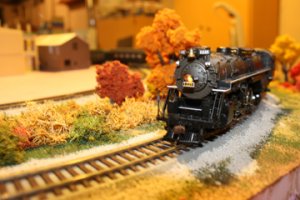
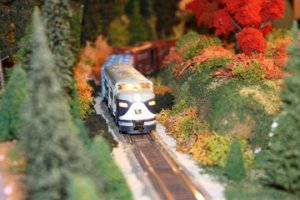
Here are some pictures of my model train layout, in progress.
http://www.facebook.com/album.php?aid=2024239&id=1321427065&l=20c1eb6921

http://www.facebook.com/album.php?aid=2024239&id=1321427065&l=20c1eb6921

Looks like a great start. My only suggestion is to get rid of the lichen and replace it with Woodland Scenics ground foam and clump foliage. I know the lichen is cheaper to begin with but it doesn't look like real plants and it will be come brittle and dried out looking pretty quickly.
I don't have an airbrish, but what can I do to achieve the weathering effect? What would I need to deal with the plastic roadbed? I could put ballast on top of the whole thing and in between the rails, but I think that would defeat what I may need to do later on, which is to replace the track without taking out the roadbed. This is Atlas True Track, and I can replace the rails without removing the roadbed.
Again, any advice is appreciated, but remember this is my first full-fledged layout, and I'm still learning some of the skills and don't want to goof up and have to do a lot of wholesale replacements. I just had to send back my Digitrax Zephyr today after it completely blew out. Very little warning, either. It was acting a little goofy when trying to program engines, and then went into d nd, not recognizing one of my decoders when trying to program it, and then finally, the Zephyr completely died, with enough smoke coming out of the Loconet ports to keep Puff The Magic Dragon happy. Remember that song? Mary Travers of Peter, Paul and Mary fame recently died.

I don't have an airbrish, but what can I do to achieve the weathering effect? What would I need to deal with the plastic roadbed? I could put ballast on top of the whole thing and in between the rails, but I think that would defeat what I may need to do later on, which is to replace the track without taking out the roadbed. This is Atlas True Track, and I can replace the rails without removing the roadbed.
Again, any advice is appreciated, but remember this is my first full-fledged layout, and I'm still learning some of the skills and don't want to goof up and have to do a lot of wholesale replacements. I just had to send back my Digitrax Zephyr today after it completely blew out. Very little warning, either. It was acting a little goofy when trying to program engines, and then went into d nd, not recognizing one of my decoders when trying to program it, and then finally, the Zephyr completely died, with enough smoke coming out of the Loconet ports to keep Puff The Magic Dragon happy. Remember that song? Mary Travers of Peter, Paul and Mary fame recently died.