HOexplorer
Well-Known Member
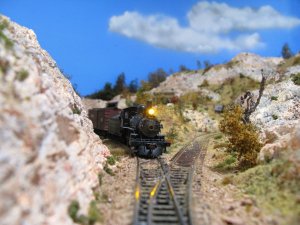
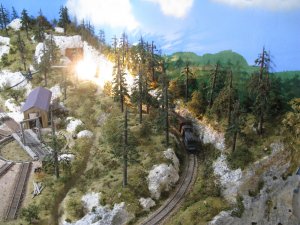
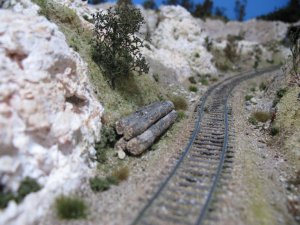
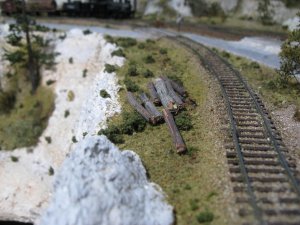
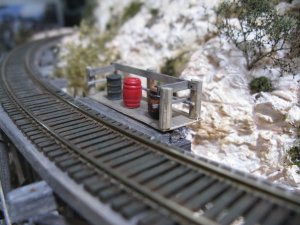
Okay I'm back. Small tutorial. This is really an easy fix to taking the same old photos time after time. There is no magic in backlighting. The magic comes with the result of a 'different' type of photo for you to enjoy. To that end here's the deal. Check this photo out. We probably all have alternative light sources in the house. Here are two I use. Desk lamp and flashlight. Jim
By simply hiding the light source behind a cliff or around a curve you can get back lit photos. The only real trick is tilting the light source so that the light is not too bright and overpowering. By simple manipulation of the lamp shade you can get as much or little light cast on your subject. I also use from time to time a piece of white paper or even some TP over the lamp to dull the light a bit. Flashlights are good too. I like this one because it gives a 'white' instead of a yellow light. I also use both these two devices combined to add additional 'color' possibilities. I personally think it is important to have a bit of the focal point of the photo, in most cases a loco, on a curve. This allows the light to show that the big black blob in the photo is actually an engine or car. Check out the two photos above and you will see what I mean.
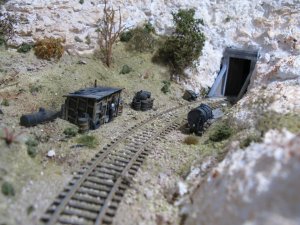
Tony, You've forgotten that I do not use F-stops for depth of field. I use my camera on SCN with an "Indoor" setting. I always use a tripod and timer for these shots. But this will not give the depth of field shown in my photos. To do that I have mentioned using a photo stacking program that takes advantage of the 'Manual Focus' button on my camera. I use Helicon Focus for this job. There are other programs available on the internet and some are FREE as well. So basically you need a stacking program and a manual focus button on your camera. Without these two things photos better than average will be hard to come by. I love photography and my Helicon Focus program is the best money, around $110, that I've ever spent to achieve my photo goals. Cameras are not the most important part in this process for sure. Jim
By simply hiding the light source behind a cliff or around a curve you can get back lit photos. The only real trick is tilting the light source so that the light is not too bright and overpowering. By simple manipulation of the lamp shade you can get as much or little light cast on your subject. I also use from time to time a piece of white paper or even some TP over the lamp to dull the light a bit. Flashlights are good too. I like this one because it gives a 'white' instead of a yellow light. I also use both these two devices combined to add additional 'color' possibilities. I personally think it is important to have a bit of the focal point of the photo, in most cases a loco, on a curve. This allows the light to show that the big black blob in the photo is actually an engine or car. Check out the two photos above and you will see what I mean.
Tony, You've forgotten that I do not use F-stops for depth of field. I use my camera on SCN with an "Indoor" setting. I always use a tripod and timer for these shots. But this will not give the depth of field shown in my photos. To do that I have mentioned using a photo stacking program that takes advantage of the 'Manual Focus' button on my camera. I use Helicon Focus for this job. There are other programs available on the internet and some are FREE as well. So basically you need a stacking program and a manual focus button on your camera. Without these two things photos better than average will be hard to come by. I love photography and my Helicon Focus program is the best money, around $110, that I've ever spent to achieve my photo goals. Cameras are not the most important part in this process for sure. Jim
Last edited by a moderator: