
You are using an out of date browser. It may not display this or other websites correctly.
You should upgrade or use an alternative browser.
You should upgrade or use an alternative browser.
The making of a good track plan book
- Thread starter NVSrr1500
- Start date
ModelRailroadForums.com is a free Model Railroad Discussion Forum and photo gallery. We cover all scales and sizes of model railroads. Online since 2002, it's one of the oldest and largest model railroad forums on the web. Whether you're a master model railroader or just getting started, you'll find something of interest here.

What makes it good is hard to say. Just throwing a track layout out on a page is not a good book.
Everything about the plan has to be well thought out, not just the track layout but how it will operate when completed. All that documented in words people can understand. Atlas does this well with their custom line layouts books. They state the overall theme of the layout, why things are set up the way they are, and some of how to run it.
Everyone like variety in type and size. Take for example the original 101 track plans for all occasions.


It seems if one could train an AI with the appropriate information than it might be more helpful. The problem with today's large language chatbot type AIs is they are not programed with the information, they derive it from texts which are pretty difficult reading, let alone enough comprehension to do anything with.



Affiliate Disclosure: We may receive a commision from some of the links and ads shown on this website (Learn More Here)
Iron Horseman
Well-Known Member
I always like good track plan books, but usually plan books are for beginners.What would everybody like to see I.n a track plan book to make it a good book? Also what layout types and mixes of layouts?
What makes it good is hard to say. Just throwing a track layout out on a page is not a good book.
Everything about the plan has to be well thought out, not just the track layout but how it will operate when completed. All that documented in words people can understand. Atlas does this well with their custom line layouts books. They state the overall theme of the layout, why things are set up the way they are, and some of how to run it.
Everyone like variety in type and size. Take for example the original 101 track plans for all occasions.
traiNscale
Well-Known Member
i would love to have trackplan book with actual built layouts.
like in the style you always have a Layout showcase in Modelrailroad Craftsman Magazin.
A Book full of those i would love.
like in the style you always have a Layout showcase in Modelrailroad Craftsman Magazin.
A Book full of those i would love.
tankist
Well-Known Member
I'm not into guidebooks. This one is an exception, however.
(I wanted to brag and take a picture of my copy, but I can't find it, dang )
)
Looks like scalpers want ridiculous money for it on Amazon...
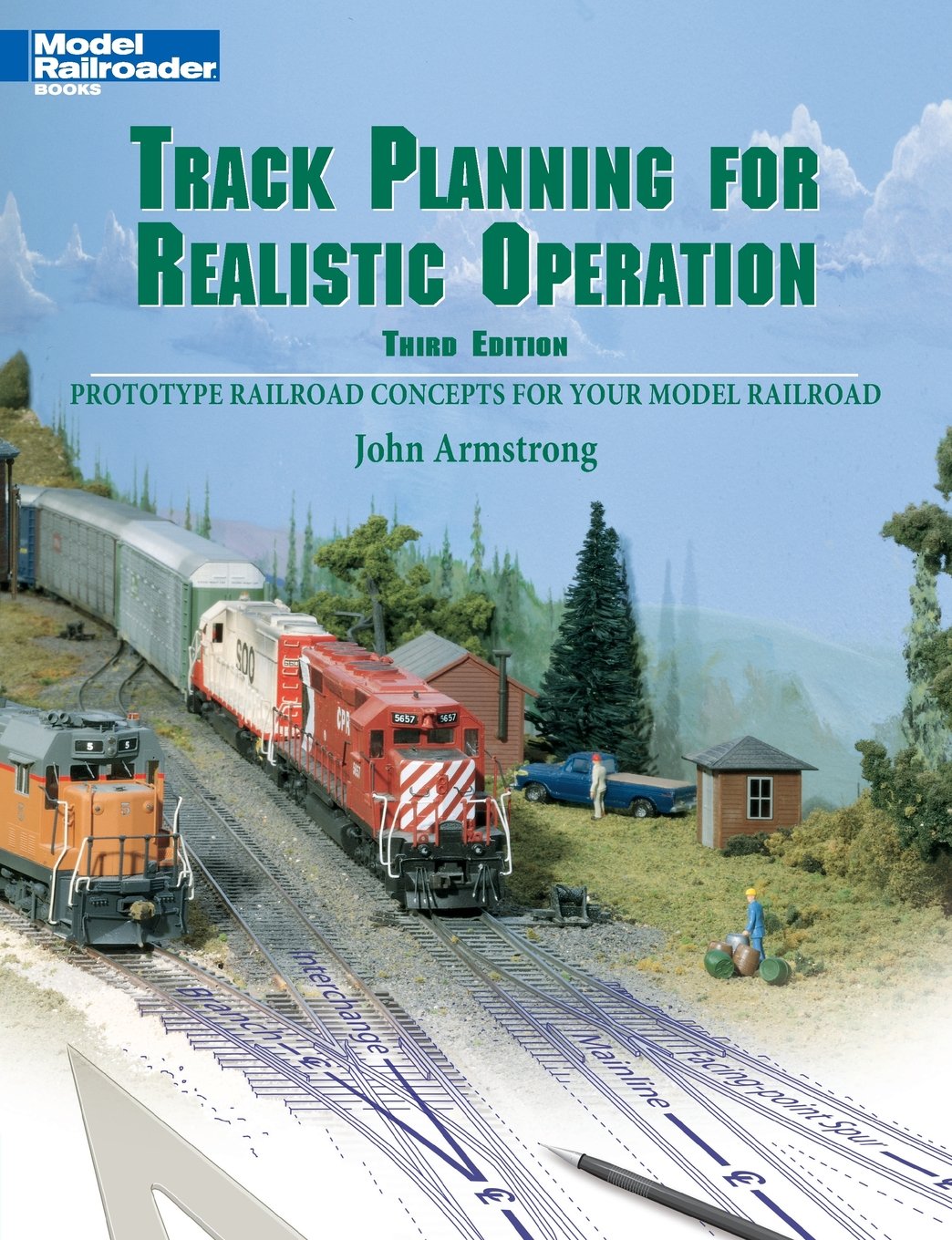
The reason I recommend this one (IF you can find a reasonably priced one) is that it doesn't give you the fish; instead, it teaches you to fish so you can catch your own.
It's a collection of principles you can selectively apply to your build as you see fit.
I do have a hand-me-down "101 track plans" book. waste of time. You see a bunch of track plans stuffed together, with a simple goal of reaching the 101-count promise. Without understanding of why the author of the layout did what he did, the information has very limited use.
(I wanted to brag and take a picture of my copy, but I can't find it, dang
)Looks like scalpers want ridiculous money for it on Amazon...
The reason I recommend this one (IF you can find a reasonably priced one) is that it doesn't give you the fish; instead, it teaches you to fish so you can catch your own.
It's a collection of principles you can selectively apply to your build as you see fit.
I do have a hand-me-down "101 track plans" book. waste of time. You see a bunch of track plans stuffed together, with a simple goal of reaching the 101-count promise. Without understanding of why the author of the layout did what he did, the information has very limited use.

Iron Horseman
Well-Known Member
Yes, if you don't mind sitting through hours and hours of videos of people babbling a lot and not getting to the point. Or of course as I've found out several times it becomes apparent the videographer really doesn't have a deep understanding of the subject and just trying to increase their "views" count. As opposed to a book that has to get to the point because pages are limited while recording memory is not. I've not found much useful at all looking for this kind of stuff on-line.Books are "old school" just like magazines and are becoming obsolete like us Boomers.
You can now go to YouTube and search "Model Railroad Track Planning" and spend days getting all the help you need or want.
It seems if one could train an AI with the appropriate information than it might be more helpful. The problem with today's large language chatbot type AIs is they are not programed with the information, they derive it from texts which are pretty difficult reading, let alone enough comprehension to do anything with.
Last edited:
Iron Horseman
Well-Known Member
That could turn into a tome really quickly.i would love to have trackplan book with actual built layouts.
like in the style you always have a Layout showcase in Modelrailroad Craftsman Magazin.
A Book full of those i would love.
traiNscale
Well-Known Member
you bet
but i would buy!
but i would buy!
Snowman
Well-Known Member
I am SO glad I looked in on your thread, because I forgot until now that one of my own favorites was stolen or destroyed during last years burglaries, and so I just got onto ebay and bought another copy. "Six HO Railroads YOU Can Build." This is the book that presents the original classic "Granite Gorge and Northern."
NVSrr1500
Well-Known Member
Makes sense too. you see the plan on paper and then how it looks built upi would love to have trackplan book with actual built layouts.
like in the style you always have a Layout showcase in Modelrailroad Craftsman Magazin.
A Book full of those i would love.
Snowman
Well-Known Member
I had forgotten, in fact, but it was a N-scale version of the GGN a guy had built or was building here that caused me to join these forums in the first place. Same fellow also does a fair bit of 3D printing too, as I recall. Last I remember he had printed up some 40' containers (presumably N).
So "Six HO Railroads" (an earlier book, also by John Armstrong) arrived just the other day. Really just bought it for nostalgia's sake, but it's nice to see an old friend again. I'm sure I read and re-read the cover off the first copy all those years ago (the red version) before it disappeared.
This copy is cellophane wrapped and dated 10/06. $3.45. Cost me about $18 with shipping, but well worth it.
My experience with archival stuff is: Buy it when you can if you anticipate passing it on or referring to it later on. It just may not be available at a reasonable price. Case in point the heavy tome I bought re: The Porsche 917 (Naher). Cost me about $125 then and it's double the price at a minimum today. I THINK I recovered my copy from all the burglaries, but I can't find it--I was moving fast at the time, so I hope it (and a couple more) are in a box around here somewhere. Hope so for sure.
If you are looking for out-of-print stuff like timetables, I would also buy that when you can. As it happens I stumbled across a "train-handling" study, possibly published by the A.R.E.A. or the test group in Pueblo CO (major test track there), and it describes everything from tonnages to traction and slip to short-time ratings to coupler strength to...well...a lot of the rest. Couple that with other material and it becomes more obvious why a railroad like the D&RGW allowed the use of dynamic braking on only the first twenty-four axles on ANY train. None on mid-train helpers or rear-end pushers (which were often cut off anyway) at all.
Of course with today's distributed power it may well be different...but I'm interested in the sixties and seventies, so that data is hard to come by.
So "Six HO Railroads" (an earlier book, also by John Armstrong) arrived just the other day. Really just bought it for nostalgia's sake, but it's nice to see an old friend again. I'm sure I read and re-read the cover off the first copy all those years ago (the red version) before it disappeared.
This copy is cellophane wrapped and dated 10/06. $3.45. Cost me about $18 with shipping, but well worth it.
My experience with archival stuff is: Buy it when you can if you anticipate passing it on or referring to it later on. It just may not be available at a reasonable price. Case in point the heavy tome I bought re: The Porsche 917 (Naher). Cost me about $125 then and it's double the price at a minimum today. I THINK I recovered my copy from all the burglaries, but I can't find it--I was moving fast at the time, so I hope it (and a couple more) are in a box around here somewhere. Hope so for sure.
If you are looking for out-of-print stuff like timetables, I would also buy that when you can. As it happens I stumbled across a "train-handling" study, possibly published by the A.R.E.A. or the test group in Pueblo CO (major test track there), and it describes everything from tonnages to traction and slip to short-time ratings to coupler strength to...well...a lot of the rest. Couple that with other material and it becomes more obvious why a railroad like the D&RGW allowed the use of dynamic braking on only the first twenty-four axles on ANY train. None on mid-train helpers or rear-end pushers (which were often cut off anyway) at all.
Of course with today's distributed power it may well be different...but I'm interested in the sixties and seventies, so that data is hard to come by.
Last edited:
GGNInNScale
Granite Gorge and Northern Again
Our first layout was built from the John Armstrong book "Six HO Layouts You Can Build" also. The copy (The red one- see Snowman's reply above) was very tattered last I saw it- my brother has it now, I think... But, my son bought me the 2nd edition two Christmases back- brings back a lot of memories. We (Dad, and my brothers) have built/rebuilt the GGN layout three times. My start into N scale about 5 years ago built on the GGN layout E with additions and modifications of the original John Armstrong design. It is now incorporated into my new layout as the centerpiece. The new layout is under construction now.
Attachments

GGNInNScale
Granite Gorge and Northern Again
We still crack up at the "Oh, nubbins" cartoon!What made that little book so memorable was, in part, Thaddeus Stepek's cartoons. By so many standards, then and now they really must be considered cutting edge.
RhB Michael
RhB Lokführer
I still have a copy of that book somewhere. I built the Great Eastern Trunk decades ago.
Affiliate Disclosure: We may receive a commision from some of the links and ads shown on this website (Learn More Here)