cv_acr
Well-Known Member
Are you actually "operating" the layout with realistic switching and train ops, or just "railfanning" moving trains?
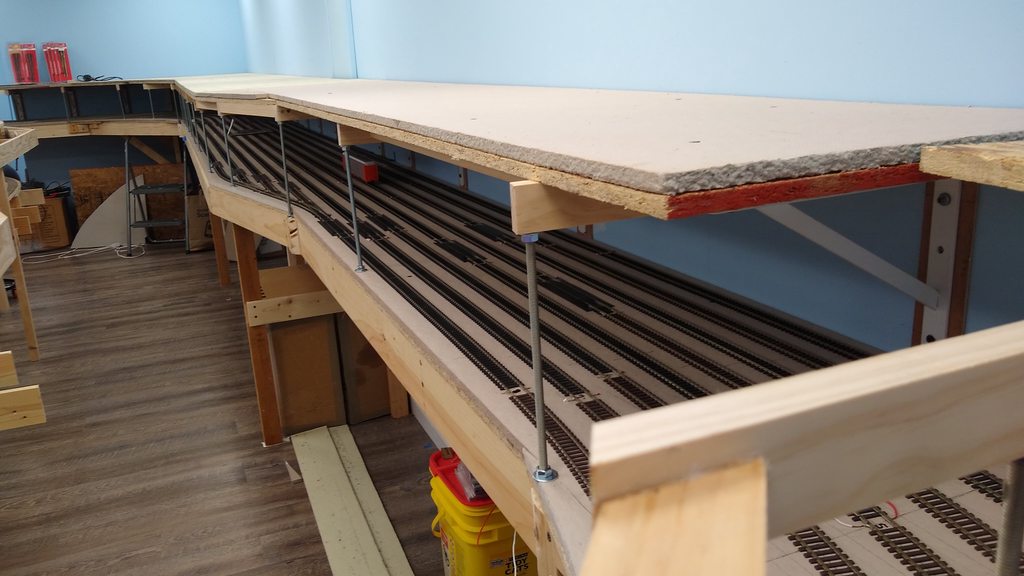
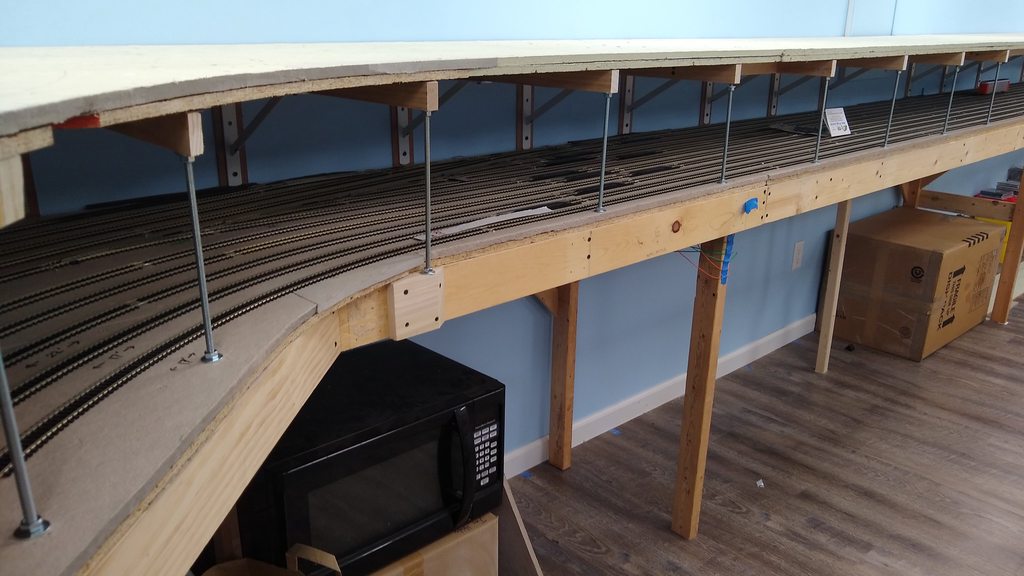
Staging does two things:
1 provides storage/parking space for trains that aren't "on the layout"
2 represents connections to the rest of the world "beyond the basement"
If you just have a few trains and like to run them around the loop to watch them run, you don't really need staging.
If you just have a small switching layout intended to run a single engine/train by a single operator at a time, you can get away with "staging" the inbound cars in a yard or siding track that an imaginary/un -modeled mainline train dropped off "overnight".
Just have some way of representing how your railroad logically connects to the rest of the world. (This could be just modelling an interchange track or yard, full hidden staging allowing you to extend your mainline to other points, a car ferry, or a break-bulk reloading transfer (e.g. between an isolated narrow guage and standard guage system)
Staging does two things:
1 provides storage/parking space for trains that aren't "on the layout"
2 represents connections to the rest of the world "beyond the basement"
If you just have a few trains and like to run them around the loop to watch them run, you don't really need staging.
If you just have a small switching layout intended to run a single engine/train by a single operator at a time, you can get away with "staging" the inbound cars in a yard or siding track that an imaginary/un -modeled mainline train dropped off "overnight".
Just have some way of representing how your railroad logically connects to the rest of the world. (This could be just modelling an interchange track or yard, full hidden staging allowing you to extend your mainline to other points, a car ferry, or a break-bulk reloading transfer (e.g. between an isolated narrow guage and standard guage system)