Shipping a carload in '35?

ModelRailroadForums.com is a free Model Railroad Discussion Forum and photo gallery. We cover all scales and sizes of model railroads. Online since 2002, it's one of the oldest and largest model railroad forums on the web. Whether you're a master model railroader or just getting started, you'll find something of interest here.


Milwaukee Road 113

Milwaukee Road addict...
Shipping a carload from the west coast to the east coast in '35, which route would have been fastest? How long would it have taken and what would the cost have been you think?
 
I believe that's a too open ended question. Where is the point of origin, and what's the destination? Just as important, what's the cargo? The cargo can determine how fast it's moved as well.


Strawberries would have been considered a perishable, high dollar load, and would most likely have been in an express reefer attached to one of the premier passenger trains.
 
There were dedicated fruit trains for SP, UP and WP (I'm sure others too) that would have at least gotten the fruit from SF to the Midwest. The PFE ran to Chicago, from there I'm sure one the Eastern railroads would have picked it up. Perishable trains got higher priority, and were a bit faster than general freight.
 
CN 2117, very interesting resource, did not know that 85% of produce was shipped unsold and was diverted and sold in transit!

Thanks for the link--


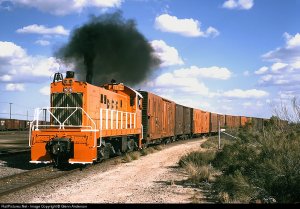
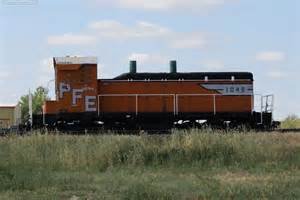
PFE locomotives? I missed that in the story, although found these pics:

PFE loco 2.jpg

The top photo was shot April 10, 1974, in Tuscon, AZ


PFE Switcher.jpg
 
Very interesting and informative thread, I learned something from nearly every post. Thank you 113 for your question and thank you everyone for your responses, keep them coming please.
 
Strawberry Shipments

I can't shed much light on shipments of strawberries from California to the East Coast in the 30s. I suspect that due to the limited time that strawberries would be at their best after being picked and the distances involved, that there wasn't much shipment of a highly perishable cargo like that that across the country. Most of the strawberries consumed East of the Mississippi were grown in the South with huge growing operations in Louisiana.

The Illinois Central ran special trains composed entirely of express reefers that followed the harvest North. The railroad started routing express reefers to Hammond, LA in the weeks immediately before the harvest started. There the reefers were cleaned and pre-cooled. When the harvest started the reefers were loaded and sent North at passenger train speeds. Often the fruit had not been sold yet and the fruit companies sent special "messengers" with the shipment. The railroad provided a drovers type or a banana messenger caboose or more often then not hung the markers on an old coach because they were worried about a derailment of a light caboose at the speed the trains operated.

Wholesalers would bid on the cars while the rain was moving and the strawberry messengers would be notified by wire what cars had been sold and where they would be dropped off. These weren't "milk train" stop at every station trips, the sold carloads were dropped off at major interchanges in Memphis, TN and Carbondale and Mattoon, IL. From there they made connections running East and West.

As the harvest moved North along with the weather, the starting point of the trains moved North. The IC called these trains "The Crimson Flyer and they ran from the 1930s thru the 50s. They were first class trains and given priority over just about everything else on the mainline. One article I read even stated that the premier train on the line, The Panama Limited, waited in the hole for the Flyer to pass.

The IC did a lot to support this traffic including hiring experts from the University of Illinois to work with farmers on the line to help them produce the crop.
 
Great info there mate, cheers!
Some hotshot then, if they let one of their premier trains step aside...
Talking about milk.....was there such a thing as milk trains, or was it just an occasional milk car in a freight or passenger train?
 
Milk--now they can "grow" that just about anywhere. And back in the 30's there weren't much for factory farms. May I suggest some corporate farms and large cooperatives shipping in to big cities via rail but a lot of areas lived off the local grocer and dairy.

In fact, my great grandfather had one of those dairies where they milked the cows and delivered out about a 5 mile radius, captured two small towns. Called the "Banta Brothers Dairy". They started in the 20's using horse wagons and eventually mechanized to Model A trucks.


Affiliate Disclosure: We may receive a commision from some of the links and ads shown on this website (Learn More Here)

Back
Top