Hey guys, progress on my table layout has halted severely this past year and my parents are threatening to take it down. The reason I stopped working on it is because I jumped in without a plan and now its a mess. So now I want to work on a new track plan and I will have a plan this time but I can't think of an industry to have. I have limited space and I Want it to be a 9' by ' 4 L Shaped shelf layout. I also want to model in the mid 1920's. So please, if anyone has ideas about industries in that era it would be greatly appreciated!

You are using an out of date browser. It may not display this or other websites correctly.
You should upgrade or use an alternative browser.
You should upgrade or use an alternative browser.
Please Help!
- Thread starter Joe
- Start date
ModelRailroadForums.com is a free Model Railroad Discussion Forum and photo gallery. We cover all scales and sizes of model railroads. Online since 2002, it's one of the oldest and largest model railroad forums on the web. Whether you're a master model railroader or just getting started, you'll find something of interest here.
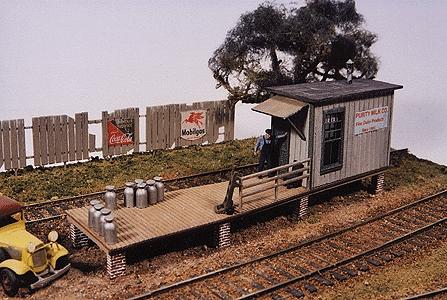
Are you referring to the "Milk Platform"? Because I plan to use this kit
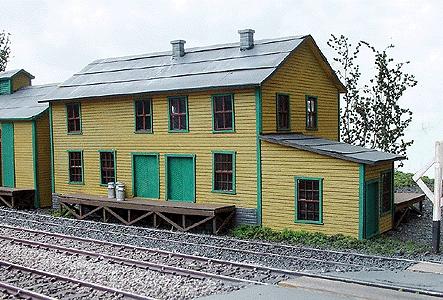
Then MAYBE this kit for the creamery
Maybe though. I'm a teenager without a job.
ALSO, the reason I asked about the crossover was not so much accuracy but for physical sense. Would it make more sense to just have the crossover or to add a loop on the creamery side of the plan. I mean that would create a lot more space.
By the way thanks for helping me through all this!
Hmmm ok. So I can use a freight station that I have built and weathered and ready to go instead of a "Milk Platform." And maybe I could add a small farm scene with Cows!

Affiliate Disclosure: We may receive a commision from some of the links and ads shown on this website (Learn More Here)
Joe, what scale? You can get a lot more in that space with N scale than HO. What part of the country do you want to model? That will pretty much dictate the kinds of industries. There was still plenty of precious metal and copper mining in the West. The Plains were still shipping lots of grains so grain elevators and flour plants were common. Oil wells were providing lots of tonnage in Oklahoma and Texas. The Midwest was gearing up for the automobile age so steel, coal, and car plants were in full swing. Further east, tanneries, dairies, and linen factories come to mind. In the South, Birmingham was shipping lots of steel north and cotton was still king. Many of these same industries are still in operation today.
I also suggest you donwload a copy of XTrackCAD from http://www.xtrkcad.org/Wikka/HomePage and do a proper job of planning this time. Industries are really secondary to the part of the country and type of terrain you want to model. Almost any spur can serve almost any kind of industry. Choosing industries and having a lousy track plan to serve them still makes for a lousy layout.
I also suggest you donwload a copy of XTrackCAD from http://www.xtrkcad.org/Wikka/HomePage and do a proper job of planning this time. Industries are really secondary to the part of the country and type of terrain you want to model. Almost any spur can serve almost any kind of industry. Choosing industries and having a lousy track plan to serve them still makes for a lousy layout.

OK, in that case, you've narrowed it down to mostly New England, where milk was picked up in cans from small stations by special milk reefers like the one pictured below.

These cars had racks for the stainless steel milk cans so they wouldn't be damaged in transit. They were usually attached to local passenger trains although the majority of cars would be milk reefers with maybe a rider coach or Pullman on the rear. These milk refers were dropped at a creamery, where the milk was processed into liquid milk, cream, cottage cheese, and whey. They would then be loaded by pipes from tanks into glass lined 40 foot refrigerator cars for transport to the big city. The milk reefers would bring back empties to the pickup points and exchange empties for loads. All milk cans were standardized so the farmer got back the same kind of can he sent off for processing. In some cases, smaller creameries weren't able to process all the milk products so the liquid milk tankers would make an intermediate stop at a larger creamery, especially one that specialized in certain types of cheses. Moving milk products by rail lasted until the mid-60's in New Emgland until trucks took the business. Having a milk processing sequence requires some unique rolling stock and buildings but it's a fun thing to do if you're modeling a New England railroad in the 20's.
These cars had racks for the stainless steel milk cans so they wouldn't be damaged in transit. They were usually attached to local passenger trains although the majority of cars would be milk reefers with maybe a rider coach or Pullman on the rear. These milk refers were dropped at a creamery, where the milk was processed into liquid milk, cream, cottage cheese, and whey. They would then be loaded by pipes from tanks into glass lined 40 foot refrigerator cars for transport to the big city. The milk reefers would bring back empties to the pickup points and exchange empties for loads. All milk cans were standardized so the farmer got back the same kind of can he sent off for processing. In some cases, smaller creameries weren't able to process all the milk products so the liquid milk tankers would make an intermediate stop at a larger creamery, especially one that specialized in certain types of cheses. Moving milk products by rail lasted until the mid-60's in New Emgland until trucks took the business. Having a milk processing sequence requires some unique rolling stock and buildings but it's a fun thing to do if you're modeling a New England railroad in the 20's.

Appreciate the advice, ICG/SOU, however the dairy idea has got me going.
So UP2CSX, correct me if I'm wrong.
- Farmers bring milk in metal cans to these small stops at one end of the line where they are picked up my a dairy train consisting of those specialized reefers.
- Train travels for miles across layout to Creamery.
- Another train picks up the ready-to-be-sold dairy products to distributors in the city.
Am I right?
So UP2CSX, correct me if I'm wrong.
- Farmers bring milk in metal cans to these small stops at one end of the line where they are picked up my a dairy train consisting of those specialized reefers.
- Train travels for miles across layout to Creamery.
- Another train picks up the ready-to-be-sold dairy products to distributors in the city.
Am I right?
Pretty much, except you also need a transloading facility for the empty milk cans. They are emptied at the creamery, steam sterilized, and loaded back on the milk express cars. The milk express cars are then hauled to a classification yard so they can be put on the next local, where the empties are dropped off as a pick up of new loaded cans is being made. Most creameries had at least two sets of tracks on different sides of the building, one for off loading full cans and the other for loading the empties. As you might imagine, this was a pretty labor intensive operation, which is why this ended as soon as farmers had trucks that could make deliveries right to the creamery.
So this plan is accurate?

Feel free to make edits.
Also should there be a loop to connect both tracks or is the switch in the middle fine.
(if picture doesnt appear)
http://www.majhost.com/gallery/admin/videos/trackplan.png
Feel free to make edits.
Also should there be a loop to connect both tracks or is the switch in the middle fine.
(if picture doesnt appear)
http://www.majhost.com/gallery/admin/videos/trackplan.png
Joe, the two track plan with the crossover switch is accurate. You wouldn't see a separate building for milk cans though. The creamery would have two loading docks, one for offloading the full cans and one for stacking the empties, both attached to the main building. A small creamery would only handle cans for both recieving raw milk and shipping out pasteurized milk. A larger creamery would have a tank that stored the finished milk. You'd then have three operations, one for loaded cans, one for empty cans, and a pipe loading spot to fill glass lined milk reefer with liquid milk. In the 1920's, this was about as big a most creameries got, since the finished milk would be shipped to other plants from making things like cheese and yogurt. Bordens revolutionized this whole process by building the first integrated plant in the late 20's, where raw milk was received and finished products, like pasteurized milk, cheese, cottage cheese, and whey products were all shipped out from the same plant. It really depends on how much room you have. On most home layouts. the receiving creamery with the two track layout is about as big as you have room for. The first Bordens plant had a five track holding yard, a number of different plants, and their own switcher to shuffle cars around. IIRC, they had over a mile of plant trackage. As you can see, you can make a milk operation as small or large as you please and have space for.
You wouldn't see a separate building for milk cans though
Are you referring to the "Milk Platform"? Because I plan to use this kit
Then MAYBE this kit for the creamery
Maybe though. I'm a teenager without a job.
ALSO, the reason I asked about the crossover was not so much accuracy but for physical sense. Would it make more sense to just have the crossover or to add a loop on the creamery side of the plan. I mean that would create a lot more space.
By the way thanks for helping me through all this!
Joe, that milk platform would only be used for a top with no passenger or freight station. There were some of these in New England but they were not common and were located out on the main or branch, not anywhere near the creamery. If you're not planning a town with a station, a milk platform would make sense.
The BLI kit would be pretty typcial of a small 20th century creamery. You can easily run another track around the back so you can do offloading and loading at the same time. I'm not sure what you mean by a loop but the most logical way to handle the track would be a siding behind the creamery and an additional siding in front fo the sreamery. You can run a switch off the dront side track to the rear track and connect it back up to the front side track with another switch. If you're modeling a low traffic branch line, you could just have all the unloading done while the train was on the main but you really need an additional siding to hold the cars waiting to get loaded with empty cans.
One thing I fogot to mention is that most creameries made most of their money for skimming cream and making butter. Butter was made in relatively small quanities compared to milk and cream so a small cannery like the one pictured might have one refrigerator car a week to pick up a load of processed butter. Bacj in the 20's, butter was shippep in wooden boxes that held either 25 or 50 pound hunks of butter. Most of it was delivered to wholesalers, who cut it up and packaged it fo grocers. This was another innovation of Borden's, who first packaged butter in one pound pasteboard containers to eliminate the unsanitary handling of butter by middle men.
There's an excellent site about milk trains creameries at http://users.rcn.com/jimdu4/MilkTrains/MilkTrainsRRDirectory.htm. As far as being a teenager without a job, do you have a lawnmower and lawns in your neighborhood? If so, get out there and make some money. Same thing with shoveling snow in the winter. I bought a lot of my Lionel equipment with money I made cutting lawns and shoveling snow.
The BLI kit would be pretty typcial of a small 20th century creamery. You can easily run another track around the back so you can do offloading and loading at the same time. I'm not sure what you mean by a loop but the most logical way to handle the track would be a siding behind the creamery and an additional siding in front fo the sreamery. You can run a switch off the dront side track to the rear track and connect it back up to the front side track with another switch. If you're modeling a low traffic branch line, you could just have all the unloading done while the train was on the main but you really need an additional siding to hold the cars waiting to get loaded with empty cans.
One thing I fogot to mention is that most creameries made most of their money for skimming cream and making butter. Butter was made in relatively small quanities compared to milk and cream so a small cannery like the one pictured might have one refrigerator car a week to pick up a load of processed butter. Bacj in the 20's, butter was shippep in wooden boxes that held either 25 or 50 pound hunks of butter. Most of it was delivered to wholesalers, who cut it up and packaged it fo grocers. This was another innovation of Borden's, who first packaged butter in one pound pasteboard containers to eliminate the unsanitary handling of butter by middle men.
There's an excellent site about milk trains creameries at http://users.rcn.com/jimdu4/MilkTrains/MilkTrainsRRDirectory.htm. As far as being a teenager without a job, do you have a lawnmower and lawns in your neighborhood? If so, get out there and make some money.
Same thing with shoveling snow in the winter. I bought a lot of my Lionel equipment with money I made cutting lawns and shoveling snow.Yes, anything that has a platform. Milk cans aren't picky except they don't like getting hot. That's the one thing I don't like about the BLI milk platform. I'm sure they left the roof off to show more detail but almost any kind of platform that was used to hold loaded milk cans would have some kind of covering to keep the sun off. Milk also doesn't like to freeze so many New England stations that handled regular milk traffic had a milk room that provided shade in the summer and was heated in the winter.
Yes, anything that has a platform. Milk cans aren't picky except they don't like getting hot. That's the one thing I don't like about the BLI milk platform. I'm sure they left the roof off to show more detail but almost any kind of platform that was used to hold loaded milk cans would have some kind of covering to keep the sun off. Milk also doesn't like to freeze so many New England stations that handled regular milk traffic had a milk room that provided shade in the summer and was heated in the winter.
Hmmm ok. So I can use a freight station that I have built and weathered and ready to go instead of a "Milk Platform." And maybe I could add a small farm scene with Cows!
Ok Bachmann makes a dairy Barn which is good for me and the ol' wallet. I have my methods of making those cheap plasticville kits look like the expensive ones  The joys of being an unemployed teen is unkind to the hobby! Well thank you so much for the help UP2CSX. I'll be back here soon to post my actual track plan and get input from you and other members!
The joys of being an unemployed teen is unkind to the hobby! Well thank you so much for the help UP2CSX. I'll be back here soon to post my actual track plan and get input from you and other members! Some more links for Milk Train information:
Milk Train WebSite
http://www.kinglyheirs.com/NewYorkStateRailroads/MilkTrain1.html
Subscription based site, seems to be $5.00/mo, can't comment on the quality of the contents.
NEB&W Guide to Rutland Milk Trains
http://railroad.union.rpi.edu/article.php?article=3863
NEB&W Guide to Milk Trains - Model Operations
http://railroad.union.rpi.edu/article.php?article=3873
Milk Train WebSite
http://www.kinglyheirs.com/NewYorkStateRailroads/MilkTrain1.html
Subscription based site, seems to be $5.00/mo, can't comment on the quality of the contents.
NEB&W Guide to Rutland Milk Trains
http://railroad.union.rpi.edu/article.php?article=3863
NEB&W Guide to Milk Trains - Model Operations
http://railroad.union.rpi.edu/article.php?article=3873
Affiliate Disclosure: We may receive a commision from some of the links and ads shown on this website (Learn More Here)