History of All Kinds

ModelRailroadForums.com is a free Model Railroad Discussion Forum and photo gallery. We cover all scales and sizes of model railroads. Online since 2002, it's one of the oldest and largest model railroad forums on the web. Whether you're a master model railroader or just getting started, you'll find something of interest here.


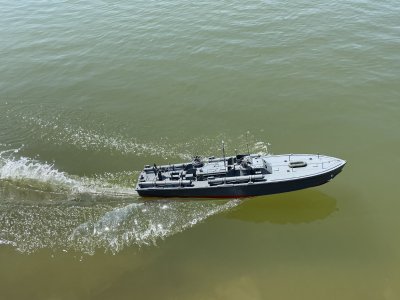
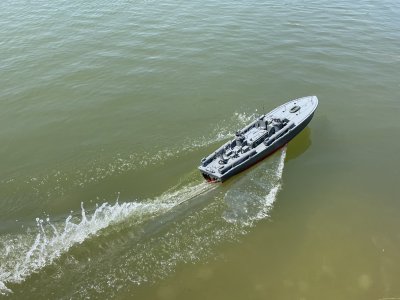
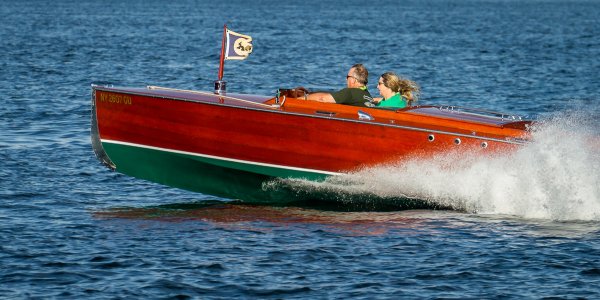
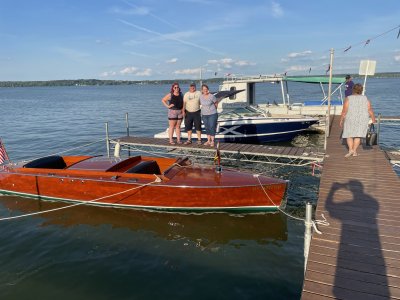
I guess my main hobby of restoring old boats and motors falls into all kinds of history but I guess the most interesting history would be my 1926 Hacker Craft which was built as a race boat then used as a rum runner out of Sodus Bay N.Y. And being that today is December 7 I added my PT 109 rc boat
 

Attachments

  • IMG_8528.jpeg
    IMG_8528.jpeg
    493 KB · Views: 267
  • IMG_0457.jpeg
    IMG_0457.jpeg
    465.9 KB · Views: 250
  • IMG_0454.jpeg
    IMG_0454.jpeg
    434.2 KB · Views: 224
  • IMG_0455.jpeg
    IMG_0455.jpeg
    435.8 KB · Views: 233
  • IMG_7210.jpeg
    IMG_7210.jpeg
    567.2 KB · Views: 247
Army-Navy Game: 100 years ago, rivals played in a Baltimore classic.

From the Baltimore Sun, "The best newspaper ever!
By Mike Klingaman | [email protected]
PUBLISHED: December 13, 2024 at 6:30 AM EST
1734114194721.png

Baltimore Sun Staff Photo
The 1924 Army-Navy football game in Baltimore was attended by 80,000 people, the largest crowd to watch a sporting event in the city’s history.

The ghosts of 33rd Street hark back in time, further than one might imagine. Once, in a stadium since demolished, the Orioles won three world championships; the Baltimore Colts did the same.

Dig deeper, still. A century ago, on a cold, gray autumn day, Army and Navy played football at Municipal Stadium before a shivering crowd of 80,000 — the largest ever to watch a sporting event in Baltimore. Standing on the game site, 100 years later, one can almost hear the full-throated whoops and cheers of rabid fans echoing through time. It was, after all, the Roaring Twenties.

On Nov. 29, 1924, Army and Navy met for the 27th time, and the first in a major city other than New York or Philadelphia. As Baltimore had lobbied hard for the game, putting on the Ritz was a given. Out-of-towners streamed in by train and Model-Ts, packing hotels draped with bunting and pennants of the two storied rivals. When hotels filled, city residents offered rooms in private homes, sometimes free of charge.

Before the game, streets were scrubbed of both trash and thieves, The Evening Sun reported: “Every man with a record as a pickpocket found circulating in the crowd was arrested and locked up until the visiting public left the city.”

The nation’s eyes were on Baltimore; no missteps allowed. The Yellow Cab Company even placed an ad in The Sun, promising “no increase in rates for the Army-Navy game.”

Making an honest buck off the big game was the American way. Local shops, from clothiers to confectioners, pitched one-time weekend deals. The Hub, a department store on Charles St., offered “field glasses” (binoculars) for $15, and 3-foot Army and Navy felt pennants for $1.50. Nearby, Ortman’s Chocolates hawked “Army and Navy specials” for those with sweet allegiance.

The $4 game tickets set aside for the public went fast. Ten days before the contest, 1,500 seats were sold within five hours at the Park Board office in Courthouse Plaza. Nearly 300 diehards had waited all night — some for 14 hours — in the biting cold to buy two tickets each. By 10 a.m., the queue stretched six blocks long as fans in line argued who would win.

Army entered at 4-1, with two ties; Navy was 2-5. Not that records mattered. Four of the previous five games had been decided by a touchdown or less; in 1923, they’d battled to a scoreless tie before 66,000 at New York’s Polo Grounds.

Army’s team arrived midweek, held secret practices at the stadium and holed up in a dormitory at Johns Hopkins University, with guards stationed outside the building. Navy’s squad came by train from Annapolis on Saturday, save for Bill, their cloven-hooved mascot, who arrived by car, debarking for the public with gold ribbons dangling from his horns.
1734114244848.png

Baltimore Sun Staff Photo
Army and Navy football played in Baltimore’s Municipal Stadium on Nov. 29, 1924.

By mid-morning, crowds lined the streets between the B&O train station at Clifton Park and 33rd St., poised to cheer the 2,000 arriving Midshipmen and 1,000 Cadets as they marched to the ballpark. The uniformed procession didn’t disappoint.

“The parade was as dignified as a procession of Supreme Court justices,” The Sun reported. “In those rigid lines of erect marching men was a dignity that attained to stateliness.”

At the stadium, the Brigade and the Corps took their seats beside diplomats and dignitaries, Congressmen and celebrities, admirals and four-star generals. President Calvin Coolidge and his wife, Grace, arrived — she was dressed to the nines in a fur coat with a fox collar and wearing a black hat with an uncurled ostrich feather. As Coolidge inched toward his seat, the Sun reported, he “tipped his hat to those nearby who cheered him … and then was lost in the mass of humanity that lined the bowl.”

Elsewhere in the stands sat Lieut. Frank Schoble, Jr., an Army veteran who’d been blinded in action during the Great War, and his companion, Lieut. Carl Hatch, of the Cecil Apartments in Baltimore, who’d offered to describe the game to his friend. Outside the gates, several thousand hardy souls stood on a slope overlooking the stadium to glimpse the game, braving the bitter wind. Their views were like those of many others in the vast, packed bowl.

“Out on the field, 22 little men — they seemed almost like puppets from the highest seats — fought to the death for an hour,” The Sun reported. It seemed longer in the cold. Huddled in their dugouts, on the sidelines, players knelt in knee-deep straw placed there to keep them warm.

In truth, the game was fraught with blunders. Army intercepted six Navy passes but missed three early field goal attempts. Eventually, Army’s kicker, Edgar Garbisch, found his mark and drove four drop kicks (including a 44-yarder) through the uprights for a 12-0 victory over the Midshipmen.

At the end, Cadets in the stands swarmed the field, hurled their caps over the bar of the goalposts and broke into an impromptu snake dance, as one, while their band played. The Army mule snorted, kicked his heels and dashed downfield, dragging his handlers, two terrified Cadets, behind.

For the 50 scribes who reported the game, Garbisch proved an enticing hero. Grantland Rice, dean of American sportswriters, wrote the next day that Garbisch “used his right toe as a flaming howitzer … upon the field of war.” Moreover, the Army captain and All-American center cut a dashing figure, The Sun reporting that “young women who visit West Point for the ‘hops’ refer to him as ‘that handsome Mr. Garbisch.'”

That night, the city was awash in revelry. Navy’s team and followers held a ball at the Belvedere Hotel; Army’s crowd partied with a banquet and dance at the Southern Hotel. Baltimoreans flocked to the Fifth Regiment Armory, which was fancied up with flags, potted palms and ferns. There, beneath lights bathed in gauzy red paper, couples danced to the music of two orchestras until 2 a.m. Then everyone left, the decorations came down and the Armory readied for the Baltimore Poultry Show, next up at that venue.

The city has hosted five Army-Navy Games since, most recently in 2016 at M&T Bank Stadium. They’ll play there again next year.

What became of Garbisch, the golden-toed hero of ’24? He graduated from West Point, served in World War II as a colonel and engineer, and got rich in business. Garbisch and his wife, Bernice, heiress to the Chrysler fortune, settled on the Eastern Shore at Pokety, a 480-acre estate near Cambridge. Avid art collectors and philanthropists, they donated several paintings to the Baltimore Museum of Art.

The couple died, within hours of each other, of separate illnesses in 1979. Garbisch was 80 years old.



Army-Navy Game: 100 years ago, rivals played in a Baltimore classic.

From the Baltimore Sun, "The best newspaper ever!
By Mike Klingaman | [email protected]
PUBLISHED: December 13, 2024 at 6:30 AM EST
View attachment 206805
Baltimore Sun Staff Photo
The 1924 Army-Navy football game in Baltimore was attended by 80,000 people, the largest crowd to watch a sporting event in the city’s history.

The ghosts of 33rd Street hark back in time, further than one might imagine. Once, in a stadium since demolished, the Orioles won three world championships; the Baltimore Colts did the same.

Dig deeper, still. A century ago, on a cold, gray autumn day, Army and Navy played football at Municipal Stadium before a shivering crowd of 80,000 — the largest ever to watch a sporting event in Baltimore. Standing on the game site, 100 years later, one can almost hear the full-throated whoops and cheers of rabid fans echoing through time. It was, after all, the Roaring Twenties.

On Nov. 29, 1924, Army and Navy met for the 27th time, and the first in a major city other than New York or Philadelphia. As Baltimore had lobbied hard for the game, putting on the Ritz was a given. Out-of-towners streamed in by train and Model-Ts, packing hotels draped with bunting and pennants of the two storied rivals. When hotels filled, city residents offered rooms in private homes, sometimes free of charge.

Before the game, streets were scrubbed of both trash and thieves, The Evening Sun reported: “Every man with a record as a pickpocket found circulating in the crowd was arrested and locked up until the visiting public left the city.”

The nation’s eyes were on Baltimore; no missteps allowed. The Yellow Cab Company even placed an ad in The Sun, promising “no increase in rates for the Army-Navy game.”

Making an honest buck off the big game was the American way. Local shops, from clothiers to confectioners, pitched one-time weekend deals. The Hub, a department store on Charles St., offered “field glasses” (binoculars) for $15, and 3-foot Army and Navy felt pennants for $1.50. Nearby, Ortman’s Chocolates hawked “Army and Navy specials” for those with sweet allegiance.

The $4 game tickets set aside for the public went fast. Ten days before the contest, 1,500 seats were sold within five hours at the Park Board office in Courthouse Plaza. Nearly 300 diehards had waited all night — some for 14 hours — in the biting cold to buy two tickets each. By 10 a.m., the queue stretched six blocks long as fans in line argued who would win.

Army entered at 4-1, with two ties; Navy was 2-5. Not that records mattered. Four of the previous five games had been decided by a touchdown or less; in 1923, they’d battled to a scoreless tie before 66,000 at New York’s Polo Grounds.

Army’s team arrived midweek, held secret practices at the stadium and holed up in a dormitory at Johns Hopkins University, with guards stationed outside the building. Navy’s squad came by train from Annapolis on Saturday, save for Bill, their cloven-hooved mascot, who arrived by car, debarking for the public with gold ribbons dangling from his horns.
View attachment 206806
Baltimore Sun Staff Photo
Army and Navy football played in Baltimore’s Municipal Stadium on Nov. 29, 1924.

By mid-morning, crowds lined the streets between the B&O train station at Clifton Park and 33rd St., poised to cheer the 2,000 arriving Midshipmen and 1,000 Cadets as they marched to the ballpark. The uniformed procession didn’t disappoint.

“The parade was as dignified as a procession of Supreme Court justices,” The Sun reported. “In those rigid lines of erect marching men was a dignity that attained to stateliness.”

At the stadium, the Brigade and the Corps took their seats beside diplomats and dignitaries, Congressmen and celebrities, admirals and four-star generals. President Calvin Coolidge and his wife, Grace, arrived — she was dressed to the nines in a fur coat with a fox collar and wearing a black hat with an uncurled ostrich feather. As Coolidge inched toward his seat, the Sun reported, he “tipped his hat to those nearby who cheered him … and then was lost in the mass of humanity that lined the bowl.”

Elsewhere in the stands sat Lieut. Frank Schoble, Jr., an Army veteran who’d been blinded in action during the Great War, and his companion, Lieut. Carl Hatch, of the Cecil Apartments in Baltimore, who’d offered to describe the game to his friend. Outside the gates, several thousand hardy souls stood on a slope overlooking the stadium to glimpse the game, braving the bitter wind. Their views were like those of many others in the vast, packed bowl.

“Out on the field, 22 little men — they seemed almost like puppets from the highest seats — fought to the death for an hour,” The Sun reported. It seemed longer in the cold. Huddled in their dugouts, on the sidelines, players knelt in knee-deep straw placed there to keep them warm.

In truth, the game was fraught with blunders. Army intercepted six Navy passes but missed three early field goal attempts. Eventually, Army’s kicker, Edgar Garbisch, found his mark and drove four drop kicks (including a 44-yarder) through the uprights for a 12-0 victory over the Midshipmen.

At the end, Cadets in the stands swarmed the field, hurled their caps over the bar of the goalposts and broke into an impromptu snake dance, as one, while their band played. The Army mule snorted, kicked his heels and dashed downfield, dragging his handlers, two terrified Cadets, behind.

For the 50 scribes who reported the game, Garbisch proved an enticing hero. Grantland Rice, dean of American sportswriters, wrote the next day that Garbisch “used his right toe as a flaming howitzer … upon the field of war.” Moreover, the Army captain and All-American center cut a dashing figure, The Sun reporting that “young women who visit West Point for the ‘hops’ refer to him as ‘that handsome Mr. Garbisch.'”

That night, the city was awash in revelry. Navy’s team and followers held a ball at the Belvedere Hotel; Army’s crowd partied with a banquet and dance at the Southern Hotel. Baltimoreans flocked to the Fifth Regiment Armory, which was fancied up with flags, potted palms and ferns. There, beneath lights bathed in gauzy red paper, couples danced to the music of two orchestras until 2 a.m. Then everyone left, the decorations came down and the Armory readied for the Baltimore Poultry Show, next up at that venue.

The city has hosted five Army-Navy Games since, most recently in 2016 at M&T Bank Stadium. They’ll play there again next year.

What became of Garbisch, the golden-toed hero of ’24? He graduated from West Point, served in World War II as a colonel and engineer, and got rich in business. Garbisch and his wife, Bernice, heiress to the Chrysler fortune, settled on the Eastern Shore at Pokety, a 480-acre estate near Cambridge. Avid art collectors and philanthropists, they donated several paintings to the Baltimore Museum of Art.

The couple died, within hours of each other, of separate illnesses in 1979. Garbisch was 80 years old.
Now, that is a story!

Why don't they write like that any more, I wonder?
 
Model Train History: From Tinplate to Detailed Collectibles

Story by Matt Herr - trains.com


Model trains have long captivated the imagination of hobbyists, collectors, and enthusiasts of all ages. From their origins as simple tinplate toys to today's intricate, highly detailed machinery, model trains trace a fascinating evolution that mirrors advancements in technology and changes in cultural trends. Let's explore how this beloved hobby developed over the decades.

1734378512306.png

Tinplate Trains and Toy Railways (1890s-1910s)

Model trains first appeared in the late 19th century as simple tinplate toys, often crafted by hand. Companies like Märklin in Germany and Lionel in the United States were pioneers in this space.

Märklin, initially a producer of dollhouse accessories, shifted to manufacturing tinplate trains in the 1890s. Early models were made from stamped metal and powered by wind-up or clockwork mechanisms – all finely crafted and considered showcases of both engineering and artistry.

By the early 1900s, Lionel began producing electric trains, introducing a new level of realism and interactivity. Their first product, the Electric Express in 1901, was designed as a store display to draw customers’ attention, but its popularity quickly grew.

Tinplate trains were often brightly colored, oversized, and durable – designs that captured the imaginations of both children and adults for many decades.

1734378536744.png

The Golden Age (1920s–1950s)

The interwar period and post-World War II era marked the golden age of model trains. During the 1920s and 1930s, model trains became more detailed and realistic, catering to both children and adult collectors.

Lionel dominated the American market with its O gauge trains, while European manufacturers like Hornby and Märklin refined their designs to create more realistic models.

During this time, accessories such as buildings, stations, and landscapes became commercially successful, featuring in now iconic media and advertising of the era. Hobbyists began to build entire miniature worlds, and the community started to form clubs and even competitions to showcase their artistry.

This era also saw the rise of smaller scales, such as HO scale (1:87), which originated in Germany in the 1920s. HO scale quickly gained popularity due to its balance between size and detail, enabling hobbyists to create more expansive layouts in less space.

The 1950s brought a boom in the popularity of model trains, fueled by post-war economic prosperity and the advent of mass media. Lionel's advertising campaigns on television turned their trains into a must-have holiday gift for children, something many of us still associate with this age of Americana today.

1734378572258.png

The Shift to Scale Modeling (1960s–1980s)

By the 1960s, model trains began shifting from toys to collectibles and scale models for serious hobbyists. Enthusiasts focused on replicating real-world railroads in exquisite detail. This era saw the rise of N scale (1:160), which became popular for hobbyists with limited space, as well as innovations like realistic weathering techniques and advanced track layouts.

Electric technology improved dramatically during this period. Manufacturers introduced more reliable motors and power systems, while features like lights, sound effects, and smoke generators made trains increasingly lifelike.

The 1980s also brought digital control systems into the hobby. Digital Command Control (DCC), introduced in the late 1980s, allowed hobbyists to control multiple trains independently on the same track. This innovation revolutionized the way model railroads operated, providing unprecedented realism and flexibility.

1734378595703.png

Precision and Detail (1990s–Today)

The modern era of model trains is defined by unparalleled precision and realism. Today, manufacturers like Broadway Limited Imports, Atlas Model RR Co., WalthersProto, Rapido, Bowser, and Athearn produce models with incredibly fine details, from hand-painted lettering to intricate undercarriages. Digital sound decoders can mimic the exact sounds of specific locomotive engines, while LED lighting creates realistic effects.

In addition to realism, customization has become a hallmark of the hobby.

Enthusiasts use 3-D printing, laser cutting, and other advanced technologies to create bespoke pieces for their layouts.

Model railroading has also embraced technology in other ways, with smartphone apps and computer programs enabling advanced control and layout design.

Meanwhile, collectors continue to seek out vintage models from Lionel, Märklin, and other classic brands. Rare pieces from the early 20th century can fetch thousands of dollars at auctions, making model train collecting both a passion and an investment for many enthusiasts.

The Enduring Appeal of Model Trains

What makes model trains so enduring? For some, it's the nostalgia of Christmas gifts, and for others, it's the challenge of designing and constructing intricate layouts that bring a miniature world to life. For many, it's the appreciation of craftsmanship, whether in a vintage tinplate model or a modern-scale replica.

Model trains have come a long way from their tinplate origins, but their ability to inspire creativity, connect generations, and celebrate the magic of railroading remains timeless. Seasoned collectors and newcomers can all find something to enjoy at shop.trains.com.https://www.trains.com/wp-content/uploads/2024/12/MRR-model-train-history-04-1224.jpg
 
90 years of Santa Claus Anonymous, bringing Christmas to Baltimore’s children
By Mike Klingaman | [email protected]
PUBLISHED: December 23, 2024 at 12:38 PM EST

Nearly a century ago, a young civic leader launched a program meant to bring holiday joy to the youngest and poorest of Baltimore’s own. Ninety years later, Santa Claus Anonymous — the all-volunteer creation of Theodore R. McKeldin, later the city’s mayor and governor of Maryland — provides a respite for children otherwise destined for a bleak Christmas. This year, the non-profit hopes to raise $300,000 for gifts for low-income recipients in the Baltimore metro area.

Here are highlights chronicling the growth of Santa Claus Anonymous, as reported by The Sun and Evening Sun:

1934: The city’s Junior Association of Commerce, of which McKeldin is president, the Junior League of Baltimore and the Evening Sun combine to raise $800 for a two-hour Christmas party for underprivileged children during the Great Depression.

1935: Three days before Christmas, those same benefactors indulge 5,000 needy kids to a day of entertainment. The children are taken to the Century and Valencia theaters and treated to gifts, food, a Jack Benny movie and personal appearances by actors Jackie Coogan and Betty Grable.

1934: The city’s Junior Association of Commerce, of which McKeldin is president, the Junior League of Baltimore and the Evening Sun combine to raise $800 for a two-hour Christmas party for underprivileged children during the Great Depression.

1935: Three days before Christmas, those same benefactors indulge 5,000 needy kids to a day of entertainment. The children are taken to the Century and Valencia theaters and treated to gifts, food, a Jack Benny movie and personal appearances by actors Jackie Coogan and Betty Grable.

1940: The annual gift-giving gala for Baltimore’s poor is incorporated as Christmas Party, Inc.

1941: Realizing “the importance of maintaining civilian morale” following America’s entry into World War II, city merchants donate enough fruit, nuts, candy and cakes to fill 7,500 stockings for impoverished children.

1942-1946: The charity is suspended for the duration of the war.

1948: Radio station WITH-AM broadcasts two 10-minute shows on Sundays, in December, to promote the holiday drive … The Sheraton-Belvedere Hotel holds benefit cabaret dances to drum up support.

1954: Christmas Party, Inc. changes its name to Santa Claus Anonymous (SCA).

1957: The $3 SCA gift certificates, which are exchanged for toys or clothing at area department stores, buy much-needed shoes for — among many others — a 13-year-old girl with an artificial leg, and clothes for three children whose mother is confined to a wheelchair after being shot by her spouse.

1958: An Evening Sun editorial touts Santa Claus Anonymous, stating, “If there is a better way of lifting the hearts of children who might otherwise receive nothing at all, we haven’t heard of it.”

1959: The donation of a charitable Cub Scout consists of five nickels taped to a piece of paper. A 28-cent contribution contains a note stating that the donors were a couple, on welfare, who were sacrificing their one pack of cigarettes, for two weeks, in hopes of making a child happy. This year’s goal: $51,000.

1963: A class of first-grade students collects $3.02 in pennies for the poor. An unidentified man enters the organization’s office at 22 Light St., plunks down two $50 bills, and walks out.

1734998102180.png


1970: Students from Towson State, Loyola College and the University of Baltimore compete for 70 straight hours in a marathon football game at Herring Run Park, which nets $5,000 for the cause and becomes an annual event. Sidelights include a football game featuring Playboy bunnies and a mini-skirt contest.

1975: Each Saturday, as the holidays approach, William Reuter, a 27-year-old banker, dons a Donald Duck costume and waddles down Saratoga Street, soliciting donations from shoppers for SCA.

1982: Laurel Race Course holds a “Santa Claus Anonymous” purse … Other fund raisers include a racquetball tournament, a 15-kilometer race downtown and a touch football game pitting the mayor and city council members against local TV and radio personalities. This year’s goal: $322,000.

1987: Baltimore Mayor Kurt Schmoke plays auctioneer at a benefit at the Governor’s Club. The Orioles hold a sale of team wear at Memorial Stadium, marked by appearances by infielder Bill Ripken and coach Elrod Hendricks, with proceeds going to SCA, which hopes to raise $450,000 overall by Christmas.

1990: Heretofore a city program, Santa Claus Anonymous expands to encompass families in Anne Arundel, Baltimore, Carroll, Harford and Howard counties.

1992: The charity doles out $550,000 in gift vouchers to 30,000 children.

2011: The annual Santa Claus Anonymous Wine and Beer Tasting benefit draws hundreds of donors at Timonium’s Crowne Plaza. Among them is Jim “Bud” Russell, a former SCA board member who grew up in Claremont Homes public housing in East Baltimore and was a recipient of the program’s gifts as a child.

2021: With contributions averaging nearly $275,000 in recent years, SCA — now competing for dollars with a number of holiday-based charities — turns to social media to boost its donor drive.

2024: Santa Claus Anonymous marks its 90th year in Baltimore.
 

“A Visit from St. Nicholas”​

Original Poem By Clement C. Moore

1735082641243.png


’Twas the night before Christmas, when all through the house
Not a creature was stirring, not even a mouse;


The stockings were hung by the chimney with care
In hopes that St. Nicholas soon would be there;
The children were nestled all snug in their beds,
While visions of sugar-plums danced in their heads;
And mamma in her kerchief, and I in my cap,
Had just settled our brains for a long winter’s nap,
When out on the lawn there arose such a clatter,
I sprang from my bed to see what was the matter.
Away to the window I flew like a flash,
Tore open the shutters and threw up the sash.
The moon on the breast of the new-fallen snow
Gave the lustre of mid-day to objects below,
When, what to my wondering eyes did appear,
But a miniature sleigh, and eight tiny reindeer,
With a little old driver, so lively and quick,
I knew in a moment it must be St. Nick.
More rapid than eagles his coursers they came,
And he whistled, and shouted, and called them by name:
“Now, Dasher! now, Dancer! Now, Prancer and Vixen!
On, Comet! on, Cupid! on, Donder and Blitzen!
To the top of the porch! To the top of the wall!
Now dash away! Dash away! Dash away all!”
As dry leaves that before the wild hurricane fly,
When they meet with an obstacle, mount to the sky;
So up to the house-top the coursers they flew,
With the sleigh full of toys, and St. Nicholas too.
And then, in a twinkling, I heard on the roof
The prancing and pawing of each little hoof.
As I drew in my head, and was turning around,
Down the chimney St. Nicholas came with a bound.
He was dressed all in fur, from his head to his foot,
And his clothes were all tarnished with ashes and soot;
A bundle of toys he had flung on his back,
And he looked like a pedler just opening his pack.
His eyes—how they twinkled! his dimples how merry!
His cheeks were like roses, his nose like a cherry!
His droll little mouth was drawn up like a bow,
And the beard of his chin was as white as the snow;
The stump of a pipe he held tight in his teeth,
And the smoke it encircled his head like a wreath;
He had a broad face and a little round belly,
That shook when he laughed, like a bowlful of jelly.
He was chubby and plump, a right jolly old elf,
And I laughed when I saw him, in spite of myself;
A wink of his eye and a twist of his head,
Soon gave me to know I had nothing to dread;
He spoke not a word, but went straight to his work,
And filled all the stockings; then turned with a jerk,
And laying his finger aside of his nose,
And giving a nod, up the chimney he rose;
He sprang to his sleigh, to his team gave a whistle,
And away they all flew like the down of a thistle.
But I heard him exclaim, ere he drove out of sight,
“Happy Christmas to all, and to all a good night!”

“‘Twas the Night Before Christmas” was first published in 1823 in the Troy Sentinel newspaper with the name, “Account of a Visit From St. Nicholas.” It was subsequently republished numerous times, often with slight modernizing alterations to the original text. The version presented here is adapted from a 1912 publication of the poem, with some minor changes to make the language accessible for today’s readers.


I was looking at things that happened today in history, and I came across this:
"The Great Storm of 1975" It spawned 45 tornados in the Southeast U.S., and put down 2 feet of snow in the Midwest U.S.https://en.wikipedia.org/wiki/Great_Storm_of_1975
I was in 11th grade. Our driveway was nearly a half mile long and there were corn fields (picked) on both sides.

The snow drifts were so high we could not get through with our car and left it parked out by the highway, we walked out in a foot path we packed down.

I wouldn't trade these memories of growing up in a farm for a million dollars.
 
History in the making.

Work is progressing on the Baltimore Belt Line which includes the Howard Street Tunnel.

Baltimore rail project will allow CSX new mid-Atlantic access for first time
By Jacques Kelly | [email protected]
PUBLISHED: March 1, 2025 at 5:01 AM EST
The freight trains that labored to climb through Baltimore’s historic Howard Street Tunnel disappeared a few weeks ago. For the first time in 130-odd years, the slow, dull roar of engines climbing a steep grade through Remington, Charles Village, Harwood and Clifton Park went silent.

The hiatus is temporary.

A small army of construction workers, clad in fluorescent safety vests, and helped by earth movers and diggers, is re-digging — essentially lowering — the principal rail route through Baltimore.

CSX, the transportation company that owns the tunnel, anticipates having its enormous campaign finished by the end of this year so that its rail cars will be able to carry double-stacked containers under the streets of Baltimore and some of its neighborhoods.
The project will permit CSX to run tall, double-stack, intermodal trains on its own tracks through the Mid-Atlantic states for the first time.

During the construction period, some trains will be redirected over the Norfolk Southern’s Lurgan Branch, Harrisburg Line to Norristown, Pennsylvania and on to Philadelphia.
Almost unnoticed during the cold weather last month, crews removed the rails. The work began adjacent to M&T Bank Stadium, the southerly end of the tunnel. The rails also left the Belt Line, the open depression that parallels East and West 26th Street and snakes along the contours of the Jones Falls Valley in Remington.

A stone portal bridge that carried automobile traffic from the 2500 to the 2600 blocks of Guilford Avenue disappeared, leaving behind massive pieces of 1890s construction stones. They soon left in dump trucks.
Other bridges the railroad encountered — the massive North Avenue Bridge and the smaller Sisson Street Bridge (a popular auto shortcut through Remington) are also being reconstructed.

“The initiative aims to increase vertical clearance in the … tunnel and address 22 additional obstructions along the corridor between Baltimore and Philadelphia, improving connectivity to key Midwest markets,” says a CSX statement.

“This is a tremendous opportunity to alleviate a restriction on our network and open up new opportunities for CSX,” said Ed Sparks, CSX chief engineer of bridge design and construction. “We’re starting something big today.”

The aim is to improve what the railroad calls its I-95 corridor while better connections to the Seagirt Marine Terminal Intermodal Container Transfer Facility at the Port of Baltimore with other markets.

“It strengthens the Port of Baltimore’s competitiveness with other East Coast ports,” said Brandon Knapp, CSX senior director of Mid-Atlantic construction. “This project benefits CSX while also boosting the region’s economy.”

In a statement, Mike Cory, CSX executive vice president and chief operating officer said, “We have a lot of people on this property, not all of them CSX employees, but we’re all one team.”

There are several financial players here, including CSX, the U.S. Department of Transportation, the state of Maryland and the Commonwealth of Pennsylvania.

The tunnel and the Belt Line have a fancy historic pedigree. It was hand dug, with maybe a steam shovel, between 1890 to 1895. Listed on the National Register of Historic Places, it was designed by the prominent civil engineer Samuel Rea.

Some 2,400 laborers spent five years on hard labor. The Sun reported the builders encountered a pesky stream at Howard and Centre streets. That same stream later plagued construction of an addition to the Walters Art Museum. Then in 1997, it created an urban sinkhole that severed a gas line and gave downtown Baltimore quite an unwelcome fireworks show.

In August 1892, the tunnel construction cracked the walls of Baltimore City College (Howard and Centre) and it had to be dynamited and demolished.

“The scene in front of City College is one of havoc,” The Sun said. “Crowds of curious sightseers and former students visited the ruins during the day.” The old B&O Railroad made good and paid for the damage. That replacement structure stands and is now apartments.

The tunnel made news in 2001 when a train caught fire within the cavity and burned for hours. A car full of computer paper took days to burn itself out.

The tunnel contractor was John B. McDonald, born in Cork, Ireland, who was paid $7 million for his efforts. A fellow contractor, Lawrence McCabe, built the Belt Line from Bayview to Huntingdon Avenue.

A locomotive, helped along by newfound power in an electrical system, tested the big dig on Feb. 1, 1895. This experimental train included 22 cars filled with West Virginia granite. It passed the test, and The Sun declared “A Railroad Triumph.”

Rea’s success in Baltimore gave him a new job at the Pennsylvania Railroad. He also was memorialized in a life-size bronze statue at Pennsylvania Station in Manhattan.

McDonald, who built the Howard Street Tunnel, was also a tunnel hero. He got the task of building New York’s first subway, the Interborough Rapid Transit Co. He died in 1911 at his home in the Dakota apartments overlooking Central Park.

He did not live to see the filming of the 1969 movie “Rosemary’s Baby,” nor the arrival of John Lennon and Yoko Ono, also famous Dakota residents. McDonald was a modest man. Of his tunnel labors, he said, it was “just like building cellars.”
 
History in the making.

Work is progressing on the Baltimore Belt Line which includes the Howard Street Tunnel.

Baltimore rail project will allow CSX new mid-Atlantic access for first time
By Jacques Kelly | [email protected]
PUBLISHED: March 1, 2025 at 5:01 AM EST
The freight trains that labored to climb through Baltimore’s historic Howard Street Tunnel disappeared a few weeks ago. For the first time in 130-odd years, the slow, dull roar of engines climbing a steep grade through Remington, Charles Village, Harwood and Clifton Park went silent.

The hiatus is temporary.

A small army of construction workers, clad in fluorescent safety vests, and helped by earth movers and diggers, is re-digging — essentially lowering — the principal rail route through Baltimore.

CSX, the transportation company that owns the tunnel, anticipates having its enormous campaign finished by the end of this year so that its rail cars will be able to carry double-stacked containers under the streets of Baltimore and some of its neighborhoods.
The project will permit CSX to run tall, double-stack, intermodal trains on its own tracks through the Mid-Atlantic states for the first time.

During the construction period, some trains will be redirected over the Norfolk Southern’s Lurgan Branch, Harrisburg Line to Norristown, Pennsylvania and on to Philadelphia.
Almost unnoticed during the cold weather last month, crews removed the rails. The work began adjacent to M&T Bank Stadium, the southerly end of the tunnel. The rails also left the Belt Line, the open depression that parallels East and West 26th Street and snakes along the contours of the Jones Falls Valley in Remington.

A stone portal bridge that carried automobile traffic from the 2500 to the 2600 blocks of Guilford Avenue disappeared, leaving behind massive pieces of 1890s construction stones. They soon left in dump trucks.
Other bridges the railroad encountered — the massive North Avenue Bridge and the smaller Sisson Street Bridge (a popular auto shortcut through Remington) are also being reconstructed.

“The initiative aims to increase vertical clearance in the … tunnel and address 22 additional obstructions along the corridor between Baltimore and Philadelphia, improving connectivity to key Midwest markets,” says a CSX statement.

“This is a tremendous opportunity to alleviate a restriction on our network and open up new opportunities for CSX,” said Ed Sparks, CSX chief engineer of bridge design and construction. “We’re starting something big today.”

The aim is to improve what the railroad calls its I-95 corridor while better connections to the Seagirt Marine Terminal Intermodal Container Transfer Facility at the Port of Baltimore with other markets.

“It strengthens the Port of Baltimore’s competitiveness with other East Coast ports,” said Brandon Knapp, CSX senior director of Mid-Atlantic construction. “This project benefits CSX while also boosting the region’s economy.”

In a statement, Mike Cory, CSX executive vice president and chief operating officer said, “We have a lot of people on this property, not all of them CSX employees, but we’re all one team.”

There are several financial players here, including CSX, the U.S. Department of Transportation, the state of Maryland and the Commonwealth of Pennsylvania.

The tunnel and the Belt Line have a fancy historic pedigree. It was hand dug, with maybe a steam shovel, between 1890 to 1895. Listed on the National Register of Historic Places, it was designed by the prominent civil engineer Samuel Rea.

Some 2,400 laborers spent five years on hard labor. The Sun reported the builders encountered a pesky stream at Howard and Centre streets. That same stream later plagued construction of an addition to the Walters Art Museum. Then in 1997, it created an urban sinkhole that severed a gas line and gave downtown Baltimore quite an unwelcome fireworks show.

In August 1892, the tunnel construction cracked the walls of Baltimore City College (Howard and Centre) and it had to be dynamited and demolished.

“The scene in front of City College is one of havoc,” The Sun said. “Crowds of curious sightseers and former students visited the ruins during the day.” The old B&O Railroad made good and paid for the damage. That replacement structure stands and is now apartments.

The tunnel made news in 2001 when a train caught fire within the cavity and burned for hours. A car full of computer paper took days to burn itself out.

The tunnel contractor was John B. McDonald, born in Cork, Ireland, who was paid $7 million for his efforts. A fellow contractor, Lawrence McCabe, built the Belt Line from Bayview to Huntingdon Avenue.

A locomotive, helped along by newfound power in an electrical system, tested the big dig on Feb. 1, 1895. This experimental train included 22 cars filled with West Virginia granite. It passed the test, and The Sun declared “A Railroad Triumph.”

Rea’s success in Baltimore gave him a new job at the Pennsylvania Railroad. He also was memorialized in a life-size bronze statue at Pennsylvania Station in Manhattan.

McDonald, who built the Howard Street Tunnel, was also a tunnel hero. He got the task of building New York’s first subway, the Interborough Rapid Transit Co. He died in 1911 at his home in the Dakota apartments overlooking Central Park.

He did not live to see the filming of the 1969 movie “Rosemary’s Baby,” nor the arrival of John Lennon and Yoko Ono, also famous Dakota residents. McDonald was a modest man. Of his tunnel labors, he said, it was “just like building cellars.”
An engineering feat, no matter which century...

Thanks for sharing!

Dave LASM
 
1867
The United States buys Alaska from Russia for $7,200,000 (109 million in 2018 dollars), roughly 2 cents an acre.

I hope Putin doesn't want it back🙃
Did Russia own it because they were the first people to plant a flag there, or because they conquered the natives?

Maybe it was more like us paying them off so they wouldn't attack us...

I don't think WE actually conquered the natives there:rolleyes:
 
Natives just assume the land they lived on for centuries is their's or else they don't believe or even understand the concept of land ownership.
Maybe they got it right.


Natives just assume the land they lived on for centuries is their's or else they don't believe or even understand the concept of land ownership.
Maybe they got it right.
...until it starts getting crowded. Has not been a problem in Alaska, their brutal weather (at least inland) keeps the population thinned down.


Affiliate Disclosure: We may receive a commision from some of the links and ads shown on this website (Learn More Here)

Back
Top