ModelRailroadForums.com is a free
Model Railroad Discussion Forum and
photo gallery. We cover all scales and sizes of model railroads. Online since 2002, it's one of the oldest and largest model railroad forums on the web. Whether you're a master model railroader or just getting started, you'll find something of interest here.
Hi everyone,
I have a question about how to elevate curved sections of road bed while keeping the track level?
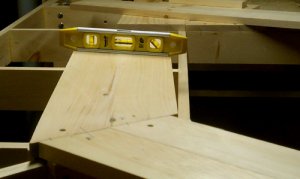
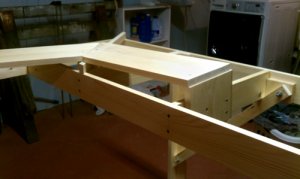
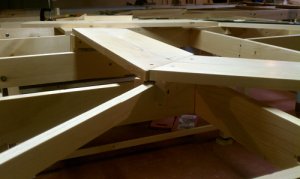
I am building the Atlas Central Midland 10’x12’ layout and am having some trouble keeping the road bed level as I curve the direction of the bed and risers increase in height. I have to increase the height of the riser on one end in order to have the road bed (1’’x8’’or 1”x6”) even make contact let alone be level.
I don’t know if this makes sense but I am at my wits end. I have searched the web and this forum but nothing comes close to what I need.
Thanks for reading this I hope someone can help,
NYCGuy
Can you get us some pics?
I worked through this when building the D&J Railroad. See the link in my signature and follow it from its beginning to the current work. I use a torpedo level to check the work. The benchwork is comprised of a vertical sheet of plywood, 18"x18" attached to a vertical 2x4 with drywall screws. Short 2x4s are attached to the top edge of the plywood with drywall screws, perpendicular to the roadbed. The roadbed, 3/4" plywood is cut to width of the right of way and laid down on the short 2x4s and secured with drywall screws. I lay the cork road bed and track then I can go back and make fine adjustments to the roadbed by loosening the screws that hold the short 2x4 to the vertical plywood then securing with the drywall screws. Do not unscrew the short 2x4s from the roadbed. Your adjustment point is where the short 2x4 attaches to the vertical sheet of plywood. You can adjust the roadbed up or down and tilt side to side as needed. When you initially attach the short 2x4 to the vertical plywood, make sure the top edge of the short 2x4 as about 1/4" to 1/2" above the top edge of the vertical sheet of plywood. This gives you room to lower the short 2x4 if needed. If things need a bigger adjustment than the short 2x4 can provide, you can make larger adjustments by loosening the vertical sheet of plywood from the vertical 2x4 then reattach it.

The first problem with your work is that you are using plank wood. Ya need to use plywood. Plywood will provide a flexibility to your work as well as a rigidness to support the track. I use 3/4" plywood for my empire. You might find others use 1/2" or thinner. The thinner you go, the higher the chance of warping which will turn your railroad into a roller coaster. Your use of the table for supporting the roadbed is sufficient. You might run into problems of bumping the table where as anchoring the benchwork to the floor will also provide a solid base.
I can see that you are butting the wood pieces to each other. This will cause unwanted angles of the roadbed which will translate into uncoupling of your train at the wood joints. I used a second piece of 3/4" plywood under the joints where the roadbed plywood joined together, about 24" long, to ensure the joint stayed smooth. Plywood will also aid in adding a bit of super-elevation in the curves too.
Using drywall screws is good. They can be removed to make adjustments later as you fine tune your benchwork.
Thanks for the suggestions. I just spent the last hour or so reading and watching your posts and videos.
All I can say is “Holy Cow”, I am impressed. I was paying particular attention to your use of and placement of the bench work materials, although the rest of the posts contain tons of very valuable information as well.
I plan on disassembling my current attempt at elevating track work and switching to ¾” plywood as you mentioned and use. I will also secure the layout to the floor and possibly the two lolly columns I have bordering near the bench work.
Thank you also for your dedication to documenting your “Empire”, and the help you offer to your fellow hobbyists. Ed the NYCGuy
Ed, you may also want to look at Lynn Westcott's book from Kalbach, the MR folks. IIRC its called,
"Building Basic Model Railroad Benchwork". Or something to that effect. Of course, by the time it came out, I didn't need it, I think I was on my 5-6th layout.

Forgive my ignorance Carey, but what is IIRC?
Sent from my SPH-D710BST using Tapatalk
IIRC=If I recall correctly.
It's difficult tearing established benchwork, but when ya go back and do it right, it's so much more worth it.

Affiliate Disclosure: We may receive a commision from some of the links and ads shown on this website
(Learn More Here)