drolmaeye
Finally underway
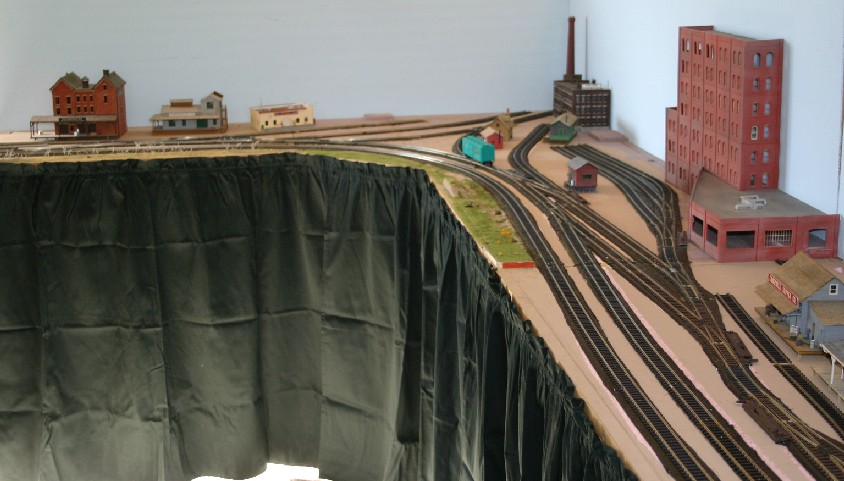
I just finished laying the last piece of track on my first layout (L-shaped point-to-point, 11' x 11' x 18", HO scale) and now it's time to wire it up. I have used Atlas code 83 with #6 turnouts (custom line). The turnouts have insulated frogs that feed power through the rails (for example, I can test continuity at any two points on a given rail in the layout and I get a signal). Because it is a switching layout, I have quite a few turnouts (10) over a small area. So, do I really have to have feeders (three sets) for each turnout? Or can I just drop feeders in such a way that at any given point in the layout there is a feeder within, say, five feet?
I have read quite a few opinions during internet search, but I am hoping to hear from people that have tried or operated on layouts that don't hit every turnout (particularly if they have had a problem).
For the sake of completeness, I tested a DC loco with power fed to one end of the layout, and it ran well to the other side (a brief but very satisfying maiden voyage), but I will be using DCC. Also, I have not soldered any rail joiners (except for three flex track joints around curves). I'll use 14 AWG bus, 18 AWG feeders.
Thanks in advance for your advice and/or experience.
I have read quite a few opinions during internet search, but I am hoping to hear from people that have tried or operated on layouts that don't hit every turnout (particularly if they have had a problem).
For the sake of completeness, I tested a DC loco with power fed to one end of the layout, and it ran well to the other side (a brief but very satisfying maiden voyage), but I will be using DCC. Also, I have not soldered any rail joiners (except for three flex track joints around curves). I'll use 14 AWG bus, 18 AWG feeders.
Thanks in advance for your advice and/or experience.