As I mentioned in my intro thread, I had a simple HO layout as a kid in the 70s, but I haven't done anything with the hobby in decades. I always intended to get back into it, and so I jumped back in about a month ago. And as I've been reading a lot of layout threads for inspiration, I thought I'd document my progress here.
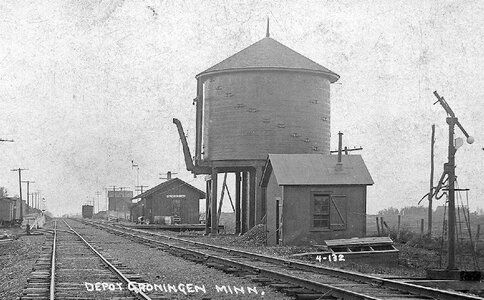
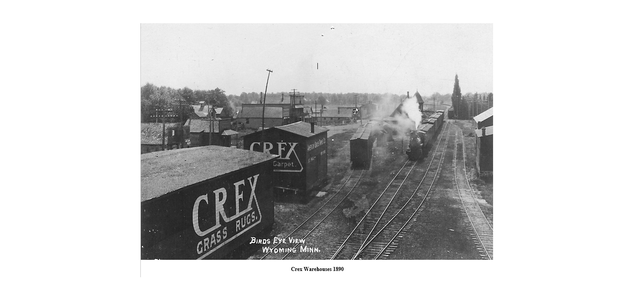
The backstory I've been developing centers around the Minneapolis & St. Louis and western Minnesota in the 1940s. There was a railway started in the early 20th century variously referred to as The Luce Line, The Electric Short Line Railway (even though they never ran electric locomotives), and Minnesota Western. This is of particular relevance to me as just off my backyard is the old Luce Line which is now a recreational trail. And I'm walking it multiple times a day with my dogs.
In the 1940s, Minnesota Western was purchased by the Minneapolis & St. Louis, and of course the MSL was then purchased by Chicago Northwestern in the 1950s. My alternative universe is that the MSL did not purchase the Minnesota Western, but it was the other way around. Minnesota Western purchased the MSL, birthing the Minnesota & Western Railway.
The area that I'm focusing on, at least for now, is from New Ulm, Minnesota west towards Sioux Falls. New Ulm is on the Minnesota river and before the milling industry was consolidated by Pillsbury and General Mills in Minneapolis, New Ulm had a vibrant milling industry as well as multiple breweries. So the initial focus will be on bring grain eastbound into New Ulm and beer westbound. North of New Ulm along the river there is some granite and other mining that could be worked in too.
So while I'm in the planning stages (i.e., spousal negotiations) as to the ultimate location and shape of the layout, I wanted get some track down and start running trains and playing around with different layout ideas. I had a sheet of plywood in the garage, so I threw that down on the spare bed in my office.

And of course, DCC.

The backstory I've been developing centers around the Minneapolis & St. Louis and western Minnesota in the 1940s. There was a railway started in the early 20th century variously referred to as The Luce Line, The Electric Short Line Railway (even though they never ran electric locomotives), and Minnesota Western. This is of particular relevance to me as just off my backyard is the old Luce Line which is now a recreational trail. And I'm walking it multiple times a day with my dogs.
In the 1940s, Minnesota Western was purchased by the Minneapolis & St. Louis, and of course the MSL was then purchased by Chicago Northwestern in the 1950s. My alternative universe is that the MSL did not purchase the Minnesota Western, but it was the other way around. Minnesota Western purchased the MSL, birthing the Minnesota & Western Railway.
The area that I'm focusing on, at least for now, is from New Ulm, Minnesota west towards Sioux Falls. New Ulm is on the Minnesota river and before the milling industry was consolidated by Pillsbury and General Mills in Minneapolis, New Ulm had a vibrant milling industry as well as multiple breweries. So the initial focus will be on bring grain eastbound into New Ulm and beer westbound. North of New Ulm along the river there is some granite and other mining that could be worked in too.
So while I'm in the planning stages (i.e., spousal negotiations) as to the ultimate location and shape of the layout, I wanted get some track down and start running trains and playing around with different layout ideas. I had a sheet of plywood in the garage, so I threw that down on the spare bed in my office.
And of course, DCC.
Last edited:


 Backstories are almost a hobby-within the hobby, particularly if you freelance. So let the imagination run.